

Memory makers, especially the South Korean ones, must learn to speak up
An industry with three trillion-dollar companies cannot outsource its narrative to its customers and critics
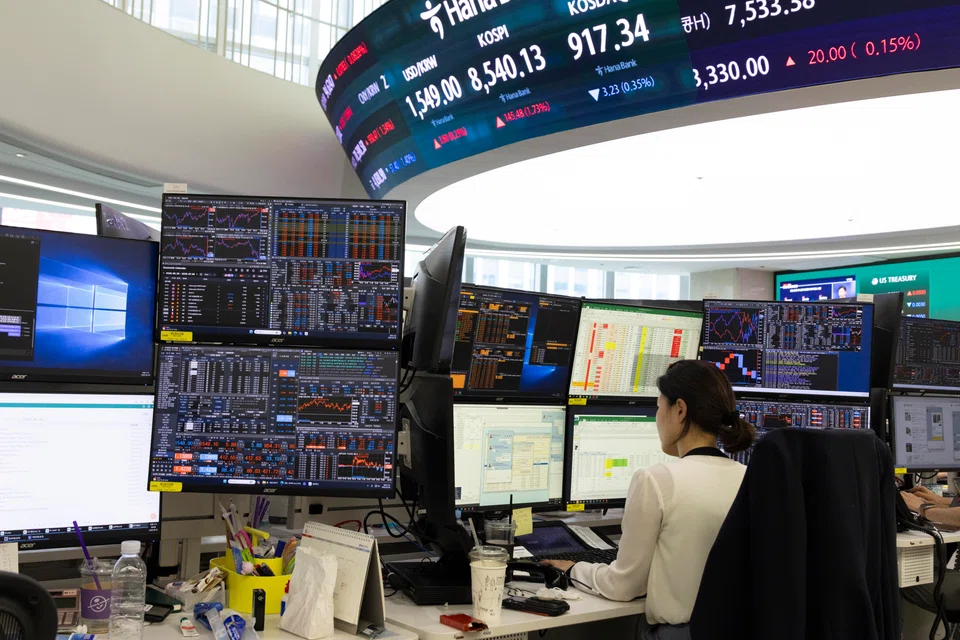
FOR 25 years, consumer technology was the most dependable disinflationary force in the world economy. Each year the device in your hand did more and cost less, and that quiet subtraction flattered every inflation figure on earth. That era is over.
GenInnov has flagged this “silicon shock” since its first tremors. What we like to call “techflation” has hardened into the invisible gravity of the global macro landscape, bending both producer prices and consumer spending into its orbit.
Technology was never meant to be a source of inflation. When the cost of living climbed, blame went to tariffs, then energy, then labour, each with a face the public could resent. Those costumes have worn through. The eye now travels to the one category that was never supposed to climb at all: memory chips. The world is busy inventing names for it. Chip inflation, “memflation”, “ramageddon”. One does not coin a word for a thing one intends to forgive.
Memory is the safest thing to accuse in the supply chain. No one boycotts a chip they have never seen, sold by a company they cannot name. These firms were resented when they were poor, dismissed as commodity peddlers, and their record margins only hardened the grudge. Two of the three are South Korean, and to a Western commentator, that fact quietly does a great deal of work.
Here is where the resentment finds its fuel. On next year’s consensus, the three memory makers may earn more in operating profit than Apple, Alphabet, Meta and Amazon make between them, with enough left over for a TSMC or a JPMorgan. And this needs no further heroics.
On today’s run rates, without a dollar of growth, Samsung, SK Hynix and Micron are already earning close to 400 billion dollars a year between them, not far short of the earlier-mentioned four giants combined. A component supplier, out-earning the marquee names whose products it sits inside.
The makers have outgrown their own language and have not noticed. For decades, they spoke only in the grammar of the cycle. Demand strong or weak, inventory high or low, price down, then up, then down again.
When the artificial intelligence boom broke their trendlines, the language did not evolve. It bolted on a prefix: Everything became a “supercycle”.
That studied humility might have suited a price-taker in 2015. For a cohort now worth trillions and gatekeeping the AI economy’s tightest constraint, it creates a dangerously wrong impression. It is an elementary public relations error, now mutating into a legal liability.
Consider what materialised recently in a California federal court. In an antitrust lawsuit, 17 plaintiffs claim the memory oligopoly – Samsung, SK Hynix and Micron – conspired to keep commodity Dram (dynamic random-access memory) artificially scarce, using their coordinated pivot towards high bandwidth memory (HBM) as a smokescreen to throttle older modules.
The lawsuit may fail, and may deserve to. Parallel investment in HBM is not proof of collusion. It may simply be what happens when every serious AI customer bangs on the same three doors at once.
But the lawsuit matters because it shows the shape of the accusation now forming. The plaintiffs do not need to understand HBM yields, wafer starts or Nvidia road maps. They need only four words: “They all moved together.”
That is why the supercycle is no longer harmless. It sounds like a shrug, like management saying prices rose because prices rose. In a commodity downturn, that language merely annoys shareholders. In an inflationary boom, with laptop, console and phone prices climbing downstream, it becomes an exhibit.
The story the memory makers decline to tell is the most interesting one in technology. Compute has grown heavier at every layer, and a machine that now thinks longer and never stops must hold more of its context in silicon.
“If Samsung, SK Hynix and Micron want the world to understand this is not a cartel story, they must stop speaking as if price falls from the sky.”
An AI server holds eight to 10 times the memory of an ordinary one, and HBM burns roughly three wafers for every one a commodity part needs. The data centre has climbed from a third of memory demand towards two-thirds. None of this is an act of God. It is arithmetic that can be shown.
An industry with three trillion-dollar companies cannot outsource its narrative to its customers and its critics.
If Samsung, SK Hynix and Micron want the world to understand this is not a cartel story, they must stop speaking as if price falls from the sky. They must show the order books, the capacity maths, the fab lead times and the economics of under-investment after the last bust.
The warning is no longer abstract, because within a single week, the industry supplied three portraits, none flattering.
The trio was sued for conspiracy. At the same time, Samsung and Hynix – which now make up more than half the Kospi – watched their shares crater in a leveraged panic as South Korea rushed leveraged single-stock funds onto the two companies.
And then, the Korean chiefs lined up beside their president to pledge a decade of joint capacity. To a domestic audience, fine theatre. To a world wincing at its memory bills, it reads like a cartel taking a podium.
The makers have forgotten their own record. Between 1998 and 2002 the industry ran a convicted price-fixing conspiracy. Executives went to prison. Among the named victims was Apple, the firm pointing fingers today. Compete in public and be dismissed as simpletons; appear in concert and be suspected as conspirators.
The only exit is to explain, separately and clearly, that discipline is a response to demand and the brutal arithmetic of fabs, not a private agreement. The memory makers must say it before, repeatedly and more emphatically than what a regulator or a politician may say soon.
Forty years ago memory was the quiet engine that made the digital world cheap. Today the world blames its producers for making it dear – a new Opec that has not yet realised it is one. The oil barrels never learnt to speak of scarcity in the 1970s, and the producers paid for it in politics for a generation.
The memory makers can explain this shock now, in their own words. Or they can wait, and be explained, by the angriest audience they have ever had.
This is an adaptation of an article that first appeared on GenInnov’s blog.
The writer is founder and portfolio manager of GenInnov Asset Management in Singapore.
Decoding Asia newsletter: your guide to navigating Asia in a new global order. Sign up here to get Decoding Asia newsletter. Delivered to your inbox. Free.
Share with us your feedback on BT's products and services
TRENDING NOW
MAS allocates S$1.45 billion to five asset managers in third EQDP batch: Chee Hong Tat
‘My grandfather’s legacy’: Sherman Kwek lays out three-year plan for CDL to drive returns

He built the Vingroup empire. Now South-east Asia’s richest man is handing some key roles to his sons
‘How many will survive?’: Bubble fears arise as China’s humanoid robotics face reality check

