MH17 was the warning. The Middle East is the test
Aviation safety faces new challenges amid escalating US-Israel-Iran tensions. Is the industry ready?
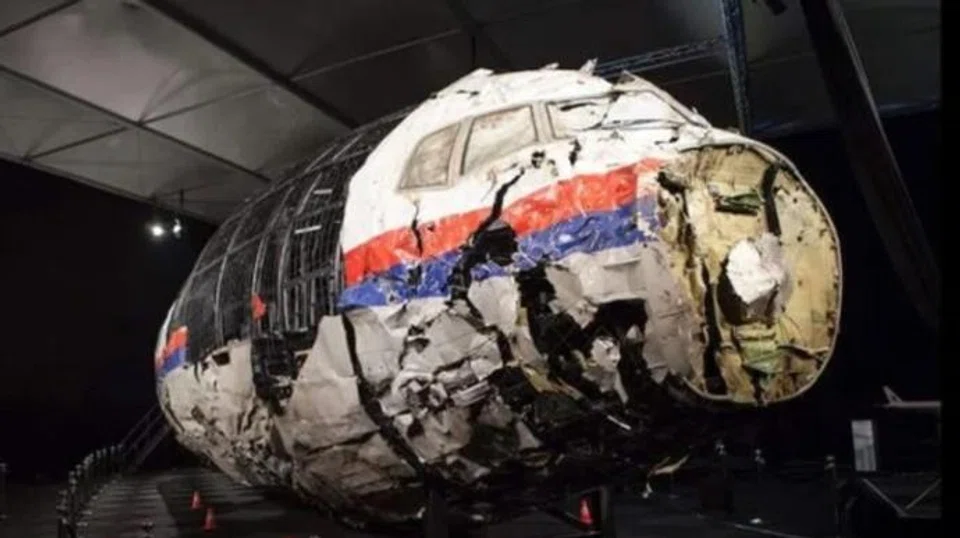
GEOPOLITICS and aviation safety rarely intersect as violently as they did on Jul 17, 2014. Malaysia Airlines flight MH17, a Boeing 777 en route from Amsterdam to Kuala Lumpur, was shot down over eastern Ukraine, killing all 298 passengers and crew.
In the decade since, the aviation industry has confronted an uncomfortable truth: The system designed to keep civil aviation safe was never built for an era of fragmented conflicts, asymmetric warfare and proliferating advanced weaponry.
Today, as tensions escalate across the Middle East – including risks around Iranian airspace – the lessons of MH17 are no longer historical. They are operational.
In the week before the MH17 incident, roughly 900 flights transited the same conflict zone, with 37 airlines continuing to overfly eastern Ukraine. The airspace remained open at cruising altitude despite restrictions below 32,000 feet – reflecting a flawed assumption that commercial aviation operated safely above the reach of battlefield weapons.
The use of a high altitude-capable Buk missile system proved otherwise.
The tragedy exposed a systemic failure. The traditional model, where states guarantee airspace safety and airlines rely on Notams – short for notices to airmen – and International Civil Aviation Organization (ICAO) guidance, was shown to be inadequate in conflict environments.
Investigations and the 2025 ICAO ruling attributing responsibility to Russia clarified legal accountability, but for operators, the more important lesson was operational: compliance does not equal safety.
This gap between legal frameworks and operational reality has long been apparent.
At Yale University, I worked on a research project examining MH17 from an international law perspective and the role of United Nations agencies. Even then, the conclusion was clear: Global governance structures are not designed to provide real-time protection for civil aviation in active conflict zones. A decade later, that limitation persists.
The first lesson is that sovereign airspace is no longer a reliable proxy for safety.
In modern conflicts – characterised by fragmented control, proxy actors and overlapping military capabilities – states often lack full visibility over their territory. Airspace may be legally open while operationally unsafe.
This is particularly relevant in the Middle East, where drones, missiles and parallel operations create risks that regulatory frameworks cannot fully capture. The industry has learnt that legality does not assure safety.
Airlines have since undergone a profound shift. Risk management has moved from compliance to intelligence. Leading carriers now integrate government advisories, third-party intelligence, satellite data and internal scenario modelling.
In recent tensions involving Iran, many airlines rerouted proactively – often ahead of formal closures – showing that decision-making has moved upstream of regulation.
Persistent issues
Yet, this evolution has not resolved a fundamental tension: the trade-off between safety and economics.
Airspace is also a revenue stream. States derive significant income from overflight fees, creating reluctance to close airspace prematurely. For airlines, rerouting can add hundreds of nautical miles, up to 90 minutes of flight time, and substantial fuel and crew costs – particularly on key corridors between Europe, the Gulf and Asia.
The result is a fragmented risk posture. Some airlines adopt conservative approaches, avoiding entire regions early. Others continue operating within formally open airspace. MH17 exposed this divergence; it has not resolved it. Risk tolerance has effectively become a competitive variable.
Compounding this is the limited effectiveness of international accountability mechanisms.
The 2025 ICAO ruling marked an important precedent, but the decade-long delay highlights a structural weakness: legal processes are slow and retrospective. Airlines must make real-time decisions under uncertainty, often without clear attribution of risk. Legal frameworks can assign blame after the fact, but offer limited operational protection.
At the same time, the threat landscape has evolved.
In 2014, the primary concern was advanced surface-to-air missile systems. Today, risks are broader and less predictable: the proliferation of man-portable air-defence systems, widespread use of drones and loitering munitions, and increasing incidents of electronic interference with navigation systems.
In congested and contested airspace, such as the Middle East, these factors increase the risk not only of attack, but also of miscalculation.
Underlying all of this is a persistent problem of information asymmetry. No single actor – states, airlines or international institutions – has a complete real-time picture of the threat environment.
Governments may hold sensitive intelligence that is not fully shared. Airlines interpret risks differently, and coordination remains largely voluntary. While information sharing has improved since MH17, the system remains fragmented.
In fast-moving crises, this fragmentation becomes a critical vulnerability. Decision windows shrink to hours, while the consequences of misjudgement remain severe.
An urgent need to act
The implications for today’s geopolitical environment are clear. Iran sits at the crossroads of major global air corridors linking Europe, the Gulf and Asia. Any escalation – direct or via proxies – has the potential to disrupt global aviation flows at scale.
Three strategic shifts are emerging.
First, pre-emptive risk avoidance is replacing reactive compliance, with airlines rerouting based on early indicators rather than waiting for formal restrictions.
Second, network resilience is becoming a competitive differentiator, with flexible fleets and diversified routing options enabling faster adaptation.
Third, geopolitics is becoming embedded in airline strategy, influencing route planning, hub structures and partnerships.
Despite these adaptations, the underlying system remains reactive. The architecture of global aviation – based on sovereign airspace control, voluntary information sharing and fragmented accountability – has not been fundamentally redesigned since MH17.
As conflicts become more complex and technologies more accessible, the gap between risk and regulation is widening again.
MH17 was not just a tragedy; it was a warning. It exposed the limits of a safety framework built for a more predictable world. The industry has learnt from it – but only incrementally.
For aviation leaders today, the conclusion is unavoidable: conflict-zone risk is no longer an exception; it is a permanent feature of global operations.
The next MH17 will not come as a surprise. It will come as a failure to act on what is already known.
The writer is founder of BAA & Partners