The Middle Eastern kaleidoscope tilts again
The fall of the Assad regime in Syria is a loss for Russia, Iran; a win for US, Turkey, Israel
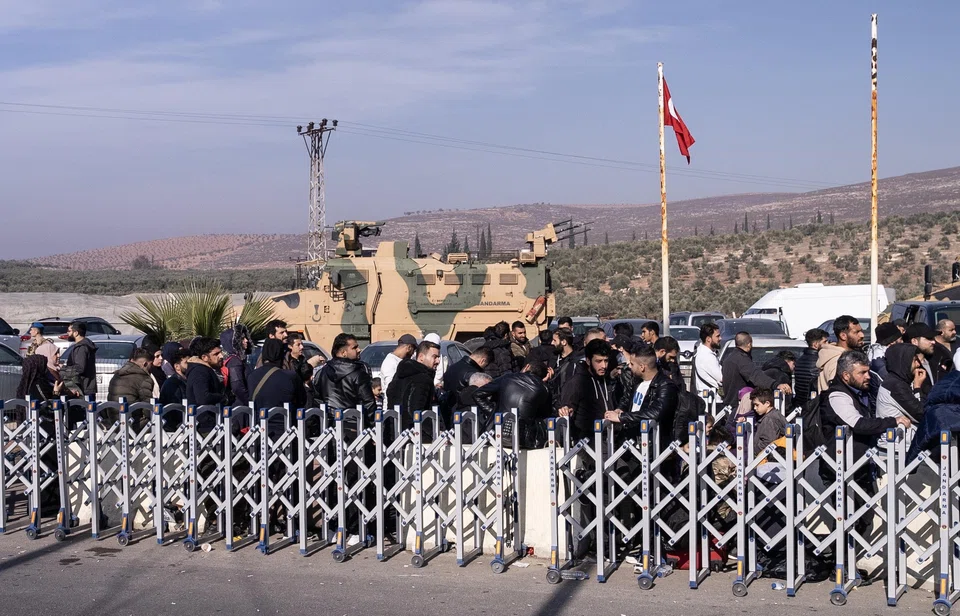
THE strategic map of the Middle East has been transformed once again, and expect it to change again sooner than you think.
Indeed, the Middle East region can be compared to a kaleidoscope. And just as how the many pieces of coloured glass move to form a new configuration with a tilt of a kaleidoscope, any military or diplomatic change in the Middle East will set a realignment of the national, ethnic, sectarian and tribal forces in the region, as well as of global players. Nothing is permanent.
Until recently, the region has been dominated by Iran at the centre of a “Shiite crescent” or “the axis of resistance” of proxies that included Bashar al-Assad’s Syria, in addition to Lebanon’s Hezbollah and the Palestinian Hamas. This axis of resistance – that also included Shiite groups in Iraq and the Houthis in Yemen – was supposed to weaken Israel and its patron, the United States.
Indeed, Assad was backed by Tehran which funnelled military assistance to the Baath regime in Damascus, as did a major global player, Russia, which maintained naval and air bases in Syria and, like Iran, challenged the American hegemonic position in the Middle East. The balance of power in the region seemed for a while to be shifting towards the direction of Tehran and benefiting the interests of Moscow.
But when Hamas attacked Israel on Oct 7, 2023, it set in motion a series of developments that led to the turning of the strategic kaleidoscope. The Israelis delivered major strategic blows to Iran’s two partners in the Levant – the Hamas rulers in the Gaza Strip and Hezbollah in Lebanon – and responded effectively to Iran’s direct attacks on Israel. The balance of power in the Middle East began to shift away from Iran’s direction.
With Iran’s position weakened, the Baath regime’s rebels concluded that they had an opportunity to finally oust Tehran’s partner, Assad, from power. That followed a 13-year-long civil war that pitted the Baath regime, which was backed by Assad’s Alawite Muslim sect, against a coalition of insurgents led by Islamist fighters.
Turkey has backed one of Syria’s Islamist groups, the Syrian National Army, while the United States supported a group of Kurdish insurgents and has maintained a small military presence in the country as part of that strategy.
From that perspective, the collapse of the Syrian regime is a win for both Turkey and its Islamist allies, and for the Americans and their Kurdish partners. This is not to mention the fact that Washington is content to see the setback in Syria experienced by Russia, which is also embroiled in a war in Ukraine, where the US backs the government in Kyiv.
But then, Ankara regards the Kurdish insurgents in Syria as allies of a movement representing the large Kurdish minority in Turkey that has been fighting against the central government there.
At the same time, the coalition of rebels that constitute Hayat Tahrir al-Sham (or HTS) and that have taken power in Damascus is under the influence of Islamists who were allies in the past with the anti-America Al Qaeda. In fact, the leader of the victorious rebels, Abu Mohammad al-Jolani, remains on the US list of terrorists.
So whether the “US win” in Syria remains sustainable depends very much on the direction taken by the HTS which only controls Damascus and some of the other large cities, while other groups representing the numerous minorities in Syria, including the Druze and Christian communities, maintain a presence in other parts of Syria.
Rebel leader al-Jolani has told reporters that his organisation has severed ties with Al Qaeda and will respect the rights of Syria’s minorities and is hoping to establish friendly ties with the US and other Western countries.
The fall of Assad and his Baath regime has been greeted in the West as a triumph of the forces of democracy in the Middle East.
This sounds like an appealing narrative that reflects so-called “Whig history”, which presents history as a progressive journey from a less developed past towards a more enlightened present, emphasising positive advancements and triumphs throughout time.
But in fact, the experience of regime changes in the Middle East in the aftermath of the US invasion of Iraq and Afghanistan, and the so-called “Arab Spring”, doesn’t provide grounds for much optimism.
The collapse of the dictatorships of Saddam Hussein in Iraq and Muammar Gaddafi in Libya ignited sectarian and tribal fighting and led to long and bloody civil wars that have drawn in regional and global players. Hence, Iraq is now under the influence of Shiite Iran.
At the same time, while the opposition forces had initially gained power in Egypt, they were later ousted by the military that now rules in Cairo. And in Afghanistan, the Islamist Taliban group returned to power.
Yet, from a strategic perspective, the United States has to consider both the opportunities and risks it now faces in Syria and the entire Middle East.
A civil war in Syria could again draw in outside forces and affect the interests of US ally Israel. The latter is very much concerned that the new government in Damascus would ally itself with Turkey, which the Israelis regard as a regional rival.
The main question would be: Who will control the Levant, the region stretching from the Sinai Peninsula to Iraq? Will Iran accept the changes in the balance of power in favour of Israel and Turkey, or will it try to use its military power to challenge them?
Most worrying from the American point of view is the following scenario: An Iran that feels isolated and weakened may try to reassert its position by doing what it has threatened to do for a long time – acquire a nuclear weapon, a development that Israel and Saudi Arabia would regard as a direct existential threat to their interests.
Responding to such a development would likely be incoming president Donald Trump. The president-elect has stated that the United States should not intervene now in Syria, and has made it clear that it wants to avoid new American military interventions in the Middle East that are bound to shift the US strategic focus from East Asia. President-elect Trump sees China, and not Iran, as America’s major global threat.
But then it is in the nature of the Middle Eastern kaleidoscope to draw in outside powers to meddle in its problems and who end up – like the United States in Iraq, or in the case of Russia now – paying a high price for their diplomatic and military interventions. Will Trump decide that it’s time for the United States to pull out of the region and allow the kaleidoscope to turn on its own?