
Middle powers will keep ganging up against the US
Nations can no longer take America’s good faith for granted, so they must seek security with one another
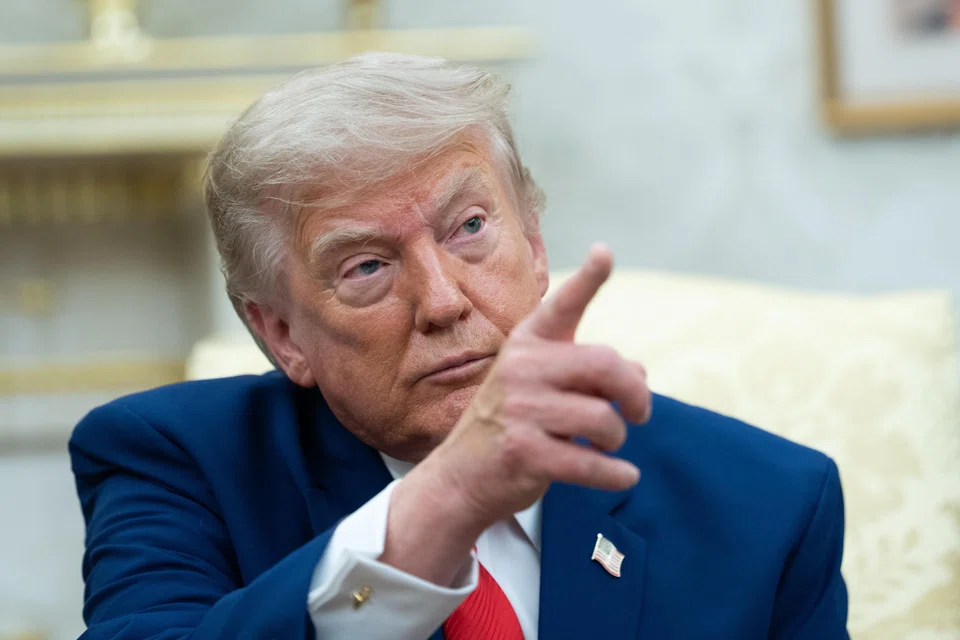
SAY you’re the leader of the planet’s most powerful country and you’ve spent a year and a half hazing almost the whole world. How does the world respond?
With boos, if the venue is Sunday’s final of the football world cup. Here was US President Donald Trump, hosting – well, technically co-hosting, along with the leaders of Canada and Mexico – the fans and players of Spain and Argentina, middle powers in geopolitics but superpowers on the pitch.
But when Trump emerged from his bulletproof VIP lounge to present the gilded trophy to the Spaniards – and then awkwardly tried to photobomb their victory portrait – the stadium hissed and jeered. Some spectators could be seen flipping him the bird.
Spain’s star, Lamine Yamal, hesitated to shake the president’s hand, as though Trump had the cooties.
Polls and other metrics corroborate the vibe on display in that stadium. In most of the 36 countries surveyed by the Pew Research Center, people now view China, a Leninist-Maoist quasi-dictatorship, more positively than the US, the erstwhile leader of the free world.
Pew’s director of global-attitudes research concludes that “the world is giving up on America”. That is certainly true of international students, who increasingly shun America’s famed universities and enroll elsewhere. The US under Trump is losing its rizz.
Partnerships without the US
In diplomatic settings, of course, booing, hissing and bird-flipping are out of the question. World leaders make themselves clear in other ways.
The most notable so far is Mark Carney, the prime minister of Canada (who was among those joining Trump in the stadium).
In January, he gave a speech in which he never mentioned Trump by name and yet dared the world to acknowledge what Canada, which Trump has threatened to annex, has accepted: that America’s turn from international benefactor to predator means that “the middle powers must act together, because if we’re not at the table, we’re on the menu”.
Middle powers everywhere have started doing exactly that, forming partnerships without the US to rebalance against the new threat from Washington.
Some of the emerging pacts among countries in Europe, Asia, South America and beyond take the form of trade regimes meant to insulate them against arbitrary tariffs (such as the barrage against Canada on Jul 20) levied by Trump or his successors.
The new arrangements also include plans to increase military spending and “diversify” defence procurement – that is, to buy fewer weapons from America and more from elsewhere.
The first part – the increase in military spending – should delight the White House. The Trump administration has long been browbeating America’s allies to stop freeloading off its protection and to take responsibility for their own defence.
Now countries from Japan and South Korea to Poland and Germany are heeding the call and rearming in a hurry. (Their motivations, admittedly, have as much to do with the growing threats from Moscow, Beijing and Pyongyang as with the hectoring from Washington.)
But the second part – the aspiration to declare military independence from America – was not what the White House had in mind.
Nor was the general movement by the middle powers to distance themselves from America, which could in time mean ganging up against it, in international institutions such as the United Nations or other fora.
Enter Elbridge Colby, a top official in the Department of Defense who stands out for his intellect and breadth of interests in a Pentagon that under current leadership, measures itself by its “High-T” virility.
Clearly all that “hubbub” about the middle powers turning away from America got under his skin, because he took to X to warn all those countries not to “waste valuable time, money and political capital on a distraction”.
As Carney didn’t mention Trump in his speech, Colby doesn’t name Carney, or any foreign leader. But he pooh-poohs the idea of middle-power “alignment”, and especially the notion that allies could buy the best, most cutting-edge and lethal weaponry anywhere but the US.
Dubiously, Colby claims: “We see an *upsurge* in desire for engagement with the United States, not a reduction. Under President Trump’s leadership, countries not only see the value of American engagement, they can no longer take it for granted.”
On one count, Colby has a point: Allied countries in Nato or Asia can’t simply stop buying American kit.
Colby cites the chief of the German air force commenting that “developing our own capabilities takes time. Right now, we do not have time”. The Kremlin is menacing.
France and Germany just lived down to stereotype by cancelling what was supposed to be their joint sixth-generation fighter jet – because they couldn’t agree on what it was supposed to do.
The rest of Colby’s argument, though, is a non sequitur. It’s precisely because middle powers can no longer take America’s leadership, or even good faith, for granted, that they must seek security elsewhere, and with one another.
A paradox in Trump’s foreign policy
Wolfgang Ischinger, a German diplomat who was ambassador to the US and now chairs the Munich Security Conference, put it this way: “(Elbridge), if you feel that you need to point all this out publicly, this suggests that you are correctly beginning to understand that many of your allies have lost trust in US reliability. What would remain of the US as a superpower without the global web of partners and allies?”
The logical flaw at the heart of Trump’s foreign policy is that he simultaneously wants to wean America’s partners off its protection and to keep them subservient.
As Rebecca Lissner, a top national-security official in the Biden administration, told me, he’s “trying to have it both ways: to scare US allies into investing in their own defence while also maintaining their dependence on and deference to the US. But that’s not how the world works”.
The way the world works is instead Newton’s third law of motion, according to which every action has an equal and opposite reaction.
Trump has spent much of his first term and all of his second offending, menacing or humiliating America’s traditional partners. (Even the genteel Colby has threatened the Holy See, of all places.)
Now all those countries, for their long-term safety and dignity, are responding by planning a post-American future. It’ll be a long, hard slog; but they’ll keep at it. BLOOMBERG
TRENDING NOW
Grab CEO’s wife Chloe Tong on life with Anthony Tan and finding her purpose
HDB reviewing ‘jumbo’ flat scheme after Telok Blangah unit listed for sale at S$2.18m
He built the Vingroup empire. Now South-east Asia’s richest man is handing some key roles to his sons
Singapore judge raises doubts iron ore trader Radiant World is owed US$1 billion



