Ministries’ new-term plans may seem broad, but do foreshadow specific moves
While containing few concrete details of new policies, these broad plans lessen the likelihood of future surprises

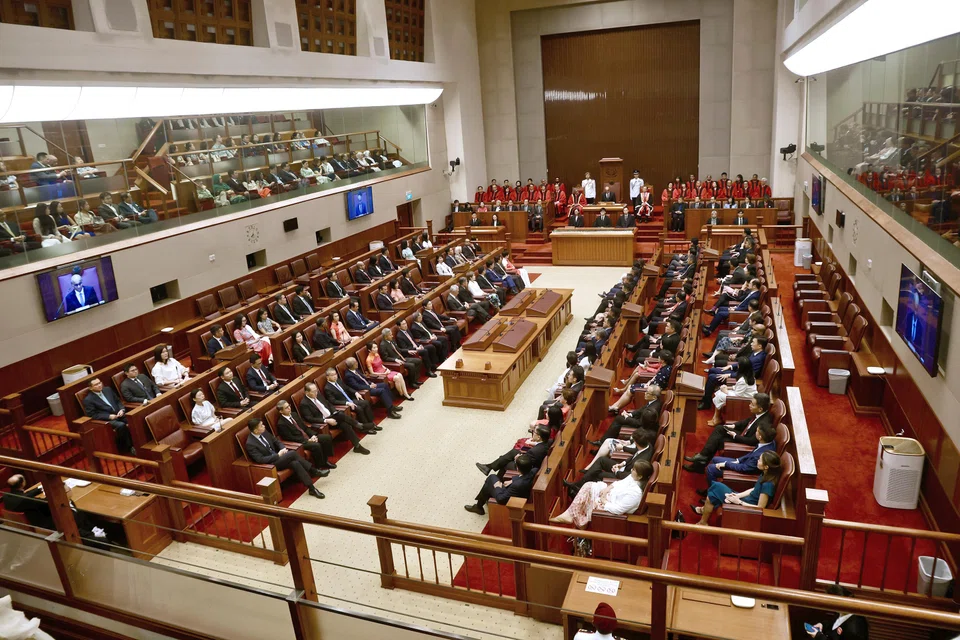
[SINGAPORE] This week, Singapore’s various ministries are revealing their plans for the new term of government – though many of the plans may not appear new.
At the opening of Parliament on Sep 5, President Tharman Shanmugaratnam delivered the traditional address in which Cabinet sets out its agenda for the next few years.
This week, government ministries are releasing their addenda to the President’s Address, adding details to the broad strokes of that speech.
The level of detail, however, remains modest. Several addenda are also devoted in large part to a recap of existing policies.
After an arguable lack of showstopping announcements in Aug 17’s National Day Rally, some pundits were looking forward to the President’s Address, the addenda, and the week-long Parliamentary debate that will begin on Sep 22.
If the first two days of addenda are anything to go by, anyone hoping for concrete policy news – the sort with timelines, numbers and factsheets – might continue to be disappointed.
But perhaps those are the wrong expectations to have. The ministries’ addenda are meant to set out plans for at least the first half of the new government term. Concrete policies will naturally be spread out across those two-odd years, instead of being frontloaded.
And while the addenda may not provide immediate specifics, simply knowing the indicative directions can be helpful.
Foreshadowing possibilities
The Ministry of Manpower’s (MOM) release on Tuesday (Sep 16), for instance, includes a line that may raise the hopes of talent-starved employers.
After noting that MOM will support Singaporeans to gain overseas expertise, Manpower Minister Tan See Leng added: “At the same time, we will refine our foreign workforce policies so that businesses can bring in talent that complements our Singaporean core, and ultimately create more jobs and opportunities for our people.”
This should provide reassurance that the government will facilitate talent flows. At the same time, expectations will be kept in check by the caveat that such talent must be complementary to local workers.
Similarly, the Prime Minister Office’s (PMO) addendum for the Monetary Authority of Singapore (MAS) states: “If cyclical economic conditions weaken unexpectedly during this period, MAS will ensure that the monetary policy response is timely and appropriate, while considering other supportive measures in conjunction with the financial sector.”
Monetary policy analysts, accustomed to close reading of any MAS statements, might take this as a signal that the central bank is prepared to make off-cycle – thus “timely” – adjustments if a sudden weakening calls for such action.
Meanwhile, the mention of “other supportive measures” may seem vague, but will likely be understood by its intended audience in the financial sector, suggesting a range of possibilities without pre-committing MAS to any specifics.
Granted, it is also possible to read too much into these releases. Take the PMO release on the National Security Coordination Secretariat, which gives examples of “key emerging, cross-cutting security risks” for which solutions must be developed.
If digital systems in an economic sector are compromised, this “could have security consequences on other sectors”, said Minister-in-charge of the secretariat K Shanmugam.
One might wonder – rightly or wrongly – if this foreshadows stricter digital regulation for major players in sectors with security implications, such as banking.
Still, even if such speculation turns out to be wrong, it will at least be in the right general direction. The ministries’ addenda may not yield exciting headlines now, but they lay the foundation for these in the future.