
Musk bids farewell to Washington – or has he?
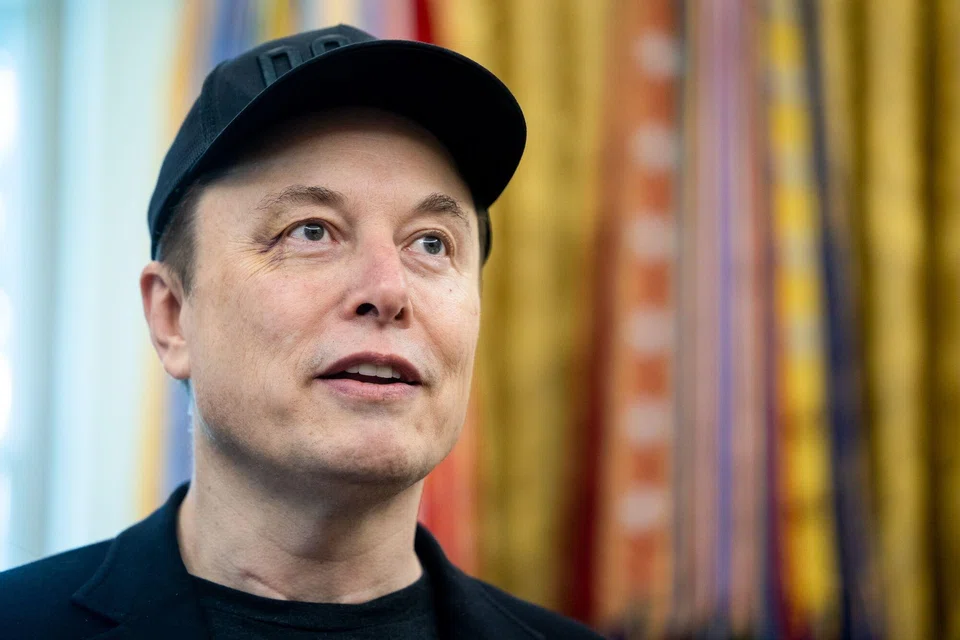
HE IS planning to land on Mars and establish a colony of humans there which sounds very fantastic. But that goal of Elon Musk’s might prove to actually be more realistic than his recent and brief expedition to Washington as part of an effort to change the way it operates.
The billionaire head of Tesla and SpaceX, who called himself President Donald Trump’s “first buddy”, is exiting the White House following a press conference he held with the president in the Oval Office on Friday (May 30).
“He’s my friend and he’s done a fantastic job,” President Trump said. “He didn’t need this and we find that the government’s a little nasty on occasion.” He said that the world’s richest man “delivered a colossal change in the old ways of doing business in Washington”.
In February, Musk appeared on stage at the Conservative Political Action Conference (CPAC) with a chainsaw, remarking “how easy” it was to “save billions of dollars sometimes in, in an hour”. “Yeah, like, it’s wild,” he added.
Indeed, over four months, Musk overturned huge government agencies by unleashing the Department of Government Efficiency (Doge).
Musk and his Doge team dismantled agencies such as the US Agency for International Development and the Consumer Financial Protection Bureau, leaving thousands of federal employees out of work.
As a special government employee, Musk’s term was limited to 130 days and ran out at the end of May.
“As my scheduled time as a Special Government Employee comes to an end, I would like to thank President @realDonaldTrump for the opportunity to reduce wasteful spending,” Musk wrote on his social media platform X.
Tens of thousands of federal workers took the offer made by Doge to quit and get months of paid leave or face the possibility of getting fired.
But Musk’s pledge to reduce the federal government budget by billions of dollars as part of an aggressive libertarian crusade ran into major obstacles, including the reality of non-discretionary spending programmes such as Social Security and Medicare.
Doge said that it has saved the government US$175 billion from a combination of various moves including asset sales, lease and grant cancellations, and workforce reductions.
But the consensus in Washington is that that number is inflated and, in any case, far short of the US$1 trillion, or even US$2 trillion, cost-cutting target that he had touted. Moreover, according to the Partnership for Public Service, Doge’s attacks on government personnel could cost the government up to US$135 billion this fiscal year.
In a way, Musk discovered that operating in the political sphere of Washington is very different from doing business in the free market, and he did end up spending too much time on politics. That caused him reputational damage, with the end result that his private companies have suffered.
“I think I probably did spend a bit too much time on politics,” Musk said in an interview last week with Ars Technica, adding: “It was just relative time allocation that probably was a little too high on the government side, and I’ve reduced that significantly in recent weeks.”
Bottom line – a disillusioned billionaire announced that he was leaving government behind, telling The Washington Post that “it sure is an uphill battle trying to improve things in DC”.
Moreover, Musk seemed to be distancing himself from President Trump and the Republicans after criticising the recent budget proposal approved by the House of Representatives, saying that it would add to the national debt.
“I was disappointed to see the massive spending bill, frankly, which increases the budget deficit, not just decreases it, and undermines the work that the Doge team is doing,” he told CBS News.
Much of Doge’s work will now shift to the White House Office of Management and Budget (OMB) which will seek to bolster tens of billions of dollars in savings in the current budget process. OMB director Russell Vought has worked together with Musk since 2024 in slashing the federal workforce and reducing spending.
Moreover, dozens of employees and associates of Musk have been appointed to roles in the federal government, which would make it likely that the billionaire and his companies will continue to have impact on the policymaking process.
Musk is expected to spend more time on the five companies he runs, including Tesla. The electric car’s company’s shares have suffered as sales plummeted in response to Musk’s controversial role in the Trump administration.
President Trump insisted during Friday’s press conference that Musk was “really not leaving” and that he would be “back and forth, and return to the White House from time to time”.
To which Musk responded, “certainly if there’s anything the president wants me to do, I’m at the president’s service”.
But freed from the constraints of being a government employee, expect Musk to express criticism of the Trump administration, as he did shortly before his press conference with the president, over its plans to cancel clean energy tax credits.



