

My Christmas Iberico ham scare is an omen
We fear something like another Covid-19 outbreak, but probably the next disease to hit the global economy will not infect humans
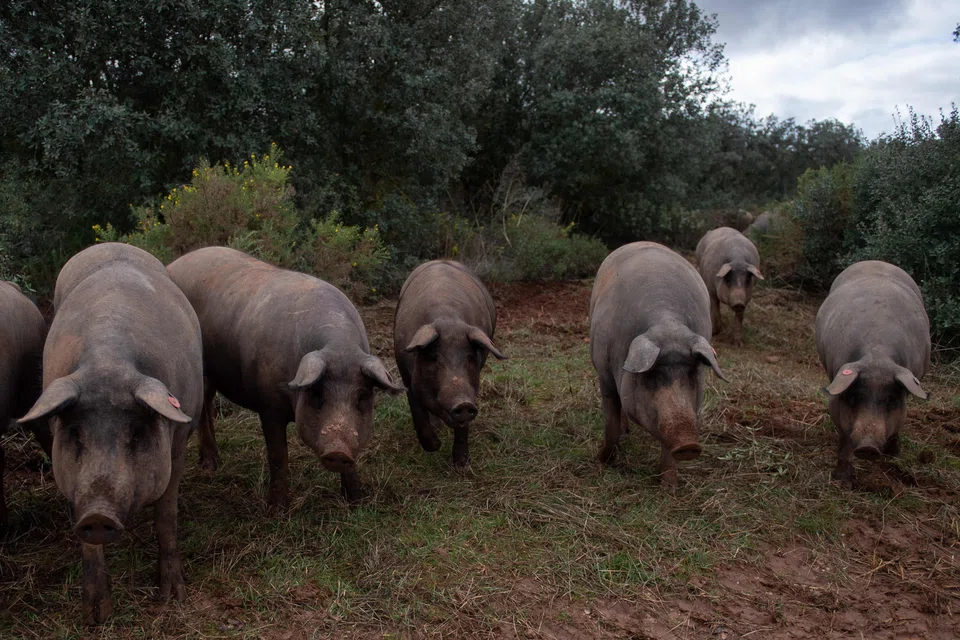
FOR a few days, I feared the worst: a Christmas without Iberico ham. In the run-up to the holiday, Spain, my country of birth, announced the first swine fever outbreak in more than 30 years. Within hours, the UK responded with a blanket ban on all Spanish pork meat imports.
Christmas is not Christmas for a Spanish family without a leg of jamon – think Thanksgiving without turkey. No bueno. Fortunately, I dodged the bullet: The Spain-UK restrictions have been relaxed. But many other countries, from the US to Japan, are maintaining the full prohibition.
My panic was, admittedly, a first-world problem. But it is a timely reminder that we are sleepwalking into the next pandemic. We fear something like another Covid-19 outbreak, but probably the next disease to hit the global economy will infect humans. Instead, it would be a virus that would kill a significant proportion of the domesticated animals we rely for meat, eggs, milk and other products.
We are badly prepared for such an outbreak. Yet, the warning signs are everywhere, from the rapid spread of swine fever – now affecting 50 nations – to major outbreaks of bird flu causing havoc in the egg and poultry industries of China and America, and foot-and-mouth disease and a parasite called screwworm crippling beef supply in Europe and Central America, respectively.
The increase in global meat prices, which in 2025 hit an all-time high, is closely linked to diseases.
For many veterinarians, international officials and commodity executives, a global outbreak – a panzootic – is more a question of when and how, rather than if. One statistic is particularly telling: Around 75 per cent of recent emerging infectious diseases are of animal origin.
The surge in egg prices in America to more than US$6 a dozen, up from about US$1.80 between 2010 and 2020 was, no pun intended, just an appetiser. What is potentially coming would be a lot worse. A century ago, for example the spread of the rinderpest virus killed 90 per cent of all cattle in Africa.
As with Covid, the economic consequences would be brutal, but this time focused on food shortages and surging prices rather than furloughing workers and restricting freedom of movement.
In a worst-case scenario, diets would have to change simply because to stop the plague the world would need to slaughter hundreds of millions of animals.
The problem is compounded by a series of trends that are reshaping our food consumption and agricultural supply chains beyond recognition.
No one enjoys picturing the infrastructure of how meat arrives at our dining tables; herding livestock, dealing with manure, trucking animals to slaughterhouses. But that is where all the important clues lie.
Meat consumption
The world’s diet has rapidly shifted to carnivore from vegetarian. On a per-capita basis, meat consumption nearly doubled from 1960 to 2025, reaching over 44 kg a year, according to data compiled by the Food and Agricultural Organization of the United Nations. The increase is exacerbated by a huge increase in global population.
As a result, the world consumed roughly 370 million tonnes of meat last year, up from about 70 million in 1960. And everything suggests consumption will increase further.
To put our new carnivorous appetite into perspective, we now consume as much beef, pork, poultry and other meat in a single decade as we did in the 30 years through the end of the 1980s.
In response to surging demand, the size of the land-based animal herd has expanded massively on the back of an often unappreciated fact: The bulk of the extra meat consumption comes from poultry. Because of the birds’ relatively small size, the rise in per-kilogram consumption translates into an outsized increase in the number of chickens bred – and killed – every year.
Last year, the world slaughtered more than 85 billion land-based animals for meat – a 1,000 per cent increase from 1960. The more animals, the larger the risk of diseases.
Risks are also increased by the spread of so-called factory animal farming, where thousands of animals living in close proximity create a petri dish for the expansion of diseases.
Moreover, factory farming typically creates regional clusters, with many businesses near each other, further increasing the risk of the rapid spread of viruses.
And gone are the years when meat was largely eaten within national boundaries. Today, meat products, particularly the processed variety, travel internationally – and so do diseases. Take swine flu: It jumped from Africa, where it is endemic, into the Caucasus in 2007, probably via food leftovers in a ship. From there, it journeyed across Eastern and Western Europe.
The geography of meat production has also changed. China overtook the US as the world’s top producer in 1990; despite periodic supply shocks due to diseases, its output has continued growing.
Today, China supplies more meat that the other top three nations – the US, Russia and India – combined. But China also appears to be a weak link in the global disease chain, with massive animal epidemics in the last few years. In 2018 to 2019, a large swine fever epidemic killed hundred of millions of pigs there, probably reducing economic activity by nearly a percentage point.
Animal health
Despite the warning signs, animal health remains largely an afterthought. Few governments are spending enough on treatment, let alone prevention. Everywhere, animal health laboratories are underfunded, leading to a string of accidents that have allowed pathogens to escape. Politics plays a role: Cows, sheep, pigs and chickens do not get to vote.
The US has slashed its development aid devoted to animal disease prevention in Africa, Asia and Latin America. Earlier this year, the top food official at the United Nations warned the cuts were destroying what “has taken decades to build”.
Sadly, the warning is falling on deaf ears. Ironically, the only people paying attention seem to be those promoting vegetarian diets and fighting against animal cruelty.
But it is carnivores like me – and perhaps you – that have the most at stake. Let’s hope we start paying attention before the first panzootic hits our beloved festive food. BLOOMBERG
TRENDING NOW

Britain’s mansion tax shows the difficulty of targeting wealth

Once staunchly pro-China, Malaysian Chinese businesses are now distancing themselves from Beijing

The only common thing in S-E Asia is that we all eat rice: Cisco’s Asean president

Singapore data centre operator DayOne opts for US IPO at likely US$20 billion valuation

