The new Middle East: Emergence of the coalition to contain Iran
FOR years, Iran has challenged Israel as well as other pro-American powers in the Middle East through an axis of proxies, which included the Hamas group ruling the Gaza Strip that attacked Israel on Oct 7 last year.
In addition, Iran activated Hizbollah, the Shi’ite guerrilla group in Lebanon that has been launching missile attacks against Israel since last October, and the Houthi group in Yemen that has been attacking Western vessels in the Red Sea as well as Israeli civilian and military targets.
In a way, Iran was able to shift the balance of power in the Middle East in its favour through indirect attacks on Israel and US forces by using its proxies and contending that it wasn’t responsible for those attacks.
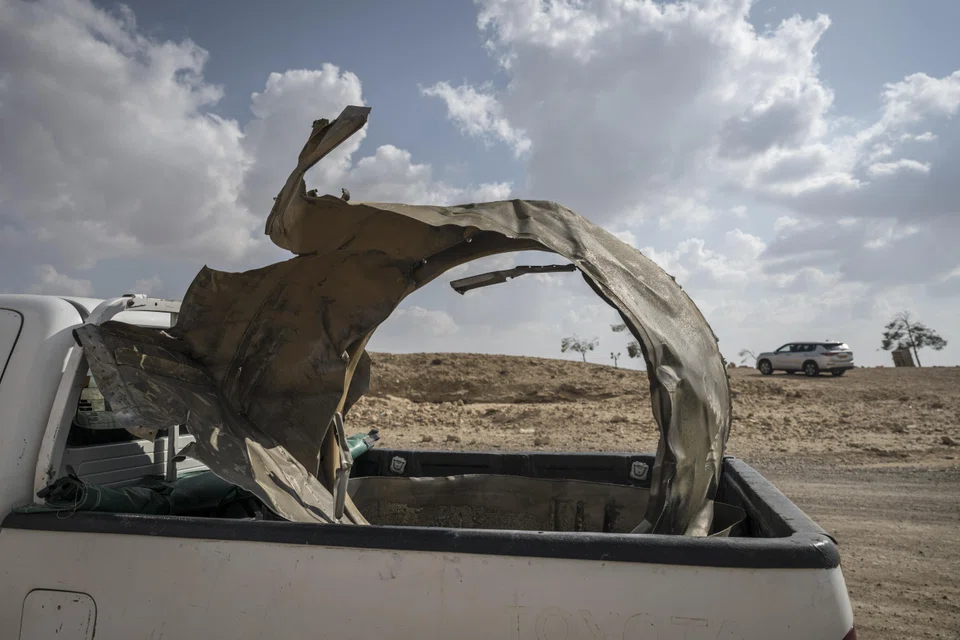
But last Saturday (Apr 13), the Iranians retaliated directly against Israel for the killing of seven Islamic Revolutionary Guard Corps officers in Damascus, Syria, with an onslaught of more than 170 explosive-laden drones, around 120 ballistic missiles and about 30 cruise missiles, aimed at restoring its credibility of its deterrence after Israel attacked its forces directly.
That move represents a moment of great strategic change in the Middle East, at a time when the war between Israel and Hamas isn’t over. It raises the spectre of the “shadow war” through proxies between Iran and Israel turning into a direct military confrontation that could ignite a broader Middle East war into which the US and perhaps other global powers may be drawn.
Most of the Iranian drones and missiles were intercepted, reflecting the paltry results of the Iranian attacks; half of the ballistic missiles that Iran launched either failed to launch or fell from the sky before reaching their targets.
That success was due to a combination of Israel’s sophisticated air-defence system and critical assistance provided by the United States and other Western and Arab partners.
Hence, American, British and Jordanian warplanes played an important role in downing drones. The result was that most of the Iranian drones and missiles were destroyed before they even reached Israeli airspace.
That in turn demonstrated the emergence of the new strategic reality resulting from Iran’s first direct military attack on Israeli territory since the Islamic revolution of 1979.
The Israelis are now weighing their options for responses to the Iranian attack.
Not responding at all could erode Israel’s deterrence, making the Jewish state more vulnerable to future Iranian salvos. But, striking back on Iranian territory could trigger a more devastating retaliation by Iran.
But Israel’s interceptors, including the Arrow and Patriot systems used against ballistic missiles, are limited in quantity while Iran has used up only a small fraction of its vast arsenal of drones and missiles. Also, its Lebanese proxy force, the Hizbollah militia, has thousands of missiles and rockets.
The commander of Iran’s Islamic Revolutionary Guard Corps, Hossein Salami, portrayed the Saturday barrage as creating a new strategic equation: Every Israeli attack on Iranian interests in the region will be met with a direct Iranian attack on Israel, challenging Israel with a red line that it would find difficult to accept.
But from a wider regional perspective, Israel will now not be operating alone. It has become part of a coalition that includes other pro-American Arab powers, including Jordan, Saudi Arabia and the United Arab Emirates.
After all, Jordan and other partners helped Israel fight off Iranian missiles and drones on Saturday; and that despite the anger among their populations over the killing of tens of thousands of Palestinians during Israel’s military operations in Gaza.
Hence, America’s regional partners stepped up despite significant tensions between them and Israel, and between them and the US over the Israeli military operation in Gaza.
The role played by these Arab partners along with the US in providing intelligence, opening their airspace and, in the case of Jordan, actually downing Iranian weapons, is a striking development that could reshape the entire balance of power in the Middle East.
Indeed, that fits very much with America’s strategic goals in the region. Even before Oct 7, the Americans had been promoting a plan to normalise diplomatic relations between Israel and Saudi Arabia, building up on the Abraham Accords under which the Israelis had established ties with several Arab-Sunni states.
The Saudis and other Arab-Sunni states share Israeli concerns over the threats posed by Shi’ite Iran to the balance of power in the region, and in particular, its efforts to acquire nuclear military power.
The American plan envisions Israeli-Saudi detente, which would combine Israel’s military and technological power with Saudi Arabia’s economic might, as part of an emerging coalition of pro-American Middle Eastern states aimed at containing Iran’s regional ambitions.
The American strategy has global implications. Russia and China have both been strengthening economic and diplomatic ties with Teheran and expressed support to its regional proxy, Hamas, during the Gaza war.
From that perspective, Iran’s ability to challenge the power of the US and its regional allies could play into the hands of Moscow and Beijing who, like Iran, are keen to erode the foundations of the existing international order backed by the US and its Western allies.
The plan for promoting Saudi-Israeli detente has been put on hold with the onset of the Gaza war, with the Saudis making it clear that they won’t take steps to establish ties with Israel so long as Israeli forces continue to engage in battle in Gaza.
Moreover, the Saudis also seek to tie any detente with Israel to a long-term plan to establish peace between the Israelis and the Palestinians, and create an independent Palestinian state. The administration of US President Joe Biden supports the Saudis over the issue.
But Israel’s right-wing government led by Prime Minister Benjamin Netanyahu is opposed to the idea of an independent Palestinian state aka a “two-state solution”.
The Americans have also urged Netanyahu not to retaliate against the Iranian attacks by striking at Iranian territory, and insist that Israel’s long-term interests would be served by thinking strategically and encouraging the formation of an anti-Iran coalition that would contain Iran, instead of taking steps that could trigger a regional war.