

Nike, Lululemon, Shein woes: A silver lining in Singapore’s lack of listed consumer brands
The local bourse doesn’t have exciting, paradigm-shifting brand names. It has boring – but solid – businesses

[SINGAPORE] If you listen closely, you can almost hear the global retail hype deflating.
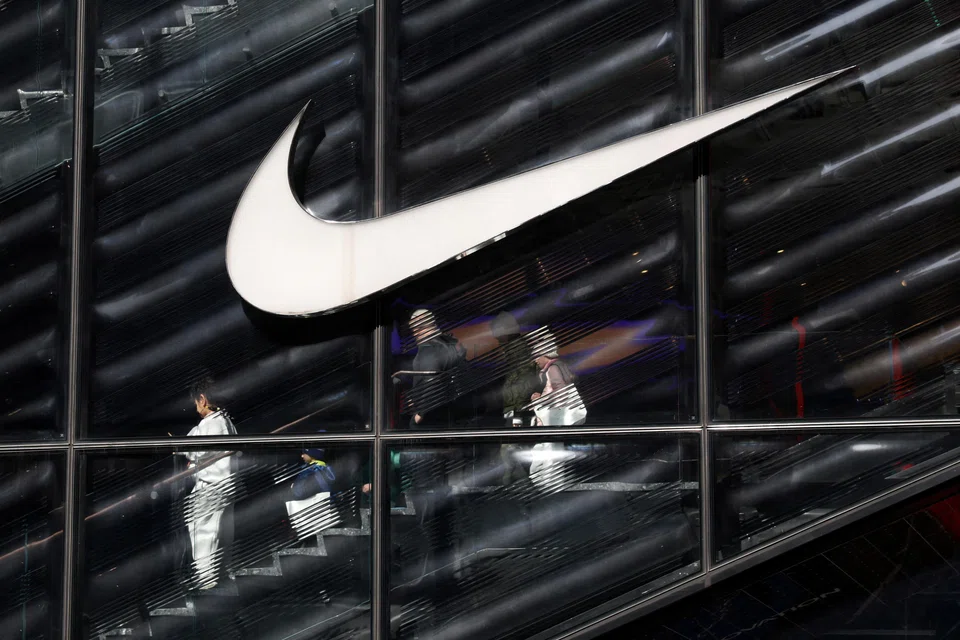
Nike will be axed from the S&P 100 index in September 2026, after nearly 18 years in it. The stock has collapsed nearly 78 per cent from its November 2021 peak, shedding more than US$200 billion in market value.
Meanwhile, Lululemon is trading at an eight-year low and roughly 80 per cent off its December 2023 high. For its second quarter ended Aug 2, comparable sales sank 9 per cent, and that for leggings – the product that built the company – plummeted 20 per cent.
Over in Hong Kong, Shein listed on Sep 1 at a valuation just above US$26 billion, against the US$98.2 billion private investors marked it at four years ago.
The shares fell as much as 10 per cent on debut before a late rally left them nearly flat. But the stock now changes hands at close to 20 per cent below the offer price, putting the company’s market value closer to US$21 billion.
Three of the most recognisable consumer brands in the world have each surrendered about four-fifths of their peak value.
But what does a legacy American sneaker giant have in common with a yoga-wear label and a Chinese-founded fast-fashion disruptor?
All three treated brand equity as a permanent asset.
In reality, a brand is closer to a short lease than a freehold title. You pay for it every season in product design, marketing spend and cultural relevance. The moment you stop paying, someone else takes the unit.
Nike stopped paying. It assumed shoppers would buy retro sneakers indefinitely, and also cut loose its wholesale partners and forced its customers onto its proprietary apps. Rivals Hoka and On walked straight into the empty shopfront.
Lululemon is a different case, because there is not much wrong with the business. Operating margins sit near 19 per cent and the company still generates cash.
What collapsed was not the earnings itself, but the multiple: Investors stopped paying a premium for the belief that the leggings would always feel worth it. Coincidentally, its new chief executive, who began her tenure on Sep 8 (Tue), came over from Nike.
Shein’s rent came due even faster. Revenue growth slid from 20.7 per cent in 2024 to 8 per cent last year. In the first quarter of 2026, growth stalled at 1.1 per cent.
US sales, once the driving force, fell 14.3 per cent and now account for under a quarter of the business. Together with tariffs and a US$328 million fair-value charge on convertible redeemable preferred shares, Shein reported a US$99 million loss for the Q1 ended March, reversing from US$395 million in net income the year before.
Some investors like to grumble that the Singapore stock market is “boring”, and that the real money is made in New York and Hong Kong.
Fair enough. But consider what this boring market was spared.
Singapore has dodged the brand trap – and it is only because there is almost nothing left in this market to trap.
Singapore’s ‘boring’ consumer play
Run through the local consumer names that once traded on the Singapore Exchange. BreadTalk went private in 2020. Koufu followed. Challenger, Eu Yan Sang and Osim are all gone.
A few remain, such as Delfi, Food Empire and Thai Beverage.
The consumer brands built in Singapore over the past decade, including Charles & Keith, Secretlab and Love Bonito, are not listed in the local bourse and show no indication that they will do so any time soon.
What sits under the retail label on our exchange is not retail in the sense global investors understand it. It is a mix of grocers, franchisees and landlords.
Take Sheng Siong Group or DFI Retail Group. Sheng Siong sells pork, vegetables and toilet paper. DFI, having offloaded its Cold Storage and Giant supermarkets to Malaysia’s Macrovalue in 2025, now runs Guardian pharmacies and 7-Eleven shops.
Neither is selling desire. You will never see a pitch deck from them promising paradigm-shifting, AI-driven retail synergy.
Instead, they sell shelf space, opening hours and a spot near the MRT. Their managements keep it simple by holding costs down and collecting the cash.
The latest Forbes rich list notes that the family fortune of Lim Hock Chee, who co-founded Sheng Siong and runs it, has climbed 46 per cent to US$2.7 billion, lifted by a 54 per cent rise in the shares.
Then consider the suburban mall trusts. Frasers Centrepoint Trust (FCT) owns the places Singaporeans actually visit – Causeway Point, Northpoint City, Waterway Point.
These are not quite the Orchard Road shopfronts that tourists photograph, but people still need dinner, groceries and enrichment classes for their children.
Sheng Siong, DFI and FCT are sound businesses; they are also the residue of a market that lost a number of its consumer brands and struggled to attract new ones.
But, for now, boring is working for Singapore – and Nike, Lululemon and Shein show what the alternative costs.
TRENDING NOW
Things to know about DBS’ incoming chairman Anthony Lim
DBS eyes prime brokerage business as Q3 profit falls 5% on weaker trading income

Royal Group and Sunset Hospitality abandon plans to open Casa Mett hotel off Orchard Road

George Yeo adds 100,000 Wilmar shares at S$2.97 apiece, taking stake to over 1 million shares

