Nikki Haley’s rise in the primaries
But the former South Carolina governor’s chances of beating Trump are slim
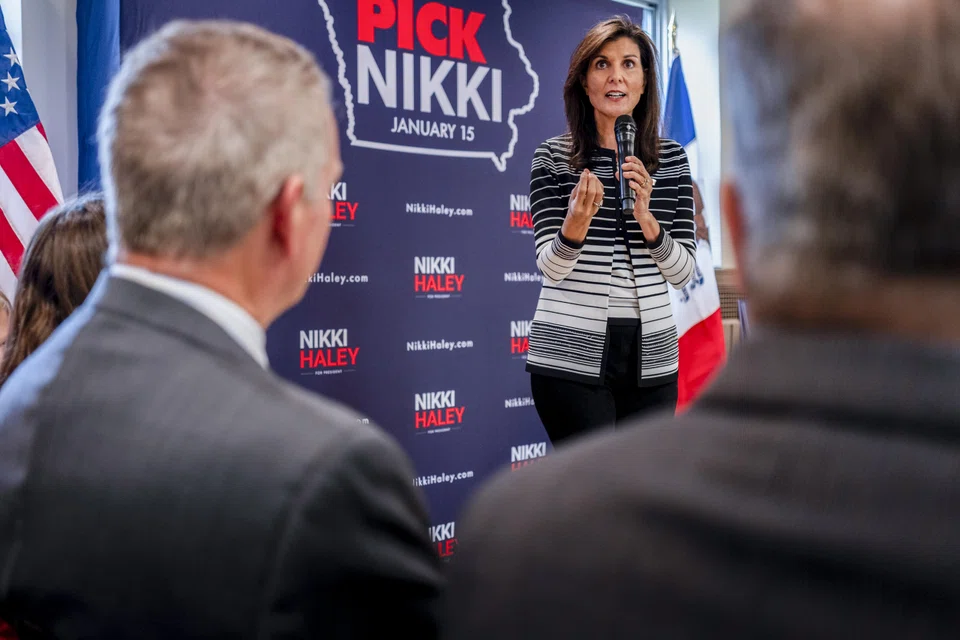
IN A normal presidential election season, that former South Carolina governor Nikki Haley seems to be gaining momentum in the Republican primaries would have been considered very big news, perhaps even a gamechanger.
Haley, 51, a daughter of immigrants from Punjab, India, who had also served as America’s United Nations ambassador, has gained enough support in the opinion polls and is now on the verge of surpassing Florida Governor Ron DeSantis as former president Donald Trump’s main adversary in the Republican presidential race.
Haley is now running neck-and-neck with DeSantis in Iowa where the first primary vote will take place in six weeks. And she is ahead of DeSantis in New Hampshire and South Carolina, but is still 50 percentage points behind Trump in the national polls.
The good news for Haley isn’t only that she has momentum, but also that she has the resources to continue fighting for the Republican party’s presidential nomination.
In a way, the former governor and ambassador has emerged as the Republican establishment’s favourite candidate, enjoying the support of a network of rich donors, including the Koch brothers. They are hoping that the former president would disappear from the political map at the last moment.
And the opinion polls suggest that Haley may be in a stronger position to beat Democratic President Joe Biden in the general election, especially among moderate suburban voters.
From that perspective, Haley has emerged as the ultimate centrist candidate, popular not only among moderate “Never Trump” Republican voters but also among moderate Democratic voters who have been concerned about the growing power of the left-leaning progressive wing in their party.
That means that in an imaginary presidential race against President Biden, Haley could sweep to victory by mobilising the support of Republican and Democratic voters as well as Independents in key states such as Pennsylvania, Michigan, Nevada, Arizona, and Georgia, which President Biden had won by a narrow margin in the last election.
Although Haley had backed Trump presidential nomination in 2016 and served as UN ambassador under him, she has tried to distance herself in recent years from the former president, criticising him for his personal conduct in and out of office, as well as for his populist agenda.
“Reaganite” principles
Indeed, Haley can be seen as the leading Republican public figure who subscribes to the traditional “Reaganite” principles, including internationalist foreign policy and free trade, and is opposed to the nationalist, if not xenophobic, Trumpist agenda.
More specifically, Ms Haley has stood up to the members of a growing isolationist wing of the Republican Party that have opposed President Biden’s strong military and economic backing for Ukraine and have advocated improving US relations with President Vladimir Putin’s Russia. Most recently, these isolationists have tried to torpedo in Congress the White House’s proposal to increase aid to Kyiv.
Moreover, Haley is probably seen as one of the leading pro-Israeli politicians in Washington, expressing strong support for the Jewish state, in general, and in the context with its war with Hamas, in particular.
The bad news for Haley is that her Reaganite positions and ties to the Republican establishment make it difficult for her to penetrate Trump’s electoral base of blue-collar workers with no college education. The latter have gravitated to the Trumpist populist movement and its isolationist and protectionist worldview.
It’s not surprising therefore that public opinion polls indicate that the ex-president is probably going to win his party’s presidential nomination and, perhaps more surprising, is in a position to beat Biden in some states, including in Georgia and Arizona, in the general election.
Yet some political observers would caution not to play down Haley’s chances of winning the Republican nomination, especially if she wins the first primaries in Iowa, New Hampshire and South Carolina.
That could provide her with the three “Ms”– momentum, media, and money – forcing DeSantis to drop from the race, and putting the former South Carolina governor in a position to start amassing convention delegates. She then could challenge Trump in states such as New York and California where the party’s establishment exerts more influence.
But, again, that could well happen in a normal presidential election year – and the one in which Trump is running is clearly not one of them.