No peace from this ‘peacemaker’
Under US president Donald Trump, wars continue to rage in Ukraine and Gaza
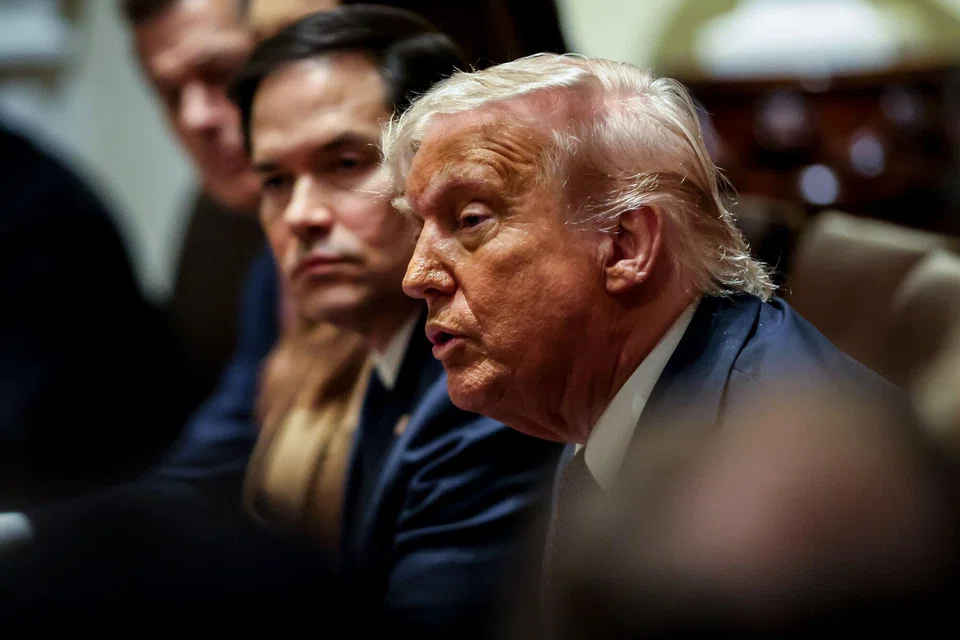
DURING his inauguration address in January 2025, Donald Trump told audience members he would like to be remembered as a “peacemaker” president. In fact, he declared months earlier on the campaign trail that he would settle the war in Ukraine within 24 hours upon becoming president.
President Trump has also pledged to bring an end to the Israel-Hamas war in Gaza and has even proposed transforming the area into the “Riviera of the Middle East”, along with a commitment to normalise the relationship between Saudi Arabia and Israel. He has also raised the possibility of reaching a new nuclear deal with Iran.
In short, if all that come to pass, Trump would be in a position to win the Nobel Peace Prize. Or so he hopes.
Meanwhile, wars continue to rage in both Ukraine and Gaza. In Europe, both sides – Russia and Ukraine – have been carrying out hugely destructive attacks on each other’s infrastructure.
Moscow has attempted to plunge Ukraine’s population into cold and darkness by targeting its electricity system, while Kyiv has become gradually more successful in its long-range drone strikes that have struck Russian oil facilities critical to its war effort.
At the same time, Israeli forces are pushing back into Gaza after a two-month ceasefire with Hamas, and its leaders are considering plans for a new ground campaign that could include a military occupation of the entire enclave for months or more.
Yet President Trump continues to press ahead with his peace-making endeavours, insisting that his reputation as a deal-maker and his pursuit of transactional diplomacy would help lead eventually to agreements on all these and other fronts, including taking over the Panama Canal, purchasing Greenland, and turning Canada into the 51st state of the United States.
But things haven’t been working exactly according to Trump’s plans. His proposal for a 30-day ceasefire between Ukraine and Russia was rejected by President Vladimir Putin while Arab allies dismissed his plan to pacify Gaza and resettle its inhabitants. And Iran has yet to respond to the US leader’s diplomatic overtures.
Russia and Ukraine agreed last week to temporarily halt strikes on energy infrastructures but couldn’t reach an accord on how and when to implement the partial truce.
The US, led by Steve Witkoff, President Trump’s special envoy to the Middle East, is currently holding separate talks with Russia and Ukraine in Riyadh, Saudi Arabia on reaching a ceasefire in Ukraine but the road to such an agreement seems to be full of obstacles.
The Russians still insist on maximalist positions, including maintaining territorial control of part of Ukraine and preventing the country from joining Nato. Ukraine has rejected the Russians’ demands and argues that Moscow is stalling for time.
Russia’s position regarding the conflict remains the same: It wants Ukraine to capitulate, recognise Russia’s territorial gains in Ukraine, declare neutrality and shrink its military.
That President Trump seems to have sided with Moscow and even threatened to cut military ties with Kyiv unless it accepts Moscow’s demands makes it less likely that the Russians are going to agree to make a deal that would be acceptable to Ukraine. They want the Ukrainians to surrender and seem to believe that Washington shares their goals.
The point is that Russia isn’t going to change its posture now that President Trump has reversed the earlier, long-held American position of assisting Ukraine as part of an effort to pressure Moscow to make concessions.
The result is that both sides believe they can continue the war as the chances for bridging the differences between them are diminishing.
Indeed, the bottom line is that the Trump administration has failed to build the diplomatic foundations for a Ukraine deal.
If anything, its embrace of the Russian positions makes it less likely that any stable deal – as opposed perhaps to a fragile ceasefire – could be reached anytime soon. Peacemaking it is not.
In the Middle East, President Trump’s support for Israel and unequivocal condemnation of Hamas provided Israeli Prime Minister Benjamin Netanyahu with a green light to invade Gaza.
Meanwhile, after Yemen’s Houthis renewed their missile attacks on Israel and on American sites, President Trump – who has pledged not to draw the US into another military quagmire in the Middle East – has ordered unprecedented large attacks on the bases of the Houthi tribes in Yemen.
The move is unlikely to topple the Houthi regime or force it to negotiate over an end to their attacks; if anything, it is bound to lead to new military escalations and more American bombing.
It is quite possible that the bombing of the Houthis’ sites is supposed to convey a message to the Houthis’ patron, Iran.
“Every shot fired by the Houthis will be looked upon from this point forward, as being a shot fired from the weapons and leadership of IRAN,” President Trump warned on Truth Social. “IRAN will be held responsible, and suffer the consequences, and those consequences will be dire!”
According to reports, President Trump has given the Iranian leadership two months to reach a new nuclear deal and has sent a letter to Iran’s supreme leader Ali Khamenei inviting Tehran to negotiate or else face the consequences.
Will Trump attack Iran’s nuclear sites or give Israel a green light to do so, if Tehran rejects its overtures, and get the US engaged in a new costly war in the Middle East?
And what will happen to the plans to normalise the relationship between Riyadh and Jerusalem?
It’s doubtful that the Saudis would consider a diplomatic detente with the Jewish State at a time when Israel is attacking Gaza and killing thousands of Palestinians there.
And in any case, Saudi Arabia’s Crown Prince Mohammed bin Salman has made it clear that a diplomatic deal with Jerusalem would take place only if the Israeli government agrees to commit itself to the establishment of an independent Palestinian state side-by-side with Israel – a demand that the current Israeli government has rejected.
It already seems clear: President Trump is going to learn the hard way that his business-like transactional approach to the Middle East – or, for that matter, the war in Ukraine – ignores the reality of generational conflicts; the long history of strife and discord that reflects deep historical, ethnic and religious roots that cannot be resolved through instant deal-making. Winning the Nobel Peace Prize, in any case, would take much more than that.