

Nuclear power partnerships in Asean: Worth studying despite hurdles
With the success of Slovenia and Croatia, countries here cannot ignore the potential benefits

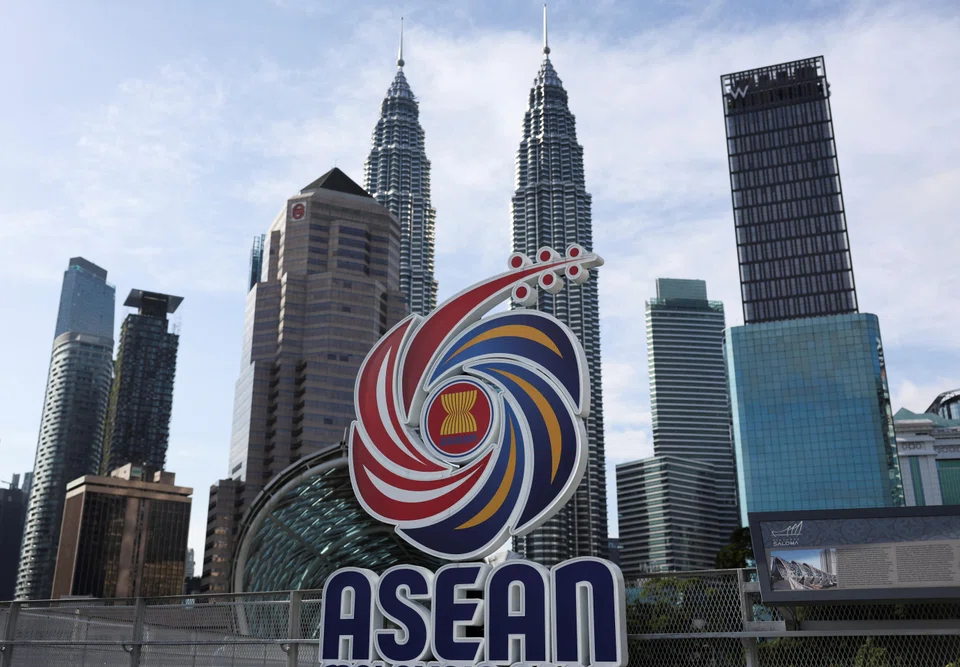
[SINGAPORE] Interest in nuclear power has surged across South-east Asia, with countries eyeing a low-carbon alternative to fossil fuels that is more consistent than solar or wind power. As Singapore and its neighbours deepen their exploration, joint nuclear power projects and regional trade could also be worth examining.
This possibility was raised by the director-general of the United Nations’ nuclear watchdog on Friday (Jul 25). Rafael Grossi of the International Atomic Energy Agency (IAEA) not only highlighted Singapore as a “perfect example” of a country that needs nuclear power, but suggested that projects could involve regional partnerships.
“My personal impression is that within a few years, you will see your first nuclear power (project)... perhaps in a wider sense, in combination or cooperation with your Asean neighbors,” he said at a dialogue while visiting the Republic.
Singapore has stepped up its exploration of nuclear power in tandem with its neighbours. Last year, the Republic inked a 30-year deal with the US to study advanced nuclear technologies. This includes exploring the use of small modular reactors (SMRs), which can be as small as a three-storey building and suit land-scarce Singapore.
Our neighbours are likewise racing to explore nuclear energy. The Philippines aims to have its first nuclear power plant by 2032, decades after a mothballed attempt in the 1980s. Indonesia wants to build its first nuclear power plant by 2034. Malaysia recently decided that nuclear power is “one of the options” for energy post-2035.
At the same time, plans for regional energy trade – via the Asean power grid – are moving forward. Singapore wants to import 6 gigawatts (GW) of low-carbon electricity by 2035, and has issued conditional licences and approvals for projects in Indonesia, Vietnam, Cambodia and Australia. An expansion of a separate energy trade deal – involving Laos, Thailand, Malaysia and Singapore – is also in the works.
Similar regional deals for nuclear power are not inconceivable. As Grossi noted, Croatia and Slovenia have successfully pulled off such a partnership. Both countries co-own the Krsko nuclear power plant in Slovenia, which started operations in 1983. The plant provides 16 per cent of Croatia’s energy needs and a fifth of Slovenia’s annually.
That said, geopolitics could certainly be a significant hurdle for collaboration on nuclear power to take off. Thailand and Cambodia recently clashed at the border. South-east Asian countries also have to navigate US-China tensions. In such a volatile environment, countries may be more invested in their domestic energy security than on interdependence.
The need for regulatory frameworks will be another hurdle to clear. Having nuclear power in Asean would require countries to set clear base rules to ensure safety and the non-proliferation of weapons.
As one observer previously told BT: “If it’s left to individual governments to set standards, you run the (risk) that one country has a much higher standard than another, but they are in close proximity to each other... If one country is going to place its nuclear reactor just at the border of another country, imagine how (the other country) will feel.”
The road to any possible consideration of nuclear power in the Asean power grid will certainly be a long and complex one. But the potential benefits – with a baseload source of clean electricity that boosts the region’s resilience – are too large to ignore.
TRENDING NOW
Singapore identifies 7 firms responsible for haze fires, notices issued urging action: Grace Fu

Could stablecoins be the future of money?

Singapore should prepare for prolonged haze until November, says Grace Fu

High Court rules against Julius Baer’s Singapore trust arm in US$50 million family trust dispute

