Nvidia was right to bring back Jensen Huang, says venture capitalist Sarah Guo
He is the key to stopping AI from becoming the preserve of a few, argues the venture capitalist
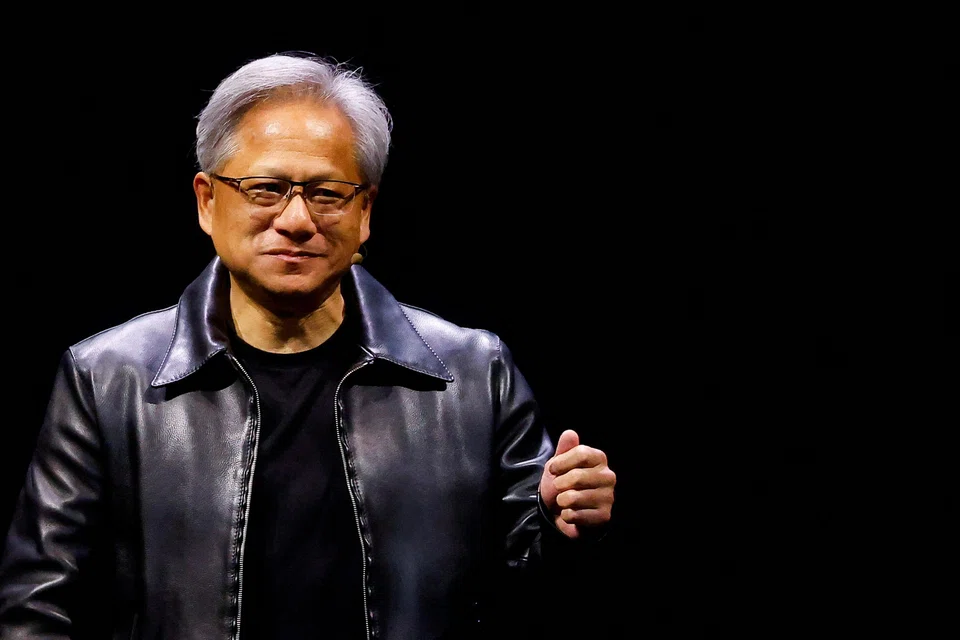
FEW boards have had a fortnight like Nvidia’s.
Days after Jensen Huang admitted to an affair with an executive at Megaspeed, an Nvidia customer that American officials suspect of smuggling chips to China, its directors, under fierce political and media pressure, accepted his resignation and ruled out his return before the facts were in.
They were right to reverse course. Huang has been the single most important force behind the democratisation of frontier intelligence, and will now continue to be.
There are three reasons to want him back. The first is his record of betting on important markets early and with conviction. I first met Huang in 2013, in a dingy conference room, when Nvidia was worth less than US$10 billion.
I was a junior investment banker, and Starboard Value, an activist hedge fund, was pressing Nvidia to return more cash to shareholders. He heard the activists out respectfully, but was struggling to explain why he should continue investing in his own business.
CUDA, software that lets Nvidia’s graphics chips do general computing, had long looked like an expensive indulgence. Then, researchers in labs founded by Andrew Ng and Geoffrey Hinton, two academics, found that Nvidia’s gaming chips could speed up artificial intelligence research many times over.
Huang diverted people and money from gaming to pursue what he called a “zero-billion-dollar market” – one that doesn’t exist yet – in AI. In 2016, he hand-delivered the DGX-1, an AI supercomputer, to OpenAI, then a young non-profit. The big orders came years later.
Huang still hunts for such markets in person, and still makes these bets. In 2025, I watched him hand out chocolate-chip cookies while he and his managers asked early stage founders what Nvidia’s products lack. Small companies get e-mail replies within minutes.
The second reason is credibility. Huang has been right often enough that people take big risks on his word. He can ask normally conservative partners such as TSMC, a giant Taiwanese chipmaker, to build capacity years before demand appears.
An able successor might see the opportunity and still not gather support. A board can appoint a new chief executive. It cannot transfer earned credibility.
The third and most important reason is open models, which anyone can download, adapt and run – and which Nvidia specialises in. Open source is a classically liberal idea, and politicians on both left and right should want more of it.
AI cannot be only for those with enormous resources, nor should a few companies decide what is worth spending intelligence on. Open models let a hospital keep patient data in-house, and a small business build without asking a supplier’s permission.
Without them, the economy would rent its intelligence from a handful of model-makers, however brilliant, and that much concentrated power should worry anyone.
Governments that want control over their own AI need open models too, but today the best of those open models are Chinese. America’s are still a step behind.
A successor at Nvidia’s helm would inherit the company’s commercial interest in open models, but might still hesitate at the breathtaking scale of investment and breakneck pace of development.
Under Huang, Nvidia has trained its own open models, has backed many outside open-model developers and plans to spend about US$26 billion on them over five years.
Openness should not be a free-for-all, and so Nvidia is also making tools to test models and add safeguards. But rules should govern how powerful models are distributed and who may use them, not who built them.
While Huang was away, founders I spoke to feared they had lost a powerful ally, yet even then he urged us to keep fighting for open models.
None of this excuses his conduct, which was a serious failure of judgment. Questions about conflicts of interest, disclosure and the treatment of employees deserve independent investigation, whatever his commercial achievements.
Critics of Huang’s reinstatement raise several objections. One is that the board agreed to have him back before its investigation had finished. But the initial decision was hasty. The board now says, after input from senior American officials, that his return poses no national-security risk.
No administration’s word should settle that. He is set to testify before a Senate committee next week, and should expect hard questions on export controls. If the board were to learn that Huang acted knowingly against American interests, he should of course again go.
Another objection is that the board bowed to campaigners like me. I would put it differently: it changed its mind as it learned more, which is what boards are for, provided the safeguards are real.
Independent directors now oversee national-security and export-control risks, and a new compliance chief will report to them. Directors must also protect employees who speak up, and act on the investigation’s findings.
The loudest objection, made by The Economist among others, is that no one should be irreplaceable, and a company ought to be stronger than its founder.
Eventually it should be, and Nvidia should plan its succession now. But it is unreasonable to force a succession in the name of planning one. Some people really are exceptional, and Huang is one.
That does not put him above the rules. In our conversations he has been deeply sorry, plainly in pain and resolved to do better. I believe he can accept closer oversight and shoulder a heavier responsibility.
Nvidia’s board was right to bring him back, and would be right to watch him closely. He is spending Nvidia’s money and his influence not only to press America’s lead in AI hardware, but to stop AI from becoming the preserve of a few.
If Huang fails, a few companies in America could build the frontier models, while much of the world builds on Chinese ones. ©2026 The Economist Newspaper Limited. All rights reserved
The writer is an American investor. She founded Conviction, a venture-capital firm.