

OCBC chief Tan Teck Long’s new strategy is a masterstroke, but execution risks abound
While his ‘Next Frontier’ plan looks good on paper, it must survive contact with operational reality

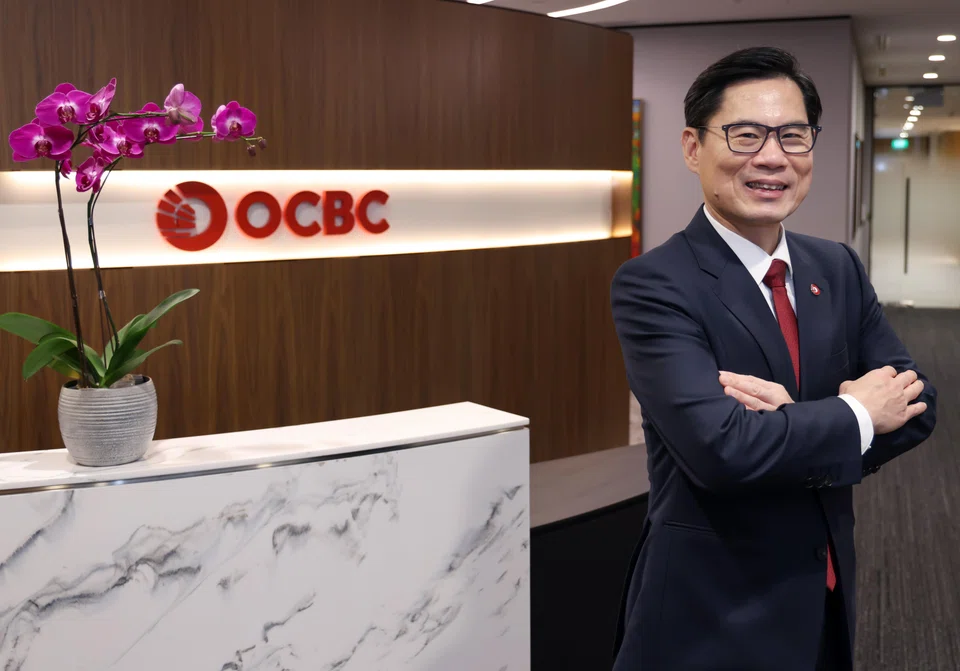
[SINGAPORE] With the tailwinds of peak interest rates decisively fading, the maiden full-year results briefing last week for OCBC’s new group chief executive officer Tan Teck Long was less about the rearview mirror and more about setting the cadence for his tenure.
The headline numbers for FY2025 were certainly respectable. Despite a 2 per cent dip in full-year net profit to S$7.42 billion, total income hit a record S$14.6 billion – supporting a 2 per cent rise in profit before tax to a new high of S$9.12 billion.
But Tan, who formally succeeded former chief Helen Wong at the start of this year, needed a compelling narrative to convince the market that Singapore’s second-largest bank can find its next engine of growth.
Enter his freshly minted corporate strategy, “The Next Frontier” – a strategic framework that has all the makings of a masterstroke.
By pivoting deliberately towards South-east Asia and aggressively doubling down on a “whole-of-wealth” continuum, OCBC is leaning into its most formidable, yet historically underutilised, structural advantage: owning the entire wealth manufacturing and distribution chain.
For years, one critique of OCBC has been that its powerful individual engines – including private banking arm Bank of Singapore (BOS) and insurance unit Great Eastern Holdings (GEH) – often operated as distinct silos rather than a synchronised fleet.
The Next Frontier is a mandate to finally bridge those gaps. And we did not have to wait long to see this integration in action.
Great Eastern’s wealth pivot
The debut of Great Eastern Private this week serves as the first major proof of concept for Tan’s unified vision.
The insurer on Tuesday (Mar 3) unveiled Great Eastern Private, a segment proposition created for high-net-worth (HNW) individuals and families across Asia.
Rather than selling universal life policies in a vacuum, this represents an expansion of the insurer’s capabilities and service offering to deliver a new suite of solutions and services that support established clients looking to preserve their financial legacy for future generations.
Crucially, it hardwires the broader OCBC ecosystem into the offering. This includes the private banking capabilities of BOS and the asset management capabilities of Lion Global Investors.
The scale of the opportunity is staggering, with an estimated US$5.8 trillion in assets expected to be passed down in Asia-Pacific between 2023 and 2030.
To capture this, GEH is treating wealth transfer not just as a financial transaction, but also as a holistic lifestyle phase.
A prime example is the newly minted Hewton Fair Suite, an exclusive space within the Great Eastern Centre designed for servicing HNW clients. It comes with an on-site medical suite in partnership with Raffles Medical Group, providing same-day health assessment, as well as access to “healthy longevity” and “medi-wellness” services.
Geopolitical sandstorm
While Great Eastern Private anchors the domestic and regional wealth continuum, OCBC’s broader ambition relies on executing a highly ambitious global geographic play through its private banking crown jewel, BOS.
BOS has explicitly anchored its future on a “three-hub” approach: Singapore, Hong Kong, and Dubai, with a target for the Middle East to account for up to 20 per cent of its total revenue and assets under management (AUM).
However, with the Middle East conflict threatening to drag the broader Gulf region into a protracted cycle of instability, this global thrust faces a complex, double-edged sword.
The immediate headwind is macroeconomic. A widening conflict triggers a risk-off environment, where ultra-HNW clients retreat to cash or short-term government bonds – assets that typically generate lower recurring advisory fees.
This “wait-and-see” paralysis will make it significantly harder for BOS to hit its aggressive double-digit fee income growth targets.
Yet, beneath the headline volatility lies a profound structural catalyst: the flight to quality.
As Middle Eastern family offices assess heightened regional risks, the imperative for geographic diversification grows.
This is where BOS’ specific architecture shines. Because it operates a fully fledged hub in Dubai and is headquartered in Singapore, it is perfectly positioned to capture this anxious capital internally.
If a wealthy Gulf client feels overexposed, their BOS relationship manager in Dubai can seamlessly book their assets in Singapore. OCBC retains the client within the Next Frontier ecosystem, actively monetising the geopolitical anxiety.
Reality check
However, a masterstroke on paper needs to survive contact with operational reality. Bringing OCBC’s ambitious domestic and global strategy to life faces severe execution hurdles.
First is the sheer friction of cultural and operational integration. Forcing collaboration between insurance agents, retail branch managers and bespoke private bankers involves untangling complex webs of misaligned compensation, client ownership disputes and legacy IT infrastructure.
Encouragingly, OCBC is tackling this head-on with a newly formed wealth management committee comprising Tan, GEH group chief executive Greg Hingston, BOS chief executive Jason Moo, and OCBC head of global consumer financial services Sunny Quek.
This coordinated tone from the top is an undeniably positive development, signalling that the mandate for cross-pollination is being driven by the group’s heaviest hitters and is less likely to be derailed by inter-departmental turf wars.
Second is the funding tightrope. Tan’s strategy relies heavily on advancing technology-led capabilities across the group. Yet, management has committed to maintaining a cost-to-income ratio in the low-to-mid-40 per cent range.
Balancing capital-intensive digital transformation with rigorous cost discipline – while margins compress – leaves little room for error.
Finally, there is the matter of timing. Notably, during the recent results briefing, Tan hesitated to pin down hard targets, specific synergies or firm deadlines for when this internal integration will yield distinct, quantifiable boosts to the bottom line.
While a degree of executive prudence is understandable when rolling out a massive transformation, the market’s patience is rarely infinite.
OCBC has the right road map, the right assets, and a structural advantage in turbulent times. But to truly conquer the Next Frontier, its leadership will need to prove they can move the needle from elegant strategy to hard, measurable execution.






