

The oil market should brace for a forever stalemate in Iran
Despite public statements, Iran and the US both have good reasons to extend the impasse
THE oil market sees the future of the Iran war as binary. Either Teheran and Washington reach a deal – in days rather than months – or they head into an extended and worsening conflict.
With few signs of peace, the market is anticipating another round of hostilities, perhaps as soon as early November after the US midterm elections.
There is, however, a third path: The current deadlock becomes the new normal, creating a forever stalemate.
With the on-off conflict already approaching 250 days and the price of oil hovering above US$100 a barrel, the prospect of months of continued standstill sounds bewildering. Yet, I have increasingly heard – in private – that some executives in the top echelons of the global energy industry are starting to prepare for such an outcome.
US President Donald Trump says he wants to break the impasse. “I have a decision to make: Do I finish it off, which would be very easy to do, or do I make a deal?” Trump said in an interview with Fox News on Sunday (Oct 25).
Problem is, he has made similar remarks multiple times since the war started. Seemingly, the Islamic Republic also wants to resolve the stand-off; Supreme Leader Mojtaba Khamenei on Tuesday met his security chief Mohsen Rezaee and reiterated his country’s conditions for ending the “neither war nor peace” situation, according to a statement from the leader’s office.
Despite the diplomatic messaging, Teheran and Washington may still conclude that letting the status quo continue is preferable to either alternative. Neither side wants to concede, but both are aware of the costs of another round of bombing.
For Iran, it would mean more economic damage, including the destruction of critical infrastructure, leaving the regime vulnerable to social unrest. Blockaded by the US Navy, it would remain unable to export its oil, perhaps until Trump leaves the White House in early 2029.
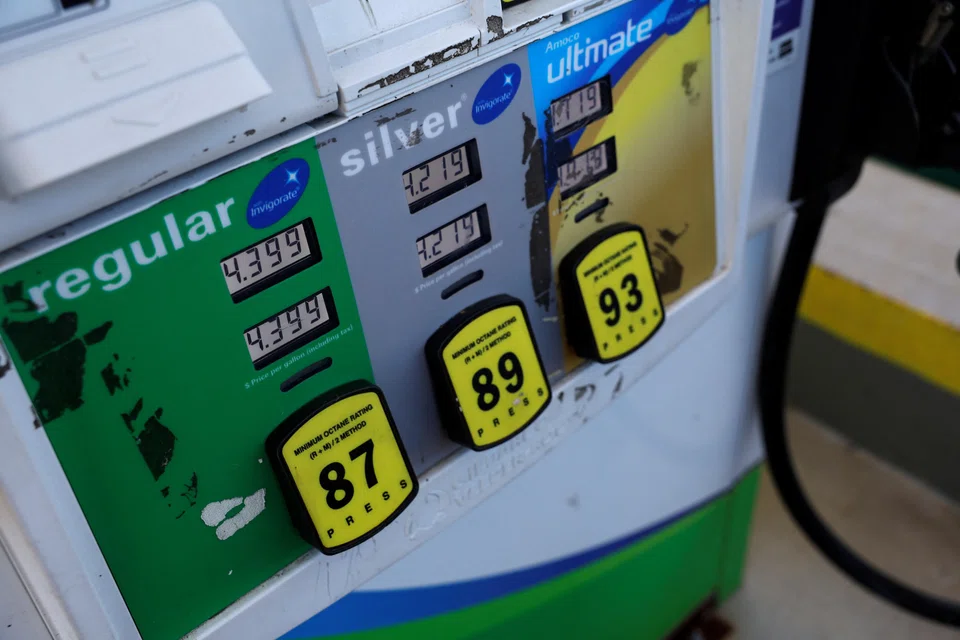
For the US, it would mean significantly higher oil prices if Teheran retaliates, as it has promised, against regional energy capacity. For the world, the Strait of Hormuz would remain neither fully closed nor fully open.
Extending the stalemate may be more manageable than it appears. For the White House, it is all about oil. Right now, the market is anticipating that the conflict will resume soon, which has driven West Texas Intermediate, the American oil benchmark, up by more than 10 per cent this month.
But the jump hides how much crude is leaving the region despite a wave of Iranian attacks against tankers.
During the first half of October, flows from the Middle East, excluding Iran, rose to about 16.5 million barrels a day, close to pre-war levels, according to Vortexa, a commodity intelligence firm. More recent data, albeit incomplete, suggests the upward trend has continued.
US Secretary of Energy Chris Wright said earlier in October that supply was back to about 80 per cent of pre-war levels. “That doesn’t make us comfortable, but it has made a viable, reasonable price today,” he said.
If oil stays around US$100 a barrel, perhaps Washington can just run down the clock, absorbing the increased energy costs and letting the blockade slowly cripple the Iranian economy.
The less Trump talks about the next stage of the war as binary – either a deal or more bombing – the more likely crude can remain close to, or even below, the triple-digit level.
Impact on Iran’s economy
For Iran, the calculation is different. It is under unprecedented financial pressure. While the US has imposed sanctions on Teheran since the Islamic Revolution of 1979, it had never previously completely stopped the country from selling its oil.
As a result, the Iranian economy is poised to suffer its worst contraction since during the Iran-Iraq war in the early 1980s. Its currency, the rial, has lost about 25 per cent of its value against the US dollar in the past two months, making imported goods more expensive and stoking inflation.
Yet, the Islamic Republic has demonstrated its capacity to endure financial suffering many times, and its pain threshold is likely even higher now that the threat is existential.
It helps that the Islamic Revolutionary Guards Corps can keep money flowing via its smuggling networks; it can probably ensure cash reaches the right people at the top of the regime for months to come.
Despite what they say in public, Iran and the US both have good reasons to extend the impasse. One of them may have to fold when the economic cost proves too high – either because the US fails to prevent a surge in oil prices, or because the Iranian economy collapses.
But unless and until one of those things happens, the stalemate is likely to continue. BLOOMBERG
TRENDING NOW

If Europe goes to war, the fallout will be felt in East Asia

Indonesia stocks suffer worst plunge in nearly 30 years as MSCI proposes standalone status

Keppel seeks US$1 billion for Vietnam investments as it joins country’s international financial centre

Philippines’ FDI slowdown exposes uneven investment prospects across S-E Asia

