

Oil shock raises risk of metals shock as EV sales accelerate
A resurging electric vehicle market means more demand for the metals needed to power the vehicles
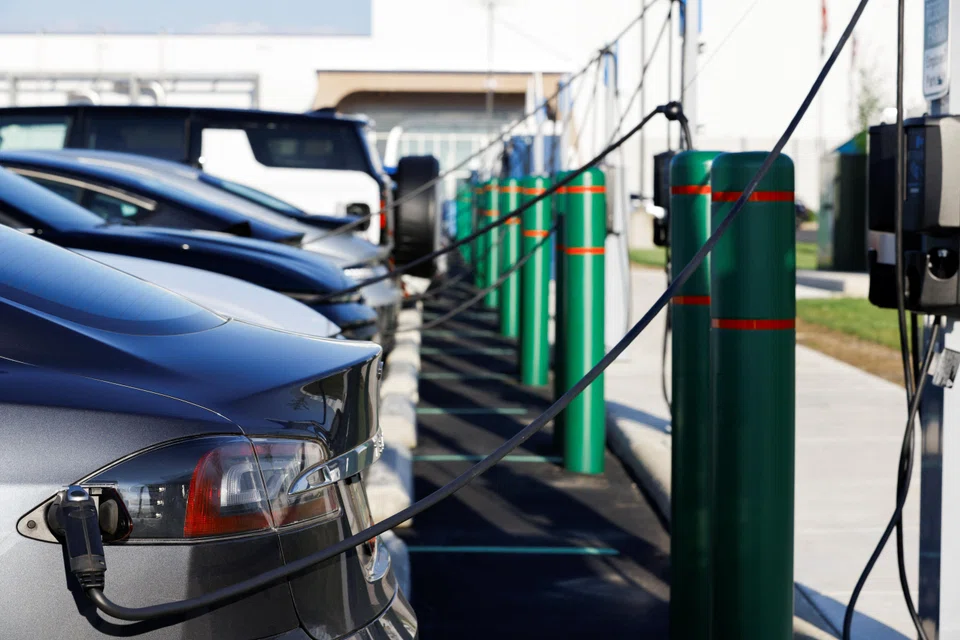
[LONDON] The oil shock caused by the Iran war is recharging the electric vehicle (EV) market as high petrol and diesel prices stimulate consumer demand for alternatives.
Economics is becoming as powerful a driver of EV sales as government subsidies and green ideology, particularly in countries most exposed to the loss of oil and gas supply from the Gulf.
This has huge implications for both the oil and metal markets, particularly for critical EV inputs such as lithium, nickel and copper.
Metal bulls lost interest in the EV story a couple of years ago after reality failed to live up to the early hype.
Grid storage and data centres are now the hot talking points for lithium and copper markets respectively.
But wars in both the Middle East and Ukraine are acting as powerful accelerators of the green transport revolution.
Polar opposites
At a headline level, nothing very much appears to be happening in the EV sector.
Global sales of new energy vehicles grew by just 4 per cent year on year from January to August, said consultancy Benchmark Mineral Intelligence (BMI).
That pedestrian growth rate, however, masks wildly differing regional markets.
US President Donald Trump’s elimination of his predecessor’s subsidy scheme has sent the country’s EV sector into steep decline. Sales in August were down 33 per cent year on year, bringing the year-to-date contraction to 21 per cent.
US car manufacturers have pivoted back to conventional engines, cancelling planned investment in new electric models and battery supply chains.
China is another weak spot. Sales in the world’s largest EV market shrank by 12 per cent year on year in the January-August period.
But this should be seen in the context of a broader downturn in the domestic vehicle market, which registered a 24 per cent year-on-year drop in total passenger vehicle sales in August.
The EV segment of the market has fared relatively well, and the new energy vehicle penetration rate hit a new high of 65 per cent last month.
Not that China’s car companies are too concerned anyway. They are exporting record amounts of EVs to the rest of the world.
European sales jumped by 36 per cent year on year in August, with year-to-date growth running at 29 per cent as high pump prices combine with government subsidy schemes.
But the most spectacular growth is outside the big three markets. EV sales in the rest of the world have doubled so far this year, noted BMI.
Cost pressures
On a total cost-of-ownership basis, battery EVs have already reached price parity with traditional internal combustion engine vehicles in China, said analysts at consultancy Wood Mackenzie.
The flood of low-priced Chinese exports at a time of high petrol prices is rapidly closing the gap in other Asian markets.
But, equally critically, consumer perceptions are changing. For many, buying an EV is no longer a commitment to the green cause but rather an economic choice.
Wood Mackenzie has modelled what it calls an “electric shock” scenario, in which high oil prices both accelerate consumer adoption of battery-powered vehicles and stimulate governments to prioritise reducing reliance on fossil fuel.
With battery performance continuously improving and EV costs falling, a structural shift in the passenger vehicle market could arrive much faster than expected.
The longer the Iran war grinds on and the longer Ukraine targets Russian oil refineries, the more likely that scenario becomes.
Metal stress
If the EV sector is shifting out of the slow lane, it will mean more pressure on already stressed metal supply chains.
Wood Mackenzie assesses that there will be enough metal to meet even accelerated EV demand but – and it is a big “but” – only if investment in new production capacity is scaled up at the same rate.
Under the company’s shock scenario, copper demand would only grow by an incremental 2 per cent relative to a base-case scenario that assumes global EV sales keep growing at a modest 4 per cent annual pace.
But that means additional new mine capacity would have to rise from the long-term average of 850,000 tonnes per year to 960,000 tonnes between 2025 and 2040.
Lithium demand would grow by an extra 14 per cent with availability complicated by China’s dominant control of the global supply chain.
Over the last decade, EV metal markets have struggled to match supply with demand, generating a sequence of price booms and busts.
It is quite possible that they are going to get wrong-footed again as EV sales accelerate just about everywhere outside the US.
The irony is that while the Trump administration has stalled the US transition to vehicle electrification, it has inadvertently persuaded much of the rest of the world that it is time to go green. REUTERS
TRENDING NOW

DBS, OCBC, UOB rout lops billions off STI as inflation, rate concerns spook investors

Grab CEO’s wife Chloe Tong on life with Anthony Tan and finding her purpose

OCBC sheds S$8 billion in value as shares close nearly 6% down; analysts cautious on banks

Deal between tycoon friends sparks scrutiny of Philippine power sector

