

Open for business, closed in our hearts? Immigration and the future of Singapore identity
Singaporeans still see citizenship in largely civic terms where contribution and commitment matter
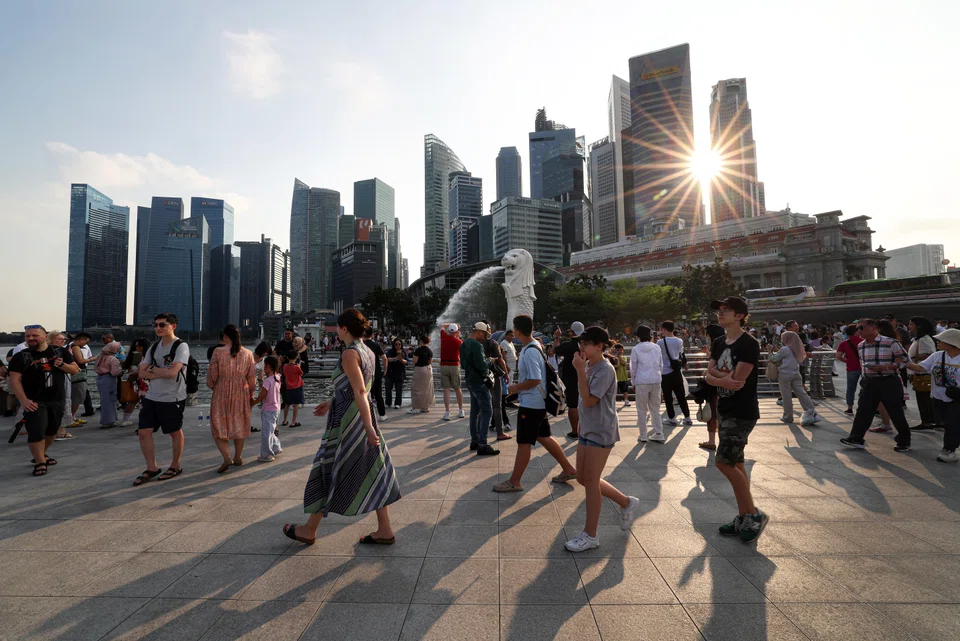
FEW in Singapore need to be told that openness brings opportunities. Global capital, regional headquarters, international schools and myriad talent from around the globe is an integral part of the operating environment here.
But with growing immigration over the past decades, it is unclear whether Singaporeans are feeling more open, or more guarded about who gets to be part of “us”.
As illustrated by a number of our studies, Singaporeans remain proud of their country and comfortable with diversity, but are unsure about how immigration fits into the national story.
This matters for business: The ability to attract and retain people is ultimately constrained by what society will accept as fair.
What Singaporeans are telling us
In our most recent study, respondents were first asked a simple open-ended question: What does it mean to be Singaporean?
The answers were reassuring: The majority of responses cited multiculturalism, a sense of belonging, pride in the country, and the value placed on living peacefully with others.
At the same time, immigration clearly emerges as a societal fault-line. Close to two-thirds of respondents felt that “believing in diversity” or having been born elsewhere can, at least sometimes, sit uneasily with national identity.
And when asked whether new citizens and foreigners strengthen or weaken Singapore’s identity, the public was split: Roughly one-third thought newcomers exert a positive effect; a quarter felt they make no real difference; and about four in 10 saw their impact on our identity as negative to some degree.
Those who took a dimmer view often worried about cultural dilution. To them, values, language and loyalty might be eroded as well as competition for jobs and perceived lapses in everyday norms.
In contrast, those who were more positive pointed to cultural enrichment, innovation, demographic renewal, and the commitment shown by people who choose to put down roots here.
So, the picture that emerges is not one of a closed or hostile society. It is a society that still believes diversity is part of who we are, but is not certain about how fast, and on what terms, that diversity should grow.
A familiar pattern beyond Singapore
These ambivalent attitudes are not unique to Singapore. Research worldwide shows that diversity brings both opportunities and complications.
Economists Alberto Alesina and Eliana La Ferrara, reviewing data from cities and countries around the world, argue that ethnic and cultural diversity can boost productivity and innovation. But it is also associated with lower provision of shared public goods and redistributive policies if institutions are weak or inequality is high.
Meanwhile, sociologist Robert Putnam’s well-known work on US communities suggests that in the short term, rapid increases in diversity can lower social trust and civic engagement, even as they hold the potential for richer “bridging” ties in the long run.
Other studies from Europe reach similar conclusions: Immigration and diversity do not automatically destroy social cohesion; but where economic insecurity is high and integration policies are weak, they can become a lightning rod for frustration.
The OECD’s recent International Migration Outlook stresses that countries only fully reap the gains from migration when newcomers are effectively integrated into education systems, labour markets and local communities, and when host populations feel that this process is fair and well-managed.
In other words, the tension Singaporeans feel about valuing openness, yet worrying about fairness and cohesion is not a uniquely Singaporean problem. It is a common challenge among advanced economies plugged into global flows of people.
Two contrasting experiences of openness
Even within Singapore, people are not experiencing openness in the same way.
Younger adults in our study were generally more positive about newcomers. Many have grown up with classmates, colleagues and friends from different countries.
For them, immigration is part of a normal, globalised life. A significant share in this group felt that new citizens and permanent residents strengthen cultural diversity, social cohesion and values.
In contrast, respondents in their 50s were most sceptical. For them, immigration is more likely to be seen through the lens of job competition, cost of living and pressure on services.
The same is true, on average, for lower-income respondents compared with higher-income ones. Both groups can see the macroeconomic benefits arising from immigration, but they disagree on whether these benefits reach their households.
If we ignore these differences, we risk talking past each other. One Singapore sees openness as opportunity, while the other experiences it in the form of sharper competition.
Our “we” is still civic; that is an asset
The good news is that, despite all this, the core of Singapore’s identity remains civic rather than ethnic.
More than nine in 10 respondents in the IPS–CNA study on national identity in Singapore said they were proud to be Singaporean and would rather be citizens of Singapore than any other country.
In an earlier 2021 IPS study on national pride and identity, we asked Singaporeans what newcomers needed to do to become “one of us”. Respondents emphasised respect for the law, tolerance of other races and religions, and belief in equality and fairness.
Cultural conformity, such as speaking local languages or sharing particular customs, ranked lower.
This is not how every society approaches identity. In some countries, birth, ancestral ties and ethnic background remain the main gatekeepers.
The fact that Singaporeans still see citizenship in largely civic terms where contribution and commitment matter most is a major strength. Our national “we” can, in principle, accommodate new citizens who live here, and embrace our local values and norms.
At the same time, immigration now tests whether we really mean what we say. If we retreat into informal hierarchies of “true-blue” versus “paper” Singaporeans, we weaken the very idea that has allowed a small, diverse society to stay cohesive while remaining open.
Towards a more confident openness
So what would it take to move from being “open for business, uneasy in our hearts” to embracing a more confident, sustainable openness?
We need to first acknowledge prevailing anxieties without writing them off as xenophobia.
When people worry about job security, housing or their children’s prospects, they are often expressing vulnerability, not hostility to diversity per se.
Addressing these concerns, as the government has done through a range of policy measures, whether through generous grants for skills upgrading for Singaporeans or anti-discrimination measures through the Workplace Fairness Act, strengthens the social licence for immigration.
Second, we must double down on the civic basis of our national identity.
A large majority already believe that having a strong identity contributes to success, unity and stability. The more clearly we define “being Singaporean” in terms of contribution, responsibility and belief in multiracialism, the easier it becomes to explain why some newcomers are welcomed into the circle, and expected to further strengthen our national identity.
Third, we should recognise that integration is a two-way process. International work on migrant integration consistently stresses that both newcomers and host societies must adapt: newcomers by learning norms and laws, and hosts by keeping pathways of trust and participation open.
Businesses can play a direct role here through mentorship programmes, inclusive HR policies and internal communication that treats diversity as a shared asset rather than a fault-line.
From the crucible of separation and independence in 1965, our founding leaders chose openness as a condition for survival for our small island with no natural hinterland. We had to plug ourselves into the world or be left behind.
That founding choice still defines us today.
Singapore will not return to being a closed, insular economy. Our demography, geography and economic model make that impossible and undesirable.
But while we are very much open for business, the harder test – in the years ahead – is whether we can stay open in our hearts, while holding firmly to the civic values that make this city worth building a life in.
Melvin Tay is a research fellow at the Institute of Policy Studies, National University of Singapore. Mathew Mathews is head of the Social Lab and principal research fellow at the same institute.
TRENDING NOW

Once staunchly pro-China, Malaysian Chinese businesses are now distancing themselves from Beijing
Stocks to watch: HPL, Aims Apac Reit, Zico, Advanced Systems Automation, ComfortDelGro
‘How many will survive?’: Bubble fears arise as China’s humanoid robotics face reality check
Smaller board lots can’t fix a market run by three banks

