Outside of politics, Thailand has a good story to tell

Inflation has come down dramatically. Too bad political intrigue crowds out encouraging economic news.
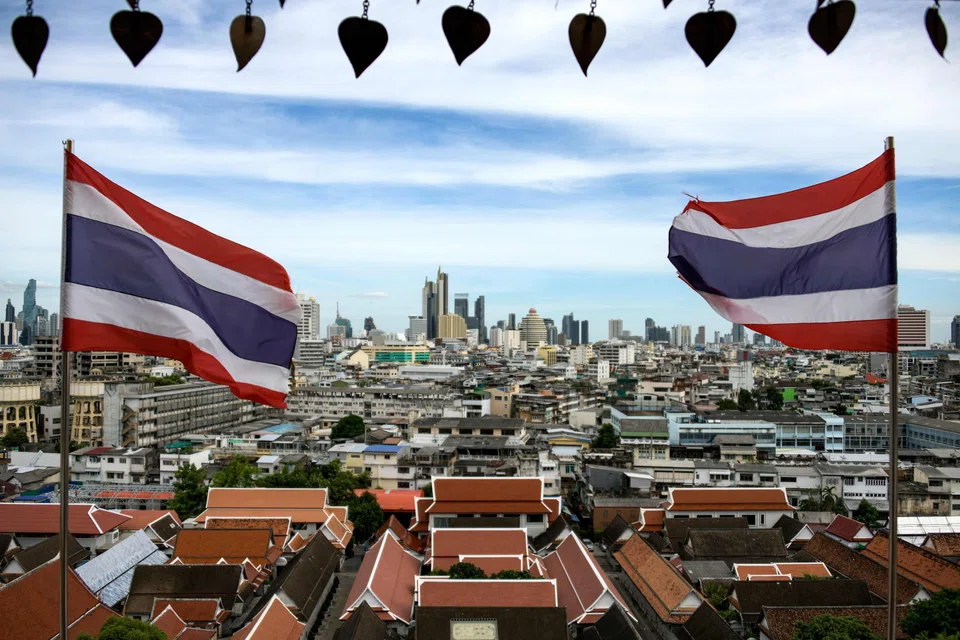
    • In Thailand, inflation is well and truly reined in.
    • In Thailand, inflation is well and truly reined in. PHOTO: AFP
    Published Mon, Jul 10, 2023 · 07:37 PM

    WHEN central bankers line up almost daily to assert their commitment to fighting inflation, it makes me think of Thailand. Not the fine resorts and great food. The country’s untrumpeted success is seriously taming prices to the point where officials might want to think about easing up, lest the economy slows too much.

    Like the rest of South-east Asia, Thailand has been blindsided by the modest nature of China’s rebound. Tourism, a key industry, is gradually recovering. The number of Chinese visitors is heading in the right direction, but nothing like the surge that was anticipated when Beijing cancelled Covid Zero. Thailand’s divisive politics are not helpful: Two months after an election, the country is without a prime minister.

    Do not let these caveats subtract from a fine story. Most policymakers would prefer to forget that when inflation first started to climb in 2021, they played it down. Having wrestled with how to fire it up in the years before the pandemic, they were not going to jump at the initial upticks. A host of terms was used to describe the benign scenario: “temporary”, “short-lived” and of course, the now infamous “transitory”. Federal Reserve Chair Jerome Powell stuck by the “T” word too long, before ultimately burying it and embarking on an aggressive tightening.

    The Bank of Thailand, by contrast, has embraced transitory – and rightly so. The pace of consumer price increases retreated to 0.2 per cent in June from a year earlier. That is a dramatic decline from almost 8 per cent in August. Officials do not see it staying so anemic for long, but even forecasts of 2.4 per cent next year mean that inflation is well and truly reined in. And they did it without smothering the economy by panicking and ratcheting up borrowing costs too rapidly.

    Thailand ought to be talking more about this favourable outcome. Politics tends to dominate perceptions of the country. That is understandable, given the cast of characters: the Shinawatra family, helmed by a patriarch in exile, years of rancour between Bangkok elites and protestors seeking more power for provincial areas, and a military that cannot break the habit of staging coups every few years. Parliament may vote on a premier as soon as this week.

    The economy, when attention is paid, is often called an outlier because the central bank will not declare that it is done with rate hikes when other authorities have chosen to pause. The real exceptionalism, however, is where it got the inflation call right. While the political class squabbles, there are adults in the room. In an interview with Bloomberg Television last week, the Bank of Thailand’s assistant governor, Piti Disyatat, drew a contrast with the US. In America, he noted, inflation has been largely driven by the tight labour market. Less so in Thailand.

    “We had an assessment of the inflation dynamics as being transitory, and it proved to be largely like that, a bit too much so than we thought. Policy was never geared towards bringing inflation down abruptly because we knew we could not do it… Monetary policy just tried to be stable and make sure that it did not add to the inflationary pressure and, especially for next year, making sure it comes down sustainably. We are not going to take too much credit,” said Disyatat.

    Thailand has plenty of challenges. If a government is formed this week, I would not bet on its longevity. The drag from China’s fizzling expansion is hurting and, longer term, there are the constraints of an ageing society that is not yet a rich one. The baht has weakened more than 3 per cent against the US dollar since the May 14 election.

    But give the currency its due: During an era of greenback strength, it barely budged over the past 12 months. The yuan, the yen, Malaysia’s ringgit and the Indian rupee were sold off. For anyone who lived and worked in the region during Asia’s 1997-98 financial crisis, when Thailand’s devaluation triggered a broader collapse, the resilience is remarkable.

    Why not make a central banker prime minister? In moments of tumult and legislative fracture, Italy and Greece made that choice, with Mario Draghi, former president of the European Central Bank, and Lucas Papademos, the one-time ECB vice-president, respectively.

    Thailand may be the unsung hero of Asian economies. BLOOMBERG