Pakistan’s pivotal moment: Peacemaker, partner, or tightrope walker?

It has emerged as a key interlocutor between the US and Iran, but its position is as precarious as it is prestigious
Summarise
    • Pakistan’s emergence as a mediator is not merely opportunistic; it also rests on genuine structural advantages.
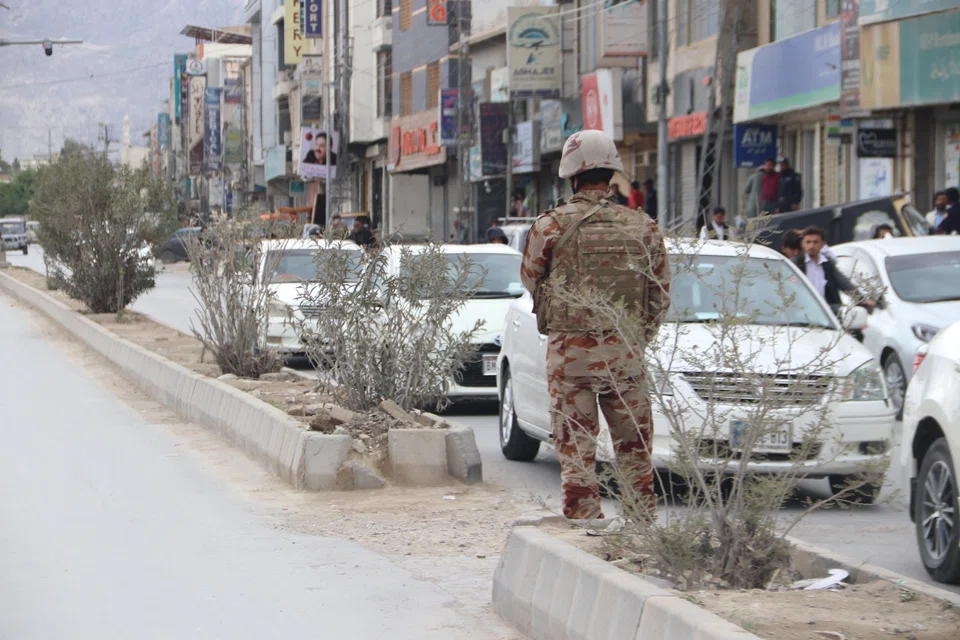
    • Pakistan’s emergence as a mediator is not merely opportunistic; it also rests on genuine structural advantages. PHOTO: EPA
    Published Thu, Apr 2, 2026 · 12:00 PM

    IN THE fog of a Middle East war that has obstructed the Strait of Hormuz and triggered the worst energy crisis since 1973, an unlikely diplomatic capital has emerged: Islamabad.

    Pakistan’s willingness to host US-Iran peace talks is not an accident of geography. It is the fruit of a carefully cultivated relationship with Washington that has been quietly ripening since US President Donald Trump returned to the White House.

    The moment is as revealing as it is consequential for understanding where US-Pakistan relations truly stand.


    A relationship reborn under Trump

    For much of the past decade, US-Pakistan ties were defined by mutual suspicion, American frustration over Pakistan’s alleged sheltering of Taliban elements, and Pakistani resentment over drone strikes and perceived disrespect.

    The Biden years did little to warm things. But ties between Washington and Islamabad have warmed significantly since Trump succeeded Joe Biden, and the rapprochement has been personal as well as strategic.

    Pakistani Prime Minister Shehbaz Sharif and army chief Field Marshal Asim Munir struck up a personal rapport with Trump, culminating in a high-profile White House meeting in September 2025. That personal chemistry is now paying geopolitical dividends.

    The architecture of Pakistan’s mediation

    Pakistan’s emergence as a mediator is not merely opportunistic; it also rests on genuine structural advantages. Pakistan shares a 909 km border and deep cultural ties with Iran, maintains close defence ties with Saudi Arabia, and is home to the second-largest Shia Muslim population in the world after Iran itself.

    This means Islamabad can speak credibly in Teheran’s ear while simultaneously holding Washington’s hand, a rare dual legitimacy in an era of hardened camps.

    Pakistan has emerged as a key interlocutor between the US and Iran, passing messages between the two sides as part of the mediation efforts. This back-channel role is what has earned Pakistan the trust of both parties.

    Pakistani Foreign Minister Ishaq Dar confirmed that both Iran and the US have “expressed their confidence in Pakistan to facilitate their talks”. For a country long treated as a problem to be managed rather than a partner to be respected, this is a significant diplomatic validation.

    Balancing act

    Yet, Pakistan’s position is as precarious as it is prestigious. Islamabad is engaged in a very delicate balancing act. The tension is already visible: While Pakistan condemned recent attacks on Iran and Gulf states, it explicitly named Israel while carefully refraining from naming the US.

    This asymmetry of blame reveals the bind Pakistan is in – it cannot afford to alienate Washington, its security partner and economic lifeline, but it cannot ignore the sentiments of its own population, the Muslim world, or its neighbour Iran.

    The early results of that balancing act have been modest but meaningful. As an initial confidence-building measure, Islamabad announced that Teheran agreed to allow 20 Pakistani-flagged ships to pass through the Strait of Hormuz at a rate of two per day, a small opening in a critically blocked artery.

    Pakistani officials framed this deliberately as a signal to Washington that diplomacy was bearing fruit.

    The limits of goodwill

    There are, however, serious clouds on the horizon. Iran rejected Trump’s 15-point peace plan as “excessive, unrealistic and unreasonable”, directly contradicting Trump’s claim that Iran had agreed to most of the points.

    More sobering still, Iran confirmed on Tuesday (Mar 31) that it did not participate in meetings between regional foreign ministers in Pakistan, undermining the narrative of imminent talks. The gap between the atmospherics of diplomacy and its substance remains wide.

    Meanwhile, the International Energy Agency warned that the disruption to the Strait of Hormuz already exceeds the combined oil crises of 1973 and 1979, which means that the pressure for a breakthrough is immense – but so is the risk of failure. If talks collapse in Islamabad, Pakistan bears the reputational cost.

    What this means for the US-Pakistan partnership

    For the US, Pakistan’s diplomatic activism offers a rare asset: a Muslim-majority, nuclear-armed state with regional reach that is willing to serve American strategic interests through soft power rather than just military basing rights.

    The old transactional relationship, dollars for cooperation on counterterrorism, could give way to something potentially more durable: a shared interest in regional stability.

    But this new chapter in US-Pakistan relations should not be romanticised. Pakistan is acting in its own interests – the energy crisis has hit it hard, the Iran-Pakistan border is volatile, and Islamabad urgently needs International Monetary Fund support and American goodwill for its own economic survival.

    There is personal warmth between Sharif, Munir and Trump, but relationships built on personalities are fragile. They do not automatically translate into long-term institutional trust.

    Pakistan’s moment as a peacemaker in the most dangerous conflict of 2026 is a testament to the country’s strategic reinvention – and to the possibilities that emerge when two countries choose engagement over estrangement.

    Washington should recognise that Pakistan’s mediation is not a favour being done to America; it is Pakistan asserting itself as an indispensable middle power. The US would do well to treat it accordingly, not as a client state, but as a genuine partner whose interests must also be respected in any eventual settlement.

    The tightrope Islamabad is walking is extraordinary. Whether it crosses to the other side depends not just on Pakistani dexterity, but also on whether Washington is wise enough to hold the rope steady.