A partnership at a crossroads: The new reality of US-India relations
The growing rift between Washington and New Delhi threatens to alter the strategic balance of the Indo-Pacific region
THE relationship between the US and India, once hailed as one of the defining partnerships of the 21st century, is now under its most significant strain in decades.
What began as a promising strategic alliance built on shared democratic values and mutual economic interests has devolved into a transactional relationship marked by escalating trade disputes, divergent geopolitical priorities, and fundamental disagreements over India’s foreign policy autonomy.
This deterioration manifested on Aug 6, when US President Donald Trump imposed a punitive 50 per cent tariff on Indian goods, doubling the previously announced rate. Justified as a penalty for India’s continued Russian oil imports, the move is more than a trade dispute – it signals a breakdown in the strategic understanding that has underpinned US-India relations for two decades.
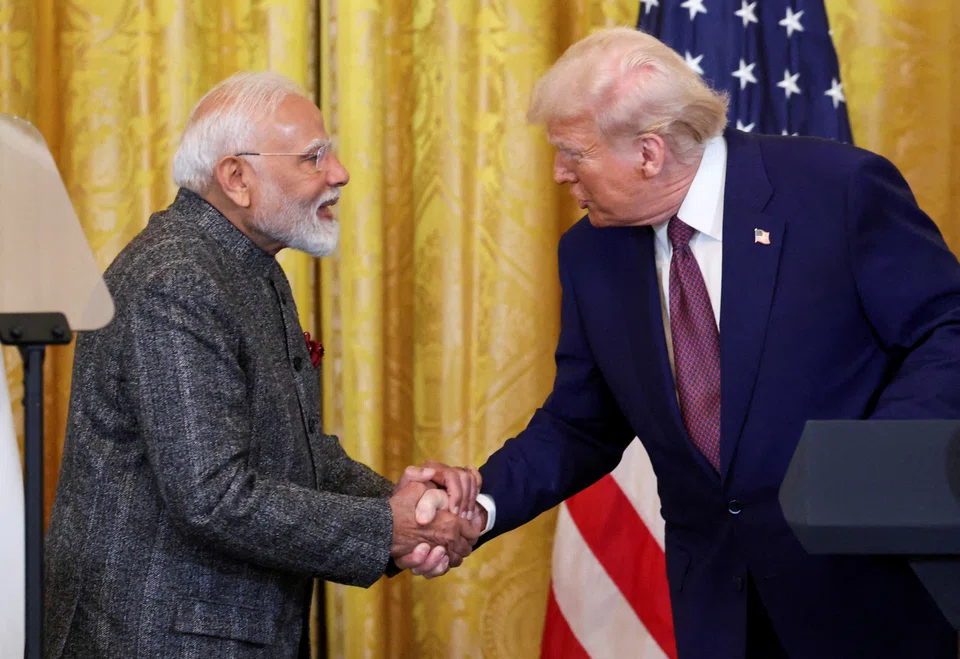
The move surprised many, given the historically warm rapport between Trump and Indian Prime Minister Narendra Modi, once seen as a stabilising force in the bilateral relationship. Yet, current tensions suggest that even strong personal ties cannot overcome fundamental policy disagreements in an increasingly polarised global environment.
Core disagreements
At the heart of the crisis lies India’s refusal to abandon its relationship with Russia, despite sustained pressure from Washington. India’s continued purchase of Russian oil and military equipment has become a litmus test of its commitment to the Western alliance system, at least from the US perspective.
For India, however, these ties represent core elements of its strategic autonomy, a principle that has guided Indian foreign policy since independence and remains non-negotiable for New Delhi.
This disagreement exposes a fundamental disconnect: The US has increasingly viewed India as a junior partner in its broader strategy to contain China and challenge the Russia-China axis, while New Delhi has consistently maintained that its alignment with Washington is based on mutual benefit, not subordination to American priorities.
“Unrealistic expectations on both sides compound the situation. American demands for greater access to India’s agricultural markets run counter to India’s domestic political imperatives, while Indian hopes for preferential treatment in trade talks clash with the US’ growing protectionism.”
Perhaps more troubling for the relationship’s long-term trajectory is the apparent return to what Indian strategists call “hyphenation” – the Cold War-era practice of treating India and Pakistan as equals in US foreign policy.
Trump’s recent diplomatic interventions in Indo-Pakistani disputes have revived Indian concerns about America’s reliability as a strategic partner. This represents a significant reversal of the “de-hyphenation” policy initiated during the George W Bush administration, and undermines a key achievement of the last two decades of bilateral engagement.
Economic and geopolitical friction
The economic dimension of US-India relations faces equally serious challenges. India supplies nearly half of all generic drugs consumed in the US, saving American consumers billions of dollars annually in healthcare costs.
The pharmaceutical sector, along with information technology services, has been a cornerstone of the bilateral economic relationship. However, the new tariff regime threatens to disrupt these established supply chains and could force both countries to seek alternative arrangements.
Unrealistic expectations on both sides compound the situation. American demands for greater access to India’s agricultural markets run counter to India’s domestic political imperatives, while Indian hopes for preferential treatment in trade talks clash with the US’ growing protectionism.
The deterioration in US-India relations is set against the backdrop of global geopolitical realignment. India’s participation in multilateral forums such as Brics and the Shanghai Cooperation Organisation, and continued engagement with the Quad (alongside the US, Japan and Australia), reflects New Delhi’s commitment to a multipolar world order.
“The era of grand strategic partnerships based on shared values and long-term vision may be giving way to more pragmatic, issue-specific cooperation between countries with different worldviews.”
This approach increasingly conflicts with Washington’s binary worldview, where countries are expected to choose sides in the emerging “Great Power” competition.
The implications of this divergence extend beyond bilateral relations to the broader Indo-Pacific strategy that has been central to US foreign policy in recent years. If India continues to drift away from close alignment with the US, it could alter the strategic balance in the Indo-Pacific region and complicate US efforts to counter Chinese influence.
Crucial next steps
Despite these tensions, the US-India partnership remains too important for both countries to allow it to deteriorate completely. Common challenges, from the rise of China to climate change and terrorism, necessitate cooperation.
But any path forward will require a fundamental recalibration of mutual expectations. The US must accept India’s strategic autonomy, while India must recognise that continued access to American markets and technology comes with certain obligations.
The current crisis may ultimately serve as a necessary correction to an overly optimistic assessment of US-India convergence that has dominated policy thinking in both countries. A more transactional relationship, while less emotionally satisfying, may prove more realistic and durable, given the constraints faced by both democratic governments.
The tensions currently shaking US-India relations reflect deeper questions about the nature of international partnerships in an increasingly multipolar world. The era of grand strategic partnerships based on shared values and long-term vision may be giving way to more pragmatic, issue-specific cooperation between countries with different worldviews.
Whether this represents a temporary setback or a permanent reorientation of one of the world’s most important bilateral relationships will depend largely on the two leaders’ ability to find common ground while respecting each other’s core interests and constraints.
The coming months will be crucial. The choices made in Washington and New Delhi will determine whether this partnership weathers the storm or unravels, with far-reaching implications for the geopolitical landscape of the Indo-Pacific region and beyond.
TRENDING NOW
He built the Vingroup empire. Now South-east Asia’s richest man is handing some key roles to his sons
Grab CEO’s wife Chloe Tong on life with Anthony Tan and finding her purpose
Deal between tycoon friends sparks scrutiny of Philippine power sector
Singapore’s S$80 million vertical farm must pass the 50-cent test to succeed