

Paying a large premium to stay near an MRT station may not be a no-brainer
Demographic and technological changes could erode the value attached to living near an MRT station; premium attached to living next to nature might rise

Many people pay more for homes that are near MRT stations and sought-after primary schools. After all, buyers assume that such homes can be resold relatively easily at robust resale prices.
However, recent changes in the primary one registration framework might dent the appeal of homes which are located near some sought-after primary schools.
Children who are Singapore citizens enjoy priority over those who are permanent residents in all phases of the primary one registration process.
In phase 2C, which is open to all children, regardless of whether they have prior connections to the school or not, generally citizens living within 1 km of the school enjoy priority in admission followed by those living within between 1 km and 2 km of the school, and then those living outside 2 km of the school.
However, under the latest changes, which will be implemented from the 2027 primary one registration exercise, a two-track system for phase 2C will apply for 12 schools that are in neighbourhoods with significantly less public housing than the national average. These include Anglo-Chinese School (Junior), Methodist Girls’ School (Primary), Nanyang Primary School, Singapore Chinese Girls’ Primary School and Tao Nan School.
Under the changes, the number of reserved places in phase 2C increases from 40 to 60 in all schools, except for schools with a smaller intake. For schools with a two-track system for phase 2C, places will be equally distributed between those living within 2 km of the school and those living outside 2 km of the school.
In short, a Singaporean child aiming to secure a primary one spot under phase 2C in a school where the two-track system applies may see his or her advantage from living within 1 km of the school substantially eroded.
While buyers may well reconsider whether to pay more to live near a popular school, perhaps paying a premium of say 15 per cent to live near an MRT station is a no-brainer.
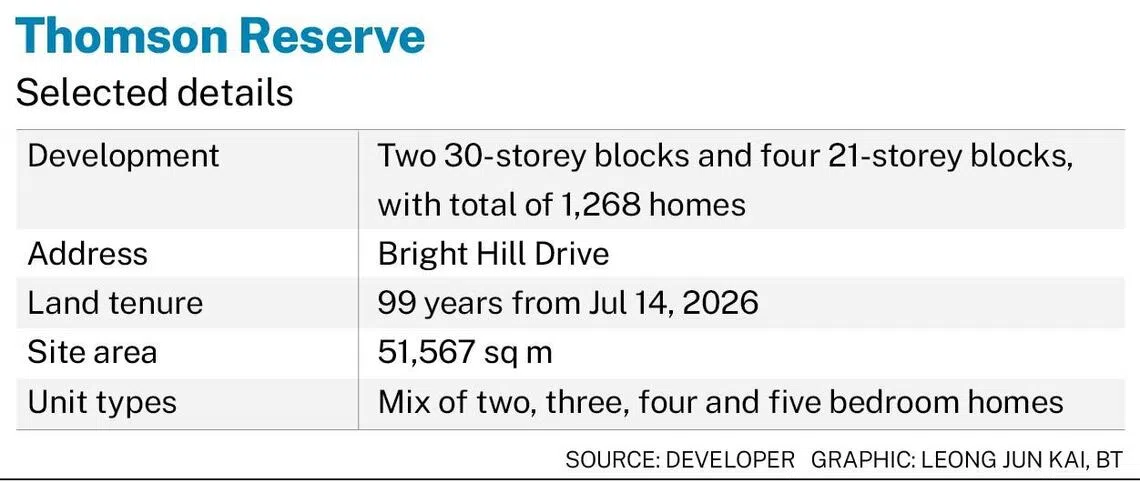
The recent launch of UOL Group and CapitaLand Development’s 1,268-unit Thomson Reserve, which is directly linked via a sheltered walkway to Upper Thomson MRT Station, saw buyers snap up 1,143 homes – or about 90 per cent of units – at an average selling price of S$2,900 per square foot (psf) over the project’s launch weekend.
Perhaps, many buyers were drawn by the project being located near an MRT station.
In contrast, the launch of Sim Lian Group’s 212-unit low-rise condominium project Amberwood at Holland in the new Holland Plain neighbourhood, which is located further from an MRT station, drew a more muted response from buyers.
On launch weekend, 23 units were sold at an average of S$3,019 per psf. In the first phase of sales, 70 units were launched for sale.
As the MRT network expands, buyers might attach a growing premium to living near an MRT station as people can easily travel by train to more destinations islandwide.
Also, amenities such as malls are often built near an MRT station, enhancing the convenience for people who live close to a station
In addition, the cost of a certificate of entitlement, which is needed to own and use a vehicle in Singapore, could rise amid a growth rate of zero for passenger cars and a growing population. In turn, a household that does not own a car might place great value on living near an MRT station.
Still, as homes are typically bought for long-term investment, buyers paying large premiums to stay near an MRT station should beware of the risks of a potential erosion to the value attached to living near an MRT station over the long run.
One, watch for demographic changes. With a rapidly ageing population, some seniors may largely be homebound or struggle to commute by MRT. This could defeat the point of living in a home which is next to an MRT station.
Also, if couples have more children, families may increasingly value getting additional space by paying a lower psf price for a home that is further from an MRT station. Some families with kids may opt to channel the extra money needed to buy a home near an MRT station into purchasing a car to ferry the children instead.
Two, a non-car-owning household can potentially leverage the expanding MRT network without having to live within close walking distance to a station.
A comprehensive public bus network allows efficient access to an MRT station. With efforts to improve the road experience for cyclists, cycling to an MRT station and other destinations could become easier.
Moreover, using comfortable and reliable public buses may at times trump cramming into crowded MRT trains.
Three, technological advances can improve the convenience for those living far from an MRT station.
In the age of artificial intelligence, more people may operate one-man businesses from the comfort of home instead of commuting regularly to a physical office.
Online shopping, tuition, medical consultation and so forth may become increasingly convenient and widespread over time thus reducing the need to stay close to the many amenities which are clustered around an MRT station.
Could driverless cars benefit people living in less accessible parts of Singapore, which are not served by an MRT station?
Moreover, in an increasingly congested city, some people may yearn to avoid the crowds thronging shops around an MRT station and choose the peace and quiet of living further from a station.
Certainly, rising household income and growth in household formation are critical drivers of housing prices in the Republic.
Nonetheless, changes in what households value in a home can lead to relative outperformance or underperformance of various residential properties.
Recently, there was huge public outcry to conserve more green spaces at Maju Forest along Sunset Way and Gillman Barracks off Alexandra Road.
Living near green spaces and nature can boost physical and mental well-being. Also, as temperatures rise, people may increasingly value the cooling effect of living near loads of greenery.
Going forward, could people value living near green spaces and abundant nature even more than staying next to an MRT station?
As the MRT network expands, paying more for a home that is near a station looks to be a solid bet.
Still, potential buyers thinking of forking out substantial premiums for homes near MRT stations should be mindful that such bets may not pay off over the long term.
TRENDING NOW
Ex-Nvidia CEO Jensen Huang carried a secret for more than a year. It led to his downfall
The start of Orchard Road’s rejuvenation? Scotts Square to commence revamp, repositioning in H1 2027

Jensen Huang discusses comeback as Nvidia CEO with allies: report
Stocks to watch: Singtel, Hongkong Land, Frasers Property, Centurion, Q&M Dental

