Pilates is fast becoming big business in Singapore – and it’s not just Gen Z driving it
Demand is booming on the back of a stronger focus on health and wellness, but operators warn of competition and rising costs

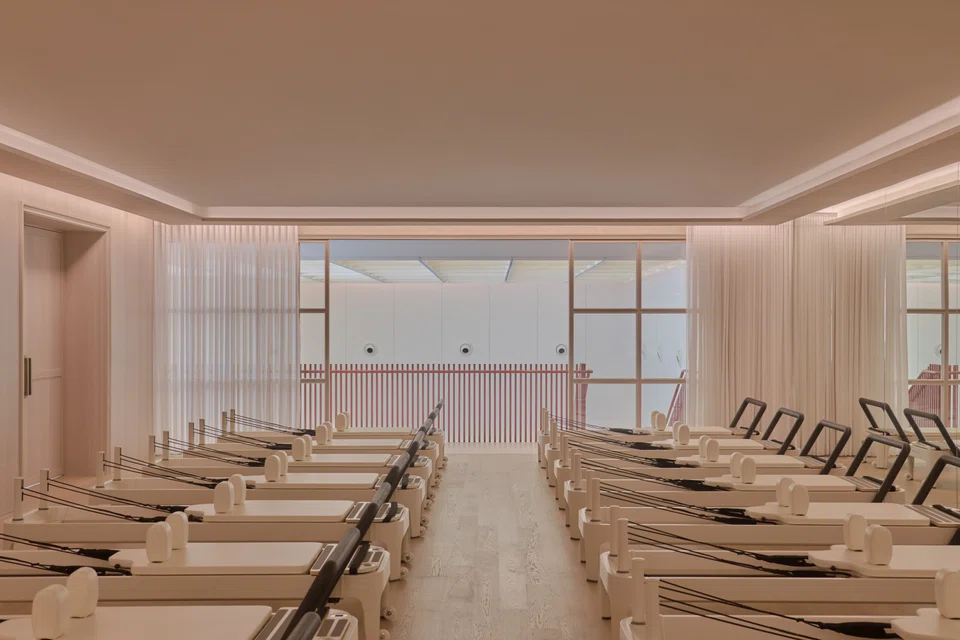
[SINGAPORE] On a quiet Thursday morning, two sisters in their 50s step into a bright, mirrored studio in The Centrepoint along Orchard Road. Clad in matching black leggings and grippy socks, they settle onto reformer machines as their instructor cues them through slow, deliberate movements. Within minutes, the room hums with controlled breaths and quiet effort.
What began as a casual experiment a year ago has turned into a weekly ritual for the two.
“At our age, we wanted something that builds up core strength, flexibility and posture without looking too intimidating,” says the older sister, Samantha Tan. “Pilates tick all the boxes.”
The pair is not alone.
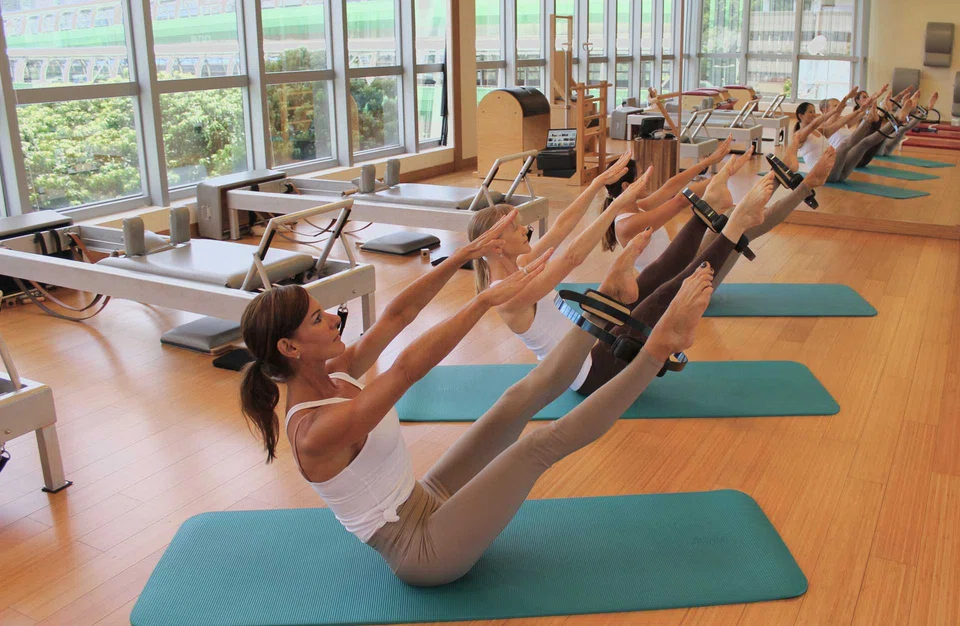
Across Singapore, Pilates studios are filling up with enthusiasts of all ages, as the once-niche practice becomes a mainstay of the city’s fitness scene. Supply has risen in tandem, as operators move to capture this wave of interest.
But industry players warn of mounting pressures, from an increasingly crowded market to rising costs amid growing macroeconomic uncertainty.
Riding the wave
According to fitness membership company ClassPass, reservations for Pilates classes on its platform have grown by 20 times over the last five years, making it the top workout genre on the app.
Corinne Ng, chief operating officer of Como Group’s Como Shambhala, notes a 15 per cent year-on-year increase in its Pilates class attendance in the same period, with a 50 per cent spike between 2023 and 2024 after its relocation from Delphi Orchard to Como Orchard on Bideford Road.
This has led to a nearly 16 per cent rise in revenue year on year, says Ng.
Sport Singapore (SportSG) says participation in its mat-based Pilates classes has also steadily grown since their introduction in 2014 as part of the agency’s efforts to expand accessible and inclusive fitness programmes to the wider community.
In 2024, there were 120,000 sign-ups for its Pilates classes, two-and-a-half times higher than the nearly 50,000 sign-ups in 2015.
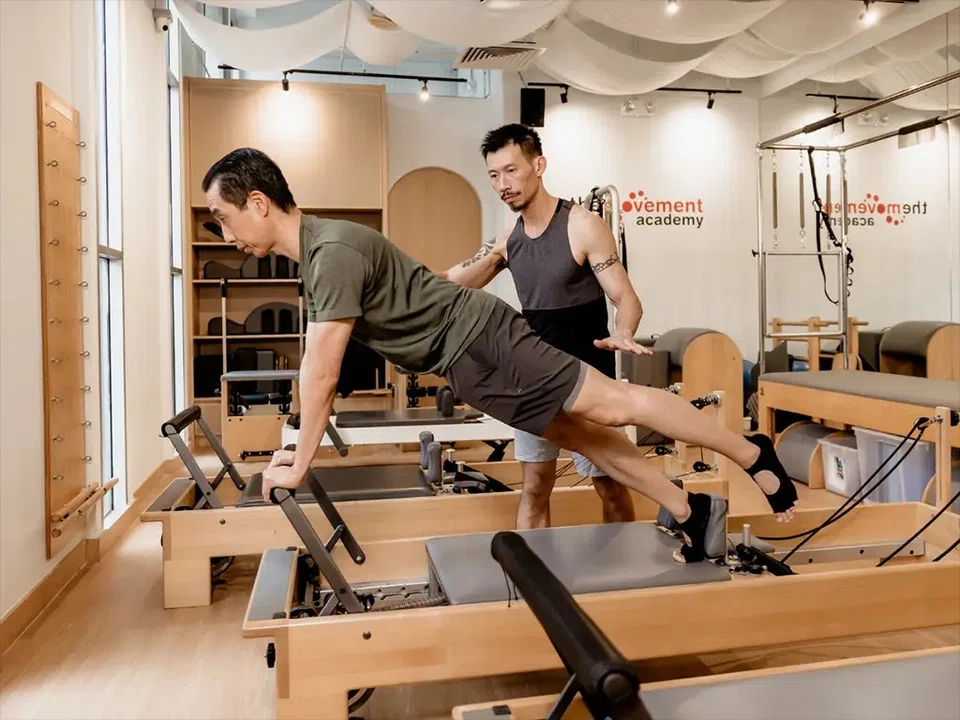
Pilates studios say the majority of their clients are women, but more men have been attending classes in recent years. Some are also seeing a wider range of customers, from students and corporate workers to retirees.
This rising interest has spurred a wave of new openings, from boutique studios to larger chains, with many reporting brisk business.
On ClassPass, the number of Pilates venues listed in Singapore surged by over 270 per cent since 2020, with over 200 Pilates listings currently.
The Absolute Group, one of Singapore’s largest operators, runs five Pilates studios across the island with 7,000 to 8,000 active members, around 60 per cent of whom are Pilates clients. On average, each studio conducts seven classes a day with an occupancy of over 80 per cent.
The group plans to open a new studio in Raffles Place early next year, says Vanessa Yen, Absolute’s assistant general manager.
In June, Absolute also launched The Reformer Society at The Cathay mall, a franchise concept combining Pilates principles with strength and higher-intensity training.
Yen says The Reformer Society was designed as a no-frills option that is more accessible to the masses, particularly younger customers who prioritise efficiency and effectiveness in their workouts.
In 2023, Hong Kong’s classical Pilates studio Flex Studio opened its first Singapore branch. Two years on, founder Heather Thomas says the studio has reached break-even, with just under 1,000 active clients attending classes two to three times a week, and 12 contracted staff delivering about 27 service hours a day.
No institutional debt was taken to finance the opening, says Thomas, who expects the studio to turn profitable by 2026.
Other operators note similarly intense demand.
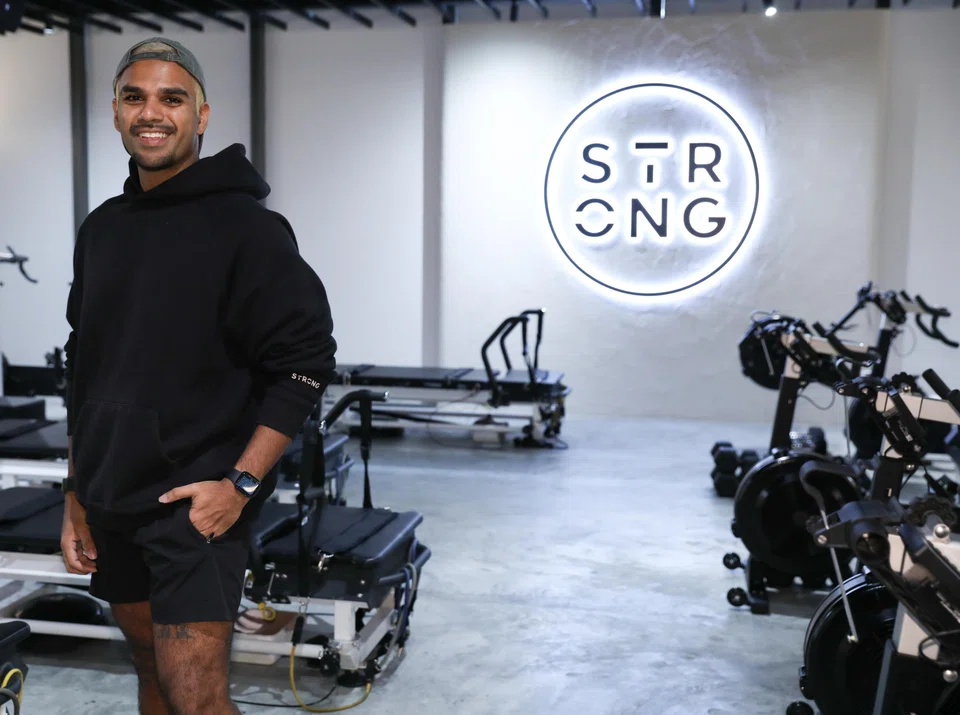
Fitness lifestyle collective Move Repeat signed an exclusive franchise agreement to bring Australian fitness chain Strong Pilates to Singapore in 2023. It now has four studios with up to 4,000 unique clients making more than 12,000 monthly visits, over 40 trainers and an average class occupancy of 70 to 80 per cent.
Move Repeat group brand and engagement manager Kamesh Waran declines to share revenue figures but says the team is constantly looking to expand. “It feels like (things are) never slowing down.”
Likewise, luxury fitness brand Ally welcomed nearly 60,000 members since opening in 2021. It says performance has been “healthy and stable”, supported by growing interest in Pilates and the wellness space.
In May this year, Ally added a second location – a 603-square-metre two-storey flagship studio along Maxwell Road.
There is also a “noticeable increase” in the purchase of its 100 and 200-class packs, which go for S$3,000 and S$5,000 respectively – indicating the long-term commitment of clients, says Ally.
Even retailers are joining the trend.
In July, Lululemon opened the region’s first in-store yoga and Pilates studio at its new flagship store in Takashimaya Shopping Centre.
“We’re seeing a powerful shift across the region, especially in markets like Singapore, Malaysia, and Thailand, where well-being is no longer limited to just fitness, but embraced as a holistic lifestyle,” says Tim Campbell-Scott, Lululemon Southeast Asia market director. “That growing appetite… makes this the perfect time and place to introduce a new kind of retail experience.”
Singapore is the ideal city for such a store, he says, given its “highly engaged wellness community” and “deep appreciation for innovation and experience”.
Lululemon’s partner operator Within reports an “extremely positive” response to the new studio, with a widening demographic that now includes more men and a broad age range of urban professionals.
Lee Siew Ling, JLL Singapore executive director of retail, adds that developers and landlords are increasingly incorporating fitness studios in offices, industrial buildings and malls to get a piece of the pie.
Operators are drawn to industrial spaces and selected office buildings due to lower rents, low competition for space and more flexible operating hours, says Lee.
At the same time, Cushman & Wakefield research head Wong Xian Yang says companies are placing greater emphasis on employee well-being and work-life balance.
Wellness-oriented facilities such as Pilates studios have therefore become “essential features” in office and retail spaces, driving consistent footfall and complementing surrounding retail, he says.
Growing appeal
Market watchers attribute much of the boom to a growing focus on health and wellness.
Many Singaporeans have higher stress and more sedentary lifestyles, says Como’s Ng.
“Pilates can help to counter the negative effects (of these lifestyles),” she says. “The population has also become more conscious of their well-being, with a growing interest in mind-body connection.”
For instance, a study published by scientific journal MDPI in March shows that attending regular Pilates classes reduced anxiety, depression, fatigue and stress. These benefits likely stemmed from its emphasis on controlled breathing, mindfulness and neuromuscular engagement, which help regulate stress responses, the researchers say.
Kamesh from Move Repeat reckons that the pandemic has also encouraged people who previously did not exercise to prioritise their health.
Dr Samer Elhajjar, senior lecturer from the department of marketing at NUS Business School, adds that many consumers justify its premium price by viewing it as a mix of therapy, self-care and lifestyle upgrade. A single group Pilates class can cost under S$10 at an ActiveSG sport centre, or range from S$20 to S$60 or more at other studios. Private classes are even pricier, going up to S$250 per session.
“It also carries that ‘quiet luxury’ feel: small classes, polished studios, highly trained instructors which makes people feel like they’re investing in themselves,” says Dr Samer, whose broader expertise includes consumer behaviour and strategic marketing. Platforms such as ClassPass have made it more accessible for beginners, helping to grow the habit.
Beyond that, such fitness classes have become vibrant “third spaces” and a healthier way to meet new people, says Kamesh.
This shift is reflected in SportSG’s latest survey on exercise participation in Singapore.
Regular sports and exercise participation of at least once a week hit 74 per cent in 2024. This was the second time participation reached this level since the survey became an annual practice in 2015.
“What’s interesting is that (the trend towards mindful movement and holistic well-being) mirrors what we’re seeing globally, though in Singapore it’s particularly strong among urban professionals who value movement as a way to recharge from busy routines,” says Campbell-Scott of Lululemon.
There is also a broader cultural tailwind, as more celebrities and professional athletes endorse Pilates for strength training and injury prevention, says Thomas from Flex Studio.
Its visually striking and “unsual” apparatus, from reformers to Cadillacs, and the many “eye candy” around make the practice feel novel and aspirational, she adds.
Social media has amplified that appeal, making Pilates look fun and desirable, says Yen from Absolute.
Cocktail of challenges
Still, operators in Singapore are feeling the squeeze as competition intensifies.
Thomas expects “cookie-cutter” reformer classes to be at risk – especially since there is a limit to how many classes can be run profitably in a day, given high rents and client capacity.
The challenge is compounded by rising costs, labour pressures and tighter consumer budgets amid a softer macroeconomic environment.
At Flex Studio, for instance, equipment is imported from Sweden and the US, adding extra costs to the studio’s set-up and maintenance. “(You need) enough upfront capital to cover your burn rate for about two years, plus fit-out costs,” says Thomas. “And you need a lot of love and passion – it’s not a get-rich-quick thing.”
For Absolute, Yen says running a studio can cost over five to six figures per month, depending on the size of the studio. This includes running and variable costs such as rent, maintenance of its machine and space, and manpower costs.
BT understands that rents alone at some studios in Singapore can go up to S$40,000 a month.
Kamesh adds that while third-party apps help introduce new people to fitness studios such as Strong Pilates, and fill empty slots, there is a growing trend of clients relying solely on these platforms. He is, however, certain that a strong product and exceptional service will drive long-term commitment, as with Move Repeat’s other brand Yoga Movement, which has been in the market for 13 years.
But the rise of these platforms has pushed some operators into difficult positions, say insiders. Customers are less committal, hopping between studios thanks to the platforms’ convenience and often cheaper prices.
There is then a pressure to match these lower prices to stay competitive, but this is often risky. “Certain modalities did it for a long time, and look at what happened – they brought down the cost, couldn’t pay instructors what they deserved, couldn’t maintain equipment or training, and a lot of studios suffered,” says one insider.
Staffing is another major burden for many Pilates studios in Singapore, due to high local wages and difficulty recruiting experienced instructors.
Consumers may also baulk at paying higher fees, even as costs rise, says another player. “They may not mind paying S$5 for chicken rice, but if you come here and it costs S$20 for 50 minutes, it might put them off. Things are valued differently.”
With everyday expenses climbing and amid a softer macroeconomic environment, market watchers say consumers are increasingly selective about where they invest their time and money. There are also concerns about studios closing down, following the path of other boutique gyms and studios in the past two to three years. This includes home-grown brand Ritual Gym, Haus Athletics, boOm and big-box gyms such as Pure Fitness and Fitness First.
But premium wellness can remain “surprisingly resilient” even in times of caution, says Dr Samer. This is because consumers tend to either cut back or switch to cheaper alternatives, or “double down” on activities that help them manage stress.
Differentiation is then key.
He says: “The closures (of other gyms and boutique studios) we’ve seen recently are not because the category is weak, but because the middle of the market is overcrowded and fragile.”
It also shows how consumers today are “much more discerning” – looking for substance, not just aesthetics or trends, says Within founder Betty Kong. “Studios that thrive are the ones offering genuine value and connection.”
Member retention and attracting new clients often hinge on instructors’ expertise, the quality of a studio’s facilities, and the sense of community it fosters, Ally adds. “Because these factors are varied and subjective, the market will never truly be saturated, and there will always be opportunities for studios that deliver a differentiated, high-quality experience.”
More than a fad
While Pilates may have started as a trend, Ally believes it is far from fleeting.
“The results people experience… create lasting habits,” it says. “Once clients feel these tangible benefits, Pilates becomes a workout they return to consistently, not just a passing fad.”
Yen from Absolute cites the longevity of the group’s Pilates studios, which first launched in Thailand in 2010. It now has nine studios in Thailand and two in Hong Kong, besides the five in Singapore.
Similarly, ClassPass notes that although Pilates has become one of the most established fitness categories in Singapore, the platform is still seeing consistent increases in both supply and reservations.
“This suggests there’s ongoing consumer interest and space for new entrants, especially those offering innovative class formats or specialised equipment-based sessions,” it says.
Dr Samer reckons that the challenge now is for operators to clearly articulate their value without competing on price. “Consumers want to know exactly what a studio stands for.”
Flexibility in shorter packages or pausable membership is crucial in a tighter economic climate, he adds.
Studio owners should monitor early signals of demand, including waitlists, class occupancy and membership trends. “Intro conversions, churn patterns, and neighbourhood-level demand patterns all reveal whether a studio is growing sustainably or simply riding a wave,” says Dr Samer.
He also warns of overexpansion, which happens not because demand collapses, but because leases are long and inflexible while consumer behaviour shifts quickly.
“Overall, Pilates is likely to remain part of Singapore’s wellness culture,” says Dr Samer, “but studios will need sharper positioning, smarter pricing, and a close eye on sentiment to stay competitive in a more cautious economy.”
TRENDING NOW
Grab CEO’s wife Chloe Tong on life with Anthony Tan and finding her purpose
Brokers maintain ‘buy’ on CDL despite investor reservations over strategic review
Deal between tycoon friends sparks scrutiny of Philippine power sector
Hwa Seng Builder, two China companies win S$1.2 billion Tuas Road Viaduct phase two contracts