Poor economy shows China needs to own recovery
Beijing won’t get much help from the world. Success will be defined by its domestic steps — or stumbles.
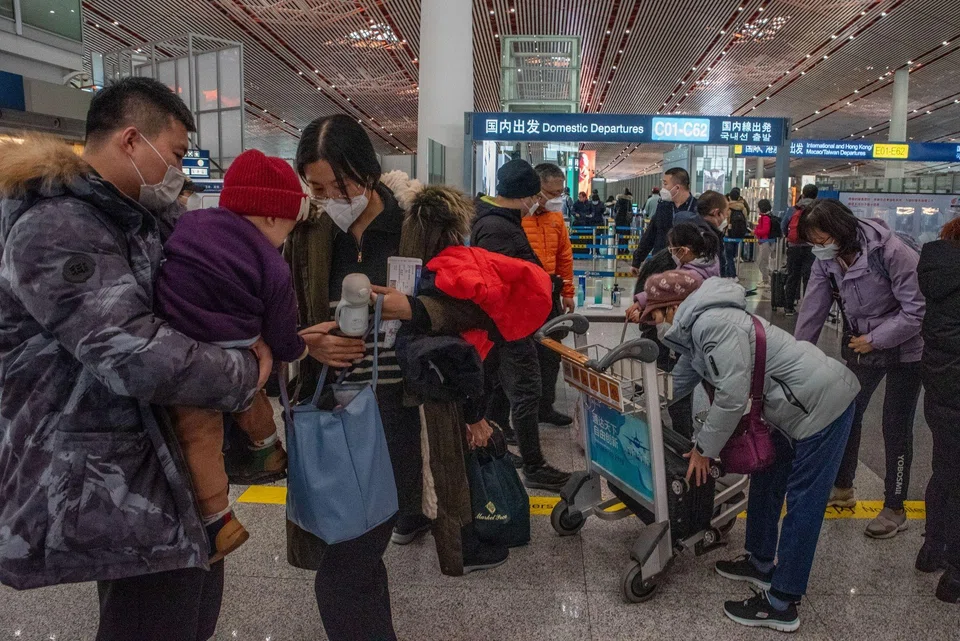
FOR as much as China’s re-opening may give the world economy a boost, President Xi Jinping would be mistaken to anticipate a two-way street. With a major slowdown or recession widely forecast for the US and Europe, Beijing can’t count on growth being buttressed much from abroad. Domestic initiatives will have to take priority.
How far are authorities willing to go? After a flurry of measures introduced and ideas floated for lifting constraints on Chinese business, the central bank injected a note of caution late last week. Stimulus is fine, but let’s be attentive to the risks of doing too much and generating a burst of inflation. That was the gist of comments Friday (Jan 13) by a top executive at the People’s Bank of China. The PBOC then passed up an opportunity Monday (Jan 16) to cut a key interest rate and added less cash than expected to the banking system.
A reduction would have been a surprise; most economists predicted the one-year rate would be held at 2.75 per cent. But that’s not an argument against taking the step. Chinese economic and social policy has been full of surprises the past few months. Despite fears that the harsh Covid-Zero stance would be maintained for at least the start of this year, China rapidly has dismantled pandemic restrictions. The government has reached a form of detente with technology companies, is considering relaxing curbs on property developers, and is mulling a loosening of fiscal policy. A rate cut Monday would have underlined the intent of removing constraints on the faltering expansion.
A raft of figures released Tuesday (Jan 17) showed conditions weakened as 2022 drew to a close. Gross domestic product increased 2.9 per cent in the fourth quarter from a year earlier, less than what was reported for the prior three months. For the year, growth was just 3 per cent, the second-slowest expansion since the 1970s and nowhere near the government’s goal of around 5.5 cent. Retail sales and real estate investment retreated in December. That these dips weren’t quite as terrible as forecast should be little comfort.
With the global expansion challenged, nursing domestic activity back to health becomes critical, as does the need to press ahead with the reopening. The drop-off in global demand showed up in China’s trade data for December, released Friday (Jan 13). Exports swooned almost 10 per cent from a year ago, while imports shrank 7.5 per cent. A sustained effort to generate domestic demand is needed. Getting folks moving around again is a definite plus, but unlikely to be sufficient.
The PBOC, generally thought to be dovish in its overall approach, has sound reasons for making sure stimulus doesn’t get out of hand. Policy is fairly supportive relative to other major economies; rate hikes aren’t seen on the horizon. Nobody thinks the Federal Reserve, European Central Bank, the Bank of England and the Reserve Bank of Australia covered themselves in glory coming out of the worst phase of the pandemic. They waited too long to tap the brakes and, as a consequence, had to slam them. In that sense, China is fortunate to have an example of what can go badly wrong.
Inflation is low in China right now. Consumer prices rose 1.8 per cent in December from a year earlier, up a tad from the prior month, but the kind of number Fed Chair Jerome Powell would kill for. Factory gate prices are falling, though the pace of decline is moderating. This isn’t the kind of picture that would warrant PBOC policymakers packing up their bags and going home. Economists suspect the bank wants to see how the full reopening progresses before opting to take out some insurance. Bloomberg Economics, which was among a minority predicting a cut Monday (Jan 16), still thinks a reduction will be required in coming months.
The absence of a move Monday may be disappointing to some unabashed China bulls. Too much hand-wringing would be untoward. We don’t want the PBOC to start throwing discredited words like “transitory” around too much. We are witnessing the painful aftermath of that line. Beijing shouldn’t be under the illusion that this recovery will be anything other than homegrown. Success or failure will be stamped “Made in China”. BLOOMBERG