From pop-star to policy wonk? Vibes are over, time now for the issues

What about trade policy, for example?
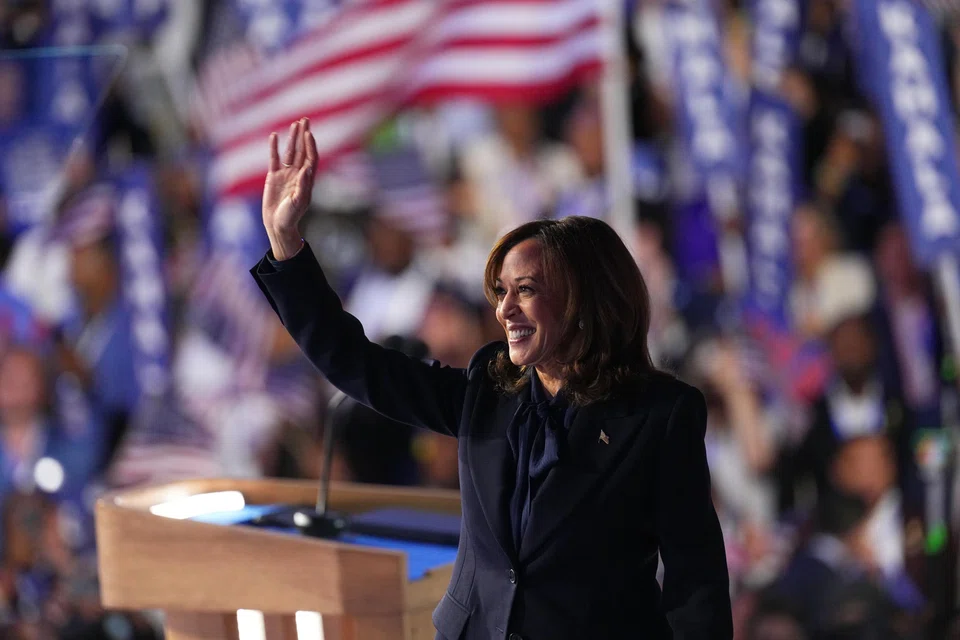
    • Vice-president Kamala Harris on the closing day of the Democratic National Convention in Chicago, on Aug 22.
    • Vice-president Kamala Harris on the closing day of the Democratic National Convention in Chicago, on Aug 22. PHOTO: NYTIMES
    Published Mon, Aug 26, 2024 · 06:10 PM

    DEMOCRATS concluded their electrifying national convention in Chicago on Thursday (Aug 22) night with their presidential candidate Kamala Harris trying to provide a clear case to voters of what she stands for and why they should send her to the White House.

    The four days of the convention amounted to a “media event” – a made-for-television production in which Harris played the leading role. She was the star of the show and her personal background as a woman of colour and daughter of immigrants, who seemed to have achieved the American dream, helped to highlight the Democratic narrative with its set of ideas and impulses on how to achieve change and opportunity, and on “not going back” – that is, being set on the future.

    Harris’ campaign flooded social media with positive messages about the vice-president and her running mate, Tim Walz, as they accepted their party’s nomination by, among other things, inviting some 200 “influencers” with hundreds of thousands of followers on TikTok and Instagram to cover the convention.


    There is no doubt that Harris has proved to be an attractive election campaigner who succeeded in exciting the Democratic Party’s electoral base, including Blacks and young voters. The former presidential candidate, President Joe Biden, would probably not have been able to do so.

    But now Harris will have to prove to the American people that she can govern the nation, make critical decisions on economic and foreign-policy issues and carry them out successfully. Vibes are great, but now we need policy specifics; we’re looking for some substance.

    For example, how would a President Harris pay for her tax cuts and how would she handle pressing foreign-policy matters? How might she alter Biden’s course on dealing with the war in Ukraine or with the Israel-Hamas conflict?

    In her convention speech on Thursday, Harris said that she would “ensure America has the strongest, most lethal fighting force in the world”. But she didn’t explain how she would approach the defence budget.

    Candidate Harris said that she would raise the corporate tax rate to 28 per cent from 21 per cent. But that would only partially cover the cost of the tax cuts and other items she proposed, which some estimates suggest would increase deficits by at least U$1.7 trillion over a decade.

    Biden raised taxes on very wealthy individuals to pay for his agenda. Harris has yet to be specific about whether she will propose additional tax increases to offset the costs of her plans.

    Harris’ track record as a San Francisco prosecutor, California attorney-general, US senator and as Biden’s vice-president may provide some clues about how she might govern, but not a lot.

    For example, as California’s attorney-general, Harris forced banks into settlements aimed at keeping homeowners in their homes after the 2008 financial crisis. Is that evidence that she would keep her promise, and, as president, fight alleged price gouging by food companies?

    Or take the issue of international trade. Harris has been aligned with the Democratic Party’s progressive wing on trade, including in her opposition to free trade agreements.

    As a Senate candidate in 2016, Harris opposed the Trans-Pacific Partnership (TPP) negotiated by the Obama administration, agreeing with criticisms from labour unions and environmental groups that the TPP would move jobs to lower-income countries such as Vietnam.

    But the trade deal never came to a vote in Congress, and Donald Trump withdrew the United States from the pact shortly after becoming president.

    Harris voted against the US-Canada-Mexico Agreement (USCMA), Trump’s replacement for the North American Free Trade Agreement, saying it wouldn’t do enough to protect Americans’ jobs and the environment. It did pass the Senate 89-10.

    Her vote then may stand as a precursor to how a Harris administration might handle the mandatory six-year review of the USMCA, with environmental and labour issues likely to be important to a Democratic White House.

    When she first ran for president in 2019, Harris’ advisers tried to persuade her to embrace free trade to distinguish her from two other progressive candidates, Bernie Sanders of Vermont and Elizabeth Warren of Massachusetts, according to The New York Times.

    Instead, she has tacked to the left on trade, hoping to give Trump less opportunity to win over union and other blue-collar voters over the issue.

    “In a Harris administration,” she said at one point, “there would be no trade deal that would be signed unless it protected American workers and it protected our environment.”

    As a member of the Biden administration, she went along with the president’s industrial policies, his rejection of new free trade agreements, and his embrace of his predecessor’s sweeping and unprecedented tariffs on US$350 billion worth of Chinese imports.

    Candidate Trump is now threatening a massive and damaging escalation of trade protection. He wants a baseline 10 per cent tariff on all imports and 60 per cent on goods from China, and recently suggested the 10 per cent levy might rise to 20.

    Candidate Harris has repudiated Trump’s new tariffs, declaring that her policy proposals “stand in stark contrast to (those of) Trump, who would increase costs for families by at least US$3,900 with what is, in effect, a new national sales tax on imported everyday goods”. Interestingly, Harris did call this a “Trump tax”.

    So if a President Harris keeps Biden’s policies in place, she will then probably look like a free trader in comparison to the economic nationalist Trump’s tariff proposals.

    In any case, Harris is expected to be more strategic and targeted in her approach to tariffs on Chinese goods, raising tariffs on a select number of strategic sectors, such as solar cells, electric vehicles, semiconductors, and steel, while cutting back on Trump’s use of indiscriminate tariffs.

    The good news is that Harris changes her positions as she adjusts to changing realities. Hence, while she was previously against fracking, now she is for it. She also changed her views on illegal immigration and the idea of Medicare for all.

    Her critics would describe that as flip-flopping and shape-shifting. Another way of putting it is that she is a pragmatist.