

Porsche and Volkswagen deserve full-time drivers at the wheel
Oliver Blume’s dual-CEO role is becoming harder to justify
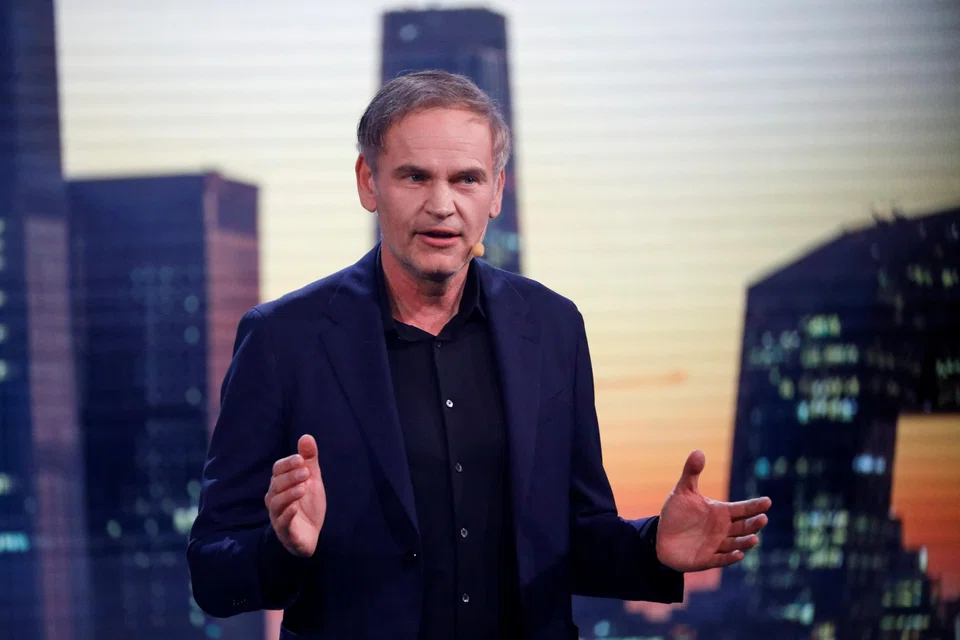
WHEN Oliver Blume accepted the role of chief executive officer of Volkswagen (VW) Group in 2022, he did so on condition he retain his previous gig running Porsche, which he’s held since 2015. It looks increasingly like one job too many.
Porsche is VW’s most valuable asset and, at the time of Blume’s promotion, the 911 manufacturer was preparing to go public. He is now CEO of both DAX-listed companies, devoting roughly half his time to each – an unusual arrangement that echoes how Carlos Ghosn once ran Renault and Nissan Motor simultaneously, and how Elon Musk currently leads Tesla and SpaceX.
I don’t doubt Blume’s capability as a manager, and I acknowledge that transforming VW will take time. But dividing his attention is becoming harder to justify; both groups face huge challenges and are underperforming peers.
VW and Porsche have a complicated history. In 2008, Porsche tried to acquire the much larger VW but ended up being swallowed by it instead. In 2022, VW sold 25 per cent of Porsche’s share capital. Institutional investors received non-voting shares, while the billionaire Porsche and Piech families’ holding company acquired voting shares. Thus VW continues to own 75 per cent of Porsche.
Investors have long had concerns about the “Doppelrolle”, and the topic came up again at the two companies’ annual shareholder meetings held in recent weeks. Shareholders warned that there are “only 24 hours in a day”, noting that Blume’s predecessor as VW CEO, Herbert Diess, stumbled despite having fewer responsibilities by the time he stepped down. Furthermore, Porsche and VW’s interests aren’t always aligned – a point also raised in Porsche’s initial public offering (IPO) prospectus. “Choose a company. Listen to the capital market. Focus on one task,” Deka Investment’s Ingo Speich told the VW meeting last month.
As usual, Blume batted away the critics. Both companies benefit “enormously” from the set-up, which enables him to keep a close eye on technology and processes at Porsche while thinking strategically for VW, he said. He reminded investors that dual roles aren’t uncommon at Volkswagen – for a time Diess was CEO of both the VW Group and its namesake brand. Plus, it’s not like he doesn’t have help. VW’s chief financial officer, Arno Antlitz, also serves as chief operating officer, for example.
In the past Blume has also reached for sporting metaphors to justify these leadership arrangements, comparing his own responsibilities to those of a football player-manager, or competing for both a league side and the national team. Porsche’s storied history, racing pedigree and patronage of sports and the arts make its CEO role one of the world’s most desirable jobs. Who would want to give it up?
By contrast, running VW is one of the toughest corporate gigs around. It involves overseeing 10 brands and almost 700,000 employees (many of them unionised), while mollifying the Porsche and Piech families and VW’s home state of Lower Saxony, who together control a majority of VW’s voting shares.
In fairness, Blume has so far shepherded these various constituencies rather well. Relations with the trade unions have improved, and he has the backing of VW’s family owners. Meanwhile, analysts applaud his determination to cut costs and openness to technological partnerships (as opposed to having VW foot the bill for everything). In terms of supervisory board level support, “we think the current management is better placed than any at VW for decades”, Citigroup analyst Harald Hendrikse told clients in March.
Blume also provides fairly good value for money. Last year, his total pay and benefits amounted to less than 10 million euros (S$14.5 million) for doing both jobs, according to VW’s annual report, which is far less than some rivals get for just one role.
Alas, in the capital markets and operationally it’s a different story. VW’s preference shares have declined around 20 per cent since Blume’s appointment, further compressing VW’s market capitalisation to a derisory 59 billion euros, less than smaller rival Stellantis.
After deducting VW’s majority ownership of Porsche and truck maker Traton, this implies the rest of VW’s sprawling automotive empire is effectively worth nothing. My hope that listing Porsche would help reveal hidden value at VW has proven much too optimistic. VW investors still have a cornucopia of concerns, ranging from the company’s fading relevance in China and software delays, to a lack of competitive electric vehicles and the Audi division’s subpar performance.
And Porsche isn’t faring much better. The stock is languishing around 10 per cent below its IPO price, after the company was trounced in profitability and pricing power by luxury rival Ferrari. Porsche’s China sales are plunging, and resale values of the electric Taycan have hit the skids. There’s a lot riding on the launch of several new models, including the electric Macan sport utility vehicle and hybrid 911.
Relinquishing the Porsche role and focusing 100 per cent on fixing VW would doubtless be wrenching for Blume, but it would demonstrate that VW is finally becoming a more “normal” company. Until then, investors may decide automakers with full-time drivers offer a smoother ride.
TRENDING NOW

World’s largest offshore wind platform by Seatrium consortium on track to be completed by 2028
Is stamp collecting enjoying an analogue revival or are its best days over?
GovTech retrenches another 38 staff in second round of layoffs
MBS adjusted property Ebitda falls 20.6% in Q3 with fewer high-roller visits, weaker hold

