

Positive reaction to market reforms opens door to broader enhancement of growth capital sector
The result could be a bigger pipeline of new listings, and some struggling listed companies going private

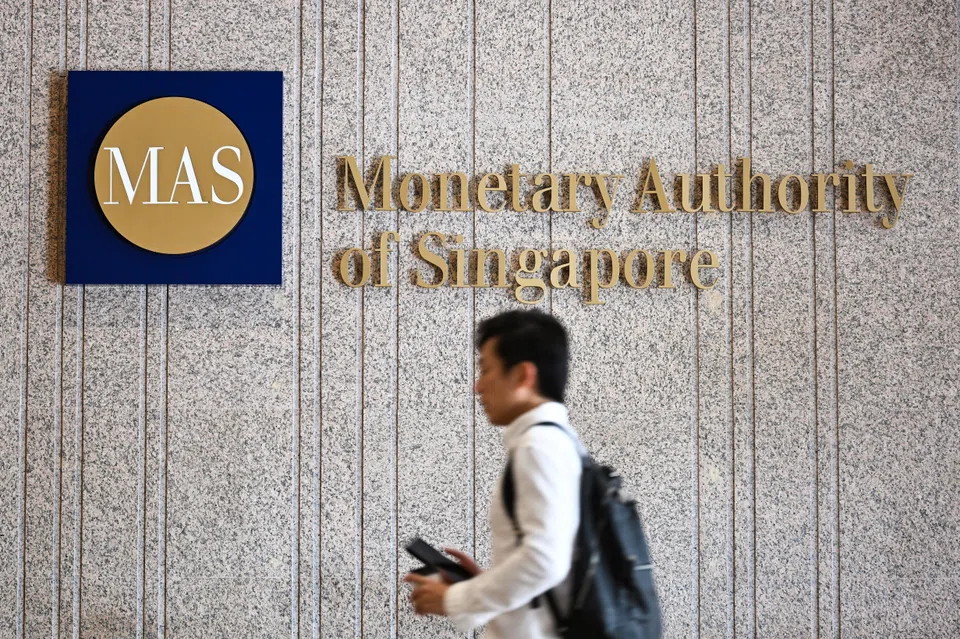
[SINGAPORE] Back in November, this column said the Monetary Authority of Singapore (MAS) ought to slow-walk the allocation of billions of dollars to fund managers under the Equity Market Development Programme (EQDP).
With stock valuations becoming stretched, and growing concerns of a global market sell-off, the dry powder would have helped stave off potential volatility in the local market.
It seems that I was worrying about nothing.
On Thursday (Feb 12) – as the Straits Times Index breached the 5,000 mark for the first time – MAS said the EQDP will be expanded from S$5 billion to S$6.5 billion.
This came after Prime Minister and Finance Minister Lawrence Wong said in his Budget speech that he would provide a S$1.5 billion top-up to the Financial Sector Development Fund.
The EQDP is one of the key initiatives announced last year to revitalise the local market. So far, a total of S$3.95 billion has been farmed out to nine fund managers.
With the expansion of the programme, a further S$2.55 billion could now be deployed over the coming months.
This latest move could also fuel expectations for further enlargement of the programme in the future. Indeed, one market watcher suggested to me in jest last week that the EQDP might become to investors in the local market what the Community Development Council Vouchers scheme is to consumers patronising heartland eateries and shops.
The government isn’t trying to boost the market for its own sake, of course. Lifting the market valuations of locally listed companies through the EQDP and other measures is part of a larger plan to draw new listings to the local market, and strengthen the whole enterprise financing ecosystem.
Enhancing growth capital sector
Last week, PM Wong announced a number of measures during his Budget speech to help promising companies grow and eventually seek a listing in Singapore.
These included setting aside S$1 billion to enhance the Startup SG Equity scheme, which aims to mobilise private-sector funding for Singapore-based technology-oriented startups with global market potential.
PM Wong also said he will launch a second S$1.5 billion tranche of the Anchor Fund, which invests in high-growth companies ahead of an eventual listing in Singapore. As with the first tranche, this will be a co-investment between the government and Temasek.
In addition, PM Wong said a new workgroup will be convened to develop strategies to position Singapore as a leading centre for growth capital.
To be chaired by Minister for National Development and MAS deputy chairman Chee Hong Tat, the workgroup will recommend measures to strengthen Singapore’s position in fields such as venture capital, private equity, private credit and securitised assets.
Chee, who chaired the equities market review group (EMRG) – which came up with the EQDP and other measures to revitalise the local market – told the media last week that the ultimate goal is for the various segments of Singapore’s enterprise financing ecosystem to reinforce one another.
What exactly would that look like? Why is the effort to strengthen the venture capital and private equity sectors getting under way only now – nearly three months after the EMRG published its final report?
Asset-light, capital-efficient models
When I first began investing in stocks more than three decades ago, I would sometimes hear older retail investors gloat about a rights issue having provided them with an opportunity to acquire “cheap shares” in a company they happened to own.
This never made any sense to me. In the first place, being tapped for cash was never a good thing, in my view. Investors who did not have sufficient cash to take up their full entitlements also risked dilution.
More to the point, even if investors subscribed fully for their entitlements, they would theoretically be no better or worse off, regardless of the rights issue price.
Nevertheless, public investor enthusiasm back then made listed companies useful capital-raising vehicles for all manner of enterprises, and even led to a proliferation of “concept stocks” – which traded on the back of little more than investment stories.
One could argue that there was an element of venture capitalism in the public market at the time.
Investment views on small companies were often shaped less by their financial statements and more by what was known about their competitive strengths, expansion plans and the capability and character of their controlling shareholders.
Things have changed a lot since then, of course. Even with the strong performance of the Singapore market over the past couple of years, investors are now much less keen on rights issues than they were in the 1990s.
These days, listed companies seem to tap their shareholders for capital only as a last resort. This seems to be precisely what their investors want.
Some of the best performers over the past couple of years are companies that have adopted asset-light and capital-efficient business models, and begun returning excess capital to investors through share buybacks as well as higher dividends.
More listings and delistings?
The way I see it, the strong positive reaction to the EMRG’s recommendations over the past year has now opened the door for Singapore to reform and enhance the other segments of its growth capital ecosystem.
With the creation of the new growth capital workgroup, as well as the expansion of the Anchor Fund and Startup SG Equity scheme, we could soon see a bigger pipeline of new listings for the local market.
Meanwhile, the increased allocation of funds to the EQDP is likely to help sustain investor interest in the domestic market in the months ahead, creating a conducive environment for venture capital and private equity players to recycle their funds.
More active private equity and private credit sectors might also create opportunities for some listed companies that are struggling to keep up with the advancing market to go private and seek alternative forms of growth capital.
What does all this mean for investors? My sense is that Singapore stocks are now quite richly priced, and may struggle to deliver good returns over the next few years.
While I have been harvesting some of the gains I’ve made, I’m still maintaining long-term exposure to the market through various fund products.
TRENDING NOW

Government to bring forward raising of retirement age, give employers more financial support to create flexi-load jobs
If Europe goes to war, the fallout will be felt in East Asia
Former minister Maliki Osman, Revolut chairman join Asia Gulf Holdings advisory board

Small nuclear reactors could boost the Asean Power Grid: GE Vernova executive

