

PPS Solitaire: Different table service, same laksa
Why Singapore Airlines’ top loyalty tier looks exclusive, feels familiar – and delivers surprisingly little
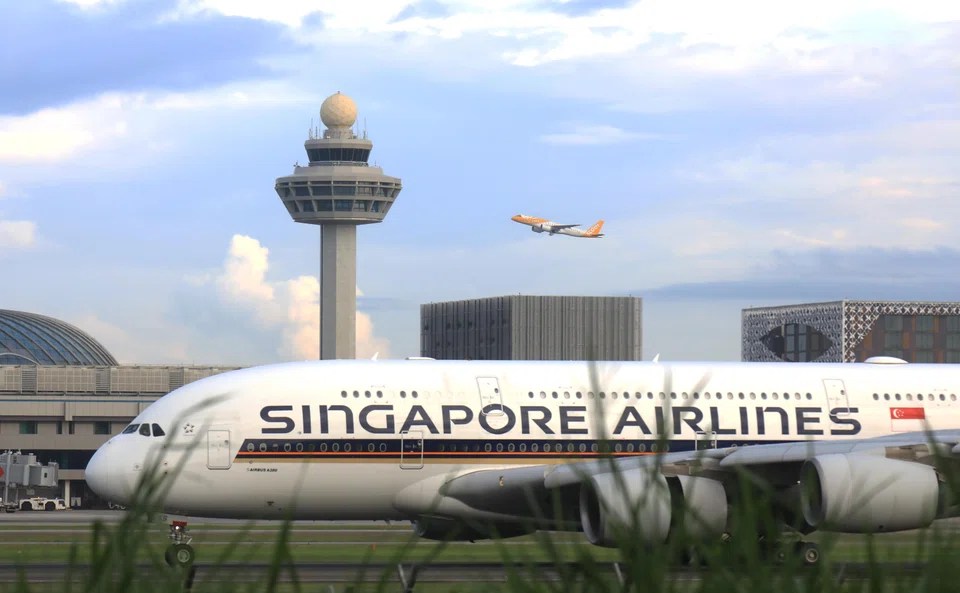
I HAVE been a PPS Solitaire member for years. Long enough, certainly, to have earned a view – and perhaps a little scepticism – about what the membership actually delivers. The uncomfortable truth is this: Despite its aura, its mystique and its luggage tags, PPS Solitaire increasingly feels less like a premium travel proposition and more like a symbolic add-on to Singapore’s modern status kit.
You know the kit here in Singapore. The five Cs: cash, condo, country club, car and credit card. PPS Solitaire sits comfortably alongside them – not as a functional necessity, but as a badge. A marker. Something to have, something to show, something to mention casually when the conversation drifts in that direction. The problem is not that PPS exists as a status symbol. The problem is that it increasingly exists only as that.
In aviation, loyalty is not about romance. It is a contract. Customers commit disproportionate share of wallet and predictability of demand; airlines respond with time, certainty and friction removal. When that contract becomes unbalanced, loyalty stops being emotional and becomes transactional. That is precisely where PPS Solitaire risks drifting today.
The paradox of being “top tier” – without top-tier outcomes
On paper, PPS Solitaire sits at the summit of Singapore Airlines’ (SIA) loyalty hierarchy. In practice, it often feels curiously indistinct. There are no complimentary upgrades as a matter of principle. No chauffeur service at Changi even though peers such as Emirates, Etihad Airways, Qatar Airways and Lufthansa long ago accepted that door-to-door experience is where premium perception is truly won or lost.
More tellingly, the customer journey itself is not meaningfully separated. PPS members use the same security screening lanes as economy passengers. Immigration flows are largely shared. At the airport – the very theatre where premium differentiation should be most tangible – the experience converges far too quickly.
This is not about entitlement. It is about design. If a loyalty programme cannot reliably remove friction at the points where friction is most visible, members will inevitably question what exactly their loyalty is buying.
Lounges as a case study in restrained differentiation
Nowhere is this tension clearer than in SIA’s lounges at Changi. The difference between the KrisFlyer First Class Lounge and the Business Class Lounge is, frankly, modest and sometimes almost performative.
Yes, in First Class, food is brought to your table. In Business Class, you walk a few metres to collect it yourself. But the offerings themselves? Often identical. The same signature laksa. The same satay. The same noodle dishes. The distinction lies in service choreography, not in substance.
This is a missed opportunity. Lounges are one of the few elements of the premium product that airlines fully control. They are predictable, scalable, and far less constrained than aircraft cabins or upgrade inventories. And yet, SIA has chosen restraint over separation.
The result is that the First Class Lounge feels less like a destination and more like a quieter annex. A slightly more hushed version of Business, rather than a space with its own identity, culinary ambition or operational privileges. When the most visible difference is whether you stand or sit while receiving the same laksa, the customer instinctively discounts the value.
This matters because lounges are where premium travellers pause long enough to notice. And what they notice today is convergence, not distinction.
The economics behind the caution – and why they no longer convince
To be fair, SIA’s conservatism is rational. Premium cabins generate substantial revenue, and indiscriminate upgrades dilute yield. Dedicated infrastructure is expensive. Operational separation introduces complexity.
But loyalty value does not have to be delivered through scarce assets. The most effective elite programmes focus on guarantees, not giveaways. Priority when things go wrong. Certainty when schedules change. Protection of time, not ego.
What PPS currently offers is largely discretionary. Lounge access that feels familiar. Priority that depends on load factors. Recognition that is polite but not operationally decisive. For the airline, this protects margins. For the member, it erodes clarity.
Over time, ambiguity is deadly to loyalty. Customers do not resent airlines for saying “no”; they resent airlines for saying “maybe”.
This is why PPS Solitaire increasingly resembles a lifestyle accessory. Members proudly attach their luggage tags, not because those tags unlock consistent benefits, but because they signal belonging. The programme delivers identity more reliably than outcomes.
That may be sufficient for some. But for the airline, it is strategically risky. High-value customers who stop believing in differentiation start behaving rationally. They compare schedules, prices and aircraft types. Emotional loyalty quietly gives way to spreadsheet loyalty.
The real danger is not dissatisfaction – it is indifference.
What meaningful reform would actually look like
Reimagining PPS does not require generosity that undermines profitability. It requires precision.
First, introduce guaranteed, published benefits. One or two confirmed upgrades per year. Guaranteed same-day rebooking during disruptions. A fixed number of priority recovery interventions. These need not be unlimited – they simply need to be reliable.
Second, redesign the ground experience privilege. If physical separation at Changi is difficult, then create time-based separation: express security windows, dedicated transfer escorts (for example, chauffeur), or fast-track digital passes triggered automatically for PPS members. Friction removal beats luxury every time.
Third, make the First Class Lounge genuinely first class. Not with more food, but with different food. Bespoke menus unavailable elsewhere. Fewer guests. Quieter zones. Operational desks empowered to fix problems proactively. The lounge should feel like an advantage, not a variation.
Fourth, allow benefit portability. Many PPS members travel with family or for work. The ability to allocate certain additional privileges would dramatically increase perceived value without material cost.
Finally, measure success not by enrolment or prestige, but by behaviour. Track retention among PPS members. Monitor share-of-wallet stability. Measure how often members choose SIA when it is not the cheapest or most convenient option. That is the only loyalty metric that matters.
A simple question SIA must answer
Is PPS Solitaire meant to be a badge – or a tool?
If it is a badge, then the programme is largely doing its job. It signals refinement. It flatters. It looks good on a suitcase.
If it is a tool, then it needs sharper edges. Clear guarantees. Real separation. Benefits that show up precisely when travel becomes stressful, not only when it is smooth.
As a longstanding PPS Solitaire member, I do not expect extravagance on every trip. I expect consistency. I expect my loyalty to buy me time, certainty and protection from avoidable friction. Right now, too much of that value remains implied rather than delivered.
SIA remains a great airline. But great airlines cannot rely on legacy prestige alone. In a world where premium travellers are more informed, more mobile and less sentimental, loyalty programmes must evolve from elegant symbolism into practical advantage.
Otherwise, PPS Solitaire will remain what it is increasingly perceived to be: a beautifully designed tag – attached to a journey that looks, feels and tastes remarkably familiar.
The writer is founder of BAA & Partners






