Prabowo’s zero-deficit delusion
Without deeper tax reform, spending restraint or realistic dividend expectations, a balanced Budget is mathematically unattainable
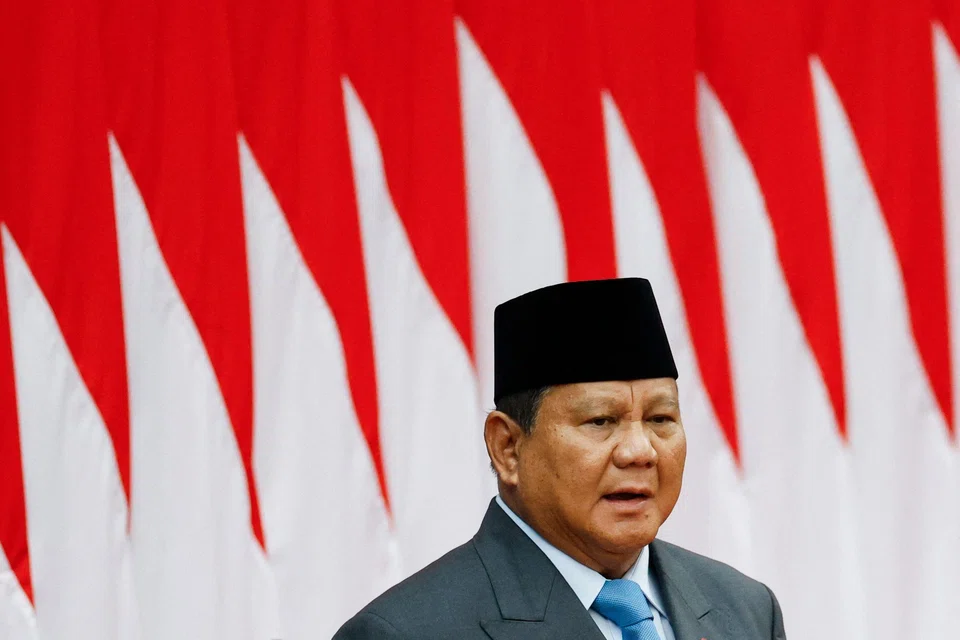
WHEN President Prabowo Subianto addressed Indonesia’s parliament on Aug 15, 2025, to present his draft 2026 state Budget, his confidence was unmistakable.
He proposed a total spending of 3,786.5 trillion rupiah (S$300 billion) and revenues of 3,147.7 trillion rupiah, which would have resulted in a deficit of 638.8 trillion rupiah or around 2.5 per cent of projected gross domestic product. He described these figures as proof of “prudent and sustainable” fiscal management.
Then came his boldest claim: By 2027 or 2028, Indonesia could achieve a balanced Budget, a fiscal year with zero deficit.
Lawmakers rose in applause, celebrating what sounded like a new chapter in Indonesia’s economic story – a self-reliant nation, no longer dependent on borrowing. But beyond the theatrics, Prabowo’s declaration is detached from fiscal reality.
The president’s optimism rests on three assumptions: that waste (corruption) can be eliminated, that tax revenues can grow without burdening the economy, and that state-owned enterprises (SOEs) can deliver unprecedented profits to the treasury. The last of these – SOEs as a fiscal engine – is the most ambitious and least realistic.
His economic team reportedly expects Indonesia’s SOEs, through a new sovereign superholding called Danantara, to generate dividends of up to US$50 billion per year, or roughly 825 trillion rupiah.
That amount conveniently mirrors Indonesia’s projected deficit in 2027 to 2028, implying that Prabowo hopes Danantara will bridge the entire Budget gap. The idea – Indonesian companies, instead of foreign creditors, financing the state – is politically attractive, but economically flimsy.
Accounting illusion
Over the past five years, SOE dividends have been modest and volatile. They totalled 43.9 trillion rupiah in 2020, fell to 29.5 trillion rupiah in 2021, rose to 39.7 trillion rupiah in 2022, then jumped to 82 trillion rupiah in 2023 and about 85.5 trillion rupiah in 2024. Even with a 2025 target of 90 trillion rupiah, those numbers remain far below the hundreds of trillions needed to eliminate the deficit.
Moreover, these dividends have been offset by large state capital injections – more than 250 trillion rupiah between 2020 and 2024. Net fiscal gain is negligible.
In reality, the government has been paying its own companies to pay it back, an accounting illusion rather than genuine profit.
Adding to the scepticism, the latest 2026 Budget numbers reveal an even wider fiscal gap than before.
In September 2025, parliament approved total spending of 3,842.7 trillion rupiah and revenues of 3,153.6 trillion rupiah, leaving a deficit of 689.15 trillion rupiah – roughly 2.68 per cent of GDP.
That figure is larger than the 2.48 per cent deficit in the original draft and reflects mounting spending pressure, not austerity. The adjustment adds more than 56 trillion in expenditures compared with the earlier proposal, largely from expanded transfers to regions, defence modernisation and social programmes.
“The new Budget signals fiscal expansion, not consolidation, the opposite of what would be needed to reach a zero deficit by 2027.”
Meanwhile, revenue growth has been tepid, with only a marginal increase of about six trillion rupiah.
In other words, spending is rising faster than income, moving Indonesia further from, not closer to, fiscal balance. Analysts now warn that the deficit could edge towards the 3 per cent legal ceiling if revenues fall short. The new Budget signals fiscal expansion, not consolidation, the opposite of what would be needed to reach a zero deficit by 2027.
Fiscal fix
Compounding the challenge is the fact that the 2025 Budget itself has already required mid-year revisions.
Finance Minister Purbaya Yudhi Sadewa, appointed earlier this year, has been renegotiating the 2025 Budget with parliament to keep the deficit under control. The official deficit target under the 2025 Budget Law was 616.2 trillion rupiah (2.53 per cent of GDP), but updated projections show that it could reach around 662 trillion rupiah, or 2.78 per cent of GDP.
Purbaya has publicly pledged to “keep the deficit below 3 per cent to protect fiscal credibility”, warning that Indonesia cannot afford to test investor confidence.
The revisions include re-prioritising certain ministries’ spending and trimming inefficient programmes. Yet, the fact that the government must already restructure the 2025 Budget midstream to contain slippage underscores how fragile fiscal discipline remains.
If the administration struggles to hold the deficit near 3 per cent today, how plausible is it that it can reduce it to zero in just two or three years?
Danantara, Prabowo’s supposed fiscal fix, offers little reassurance. While modelled on Singapore’s Temasek Holdings and Malaysia’s Khazanah Nasional, it remains untested and undercapitalised. Unlike Norway’s Government Pension Fund Global, Danantara lacks excess resource revenue or large foreign reserves. It depends on leveraging illiquid SOE assets and attracting third-party investors, both of which take time and involve risk.
“Expecting the Danantara to generate 825 trillion rupiah in annual dividends by 2027 is not optimism; it’s arithmetic denial.”
Even if Danantara performs well, its mandate as a strategic development fund means that it will prioritise long-term national projects, such as industrial downstreaming, infrastructure and renewable energy, that produce returns over a decade and not within the next two Budget cycles. Expecting it to generate 825 trillion rupiah in annual dividends by 2027 is not optimism; it’s arithmetic denial.
Ambition must be grounded in realism
Indonesia’s fiscal fundamentals also remain weak.
The tax-to-GDP ratio hovers around 10 per cent, among the lowest in South-east Asia. Efforts to broaden the tax base move slowly, while expenditures rise due to social programmes and defence spending. Prabowo’s version of “efficiency” focuses on reallocating funds, not reducing them. The political cost of genuine austerity – cutting popular programmes or limiting state-led projects – is simply too high for a populist administration.
In effect, Indonesia’s fiscal policy continues to expand even as revenues stagnate. Without deeper tax reform, spending restraint or realistic dividend expectations, the zero-deficit goal is mathematically unattainable.
Prabowo’s vision serves a political purpose more than an economic one. Announcing a zero-deficit target projects authority and confidence, traits central to his leadership persona. But as fiscal pressures grow, that narrative risks eroding credibility instead.
A more credible fiscal strategy would involve incremental deficit reduction, improved tax compliance, better governance of SOEs, and prioritisation of expenditures that yield measurable returns. These are less glamorous, but far more sustainable than the illusion of a “zero-deficit miracle”.
Indonesia deserves fiscal ambition, but ambition grounded in realism. Without substantial reform, Prabowo’s promise of a balanced Budget by 2028 will remain what it has always been, a political slogan untethered from economic reality.
And when fiscal illusions collide with arithmetic, it is ordinary citizens, not politicians, who end up paying the price.
The writer is a senior analyst at Indonesia Strategic and Economics Action Institution, a think tank specialising in geopolitical and geo-economic studies in Indonesia