

Private companies should get more involved in tackling the world’s water crisis
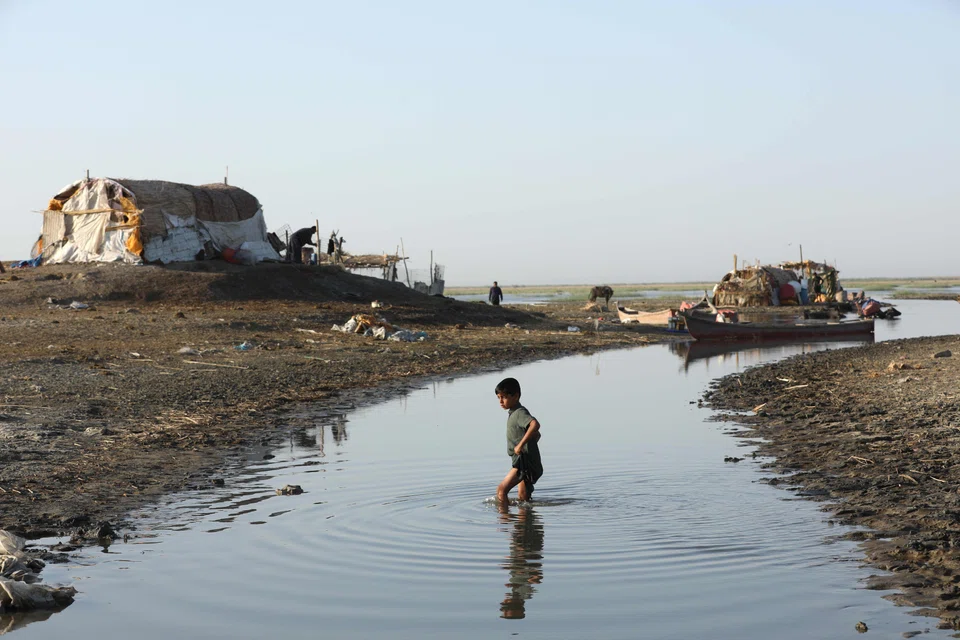
WATER has zoomed far up the global agenda – and it is critical that private companies help with funding and new technology.
At a United Nations (UN) conference in New York this month, delegates were warned that two billion people, or a quarter of the global population, use unsafe drinking water sources. Some 3.6 billion people live without safely managed sanitation, and 2.3 billion lack basic handwashing facilities at home.
Besides access, pollution is an issue. More than 80 per cent of wastewater is released without being treated or reused, pointing to the need for stringent regulations to ensure better management.
Water conservation is crucial as droughts could be the next pandemic. At the same time, climate change has worsened floods. In the past 20 years, almost three-quarters of disasters were water-related, causing economic damage of almost US$700 billion, the UN estimates.
Private-sector funding and know-how are needed to help countries such as Bangladesh build flood infrastructure. Health professionals and agricultural experts are also crucial to address the aftermath, such as pollution and land damage.
Addressing shortages
Agriculture, manufacturing and renewable energy industries desperately need reliable sources of water. According to the UN, agriculture absorbs around 72 per cent of the world’s freshwater and heavy industry about 19 per cent, while the rest goes to cities and towns.
Since the global population is growing rapidly and more food will be needed, the UN fears that by 2030, water demand could exceed supply by 40 per cent. Swift action should take place now to avoid that possibility.
What can be done to counter a potential mega water crisis aggravated by drought and floods? Besides the direct negative impact on billions of lives, there would be severe damage to food output and overall economies.
Governments, local and regional authorities, and non-governmental organisations (NGOs) are already active. The private sector has also become involved.
But many more companies need to play a much more active role in cutting pollution, construction of dams, water reclamation, sewage plants and other infrastructure. New technology and research are also urgently needed to create new water sources.
This is not a recommendation for the privatisation of water companies. The UK privatisation model has been inefficient, costly and extremely unpopular. Inadequate investment, high levels of debt, large dividends to shareholders and excessive director payments have resulted in major water leakages and sewage being dumped into rivers and the sea.
Instead, private companies should provide funding and work alongside the public sector and NGOs on a contractual or private partnership basis.
“Water does not only present us with challenges. It also presents us with a great opportunity,” states the UN’s dedicated water division. “Water can be the dealmaker, the leverage point for a green economy, climate resilience and a more sustainable and inclusive world.”
“Water – because of its many interlinkages – can bring together all stakeholders (individual and institutional) to forge coalitions, strengthen capacities and provide solutions to be replicated and scaled.”
Opportunities for investment
Pledges made during the July conference exceeded US$330 billion, with the potential to leverage close to US$1 trillion. The private sector and civil society made most of these, according to the UN. Two-thirds of commitments came from 480 large and well-established organisations.
Riding the Wave, a study of private companies working on water conservation and innovation, found more than 2,700 water-related opportunities worth an estimated US$436 billion.
“The ripple effect of water action means that acting on these opportunities is good for business, and good for the planet,” the report said.
For instance, the global water desalination market – that is, converting seawater to freshwater – is expected to grow from US$13.5 billion in 2021 to US$28.8 billion by 2030, according to some estimates.
In providing access, one player is WorldServe International, with backers that include US businessman Doug Pitt and his younger brother, actor Brad Pitt. It has been drilling large-scale, deep boreholes in Tanzania, Africa. These wells provide water for some three million people, and are powered by solar panels to distribute the water for drinking, sanitation and agriculture.
Innovation could bring even more opportunities to light. Source, a startup in Arizona, has reportedly raised US$130 million from investors such as Bill Gates’ Breakthrough Energy Ventures and asset manager BlackRock.
Source produces “hydropanels” for residents and companies. These are similar to solar panels, but also have fans that suck in moisture from the air to create clean, safe drinking water. Despite the dry desert conditions in Arizona, each panel can produce six litres of water a day, the company says.
TRENDING NOW

Indonesia begins cutting natural gas exports to Singapore from Oct 24: reports

Singapore’s central gas buyer affirms Indonesia’s role as ‘important partner’ amid export review warning

KKR founders among investors buying 42% of Peter Lim’s Valencia; club valued at US$1.4 billion
NEA issues notices to 10 Singapore-based companies, including Wilmar and APP, over haze

