

The quiet death of the US pivot to Asia
Iran campaign consumes capabilities America would rely on in any major conflict in the Indo-Pacific
FOR over a decade, successive American administrations agreed on precious little – but they agreed on this: the future of US power lay in the Indo-Pacific, not the Middle East.
The pivot to Asia was more than a policy preference. It was a strategic reckoning – an acknowledgement that Washington had squandered a generation of blood and treasure in Iraq and Afghanistan, while China quietly transformed itself into the only power on earth capable of contesting American primacy.
That consensus is now in ruins, and the rubble is scattered across the Persian Gulf.
On Feb 28, the US and Israel launched surprise air strikes against multiple sites across Iran, killing Supreme Leader Ali Khamenei and setting off the most serious regional war the Middle East has seen in decades.
The immediate military results have been, by some measures, impressive. But the strategic consequences may prove far more damaging to American interests than any Iranian missile.
Former senior US official Kurt Campbell, one of the architects of the original pivot, warned that the decision to join Israel in striking Iran disrupted a strategic trajectory built painstakingly across three administrations.
Military assets, including aircraft carriers, have been rapidly redeployed from Asia to the Middle East, and high-level diplomatic engagements in the Pacific have been postponed. In one fell swoop, as Campbell put it, everything the pivot stood for has been sent into reverse.
The strategic logic that underpinned the pivot was always sound. China is the only true peer competitor to the US. The Russian economy is a fraction of America’s, and Germany’s alone dwarfs that of Moscow.
The argument that Europe could manage Russia while Washington turned to the more consequential challenge in Asia was – and remains – robust. Yet America finds itself, once again, neck-deep in Middle Eastern sand.
The military costs are already visible. At least two US destroyers based in Japan have been redeployed to take part in strikes on Iran.
Current and former defence officials in Asia are growing alarmed that more American firepower will shift over time if the war drags on. Even a swift conclusion, they warned, could leave depleted munitions stockpiles that would take years to replace – leaving Taiwan and other partners dangerously exposed.
Reports suggested that Washington and Seoul have been in talks to redeploy Patriot air defence batteries from South Korea to the Middle East. South Korean President Lee Jae Myung acknowledged to his Cabinet that while Seoul has expressed opposition, it cannot fully push back against US military needs.
This is the quiet, almost undiscussed price of the Iran war: the hollowing out of the very defensive architecture that was supposed to deter Chinese adventurism in East Asia.
Beijing, for its part, is watching with composed attention. China’s official sources have framed the war as confirmation of their core strategic narrative: the US as a global destabiliser, China as a voice of responsible diplomacy and national sovereignty.
Whether one accepts that framing or not, the geopolitical windfall is real. Every week that American carriers patrol the Persian Gulf is a week they are not in the South China Sea. Every Patriot battery moved to Jordan is one fewer battery guarding Seoul or Taipei.
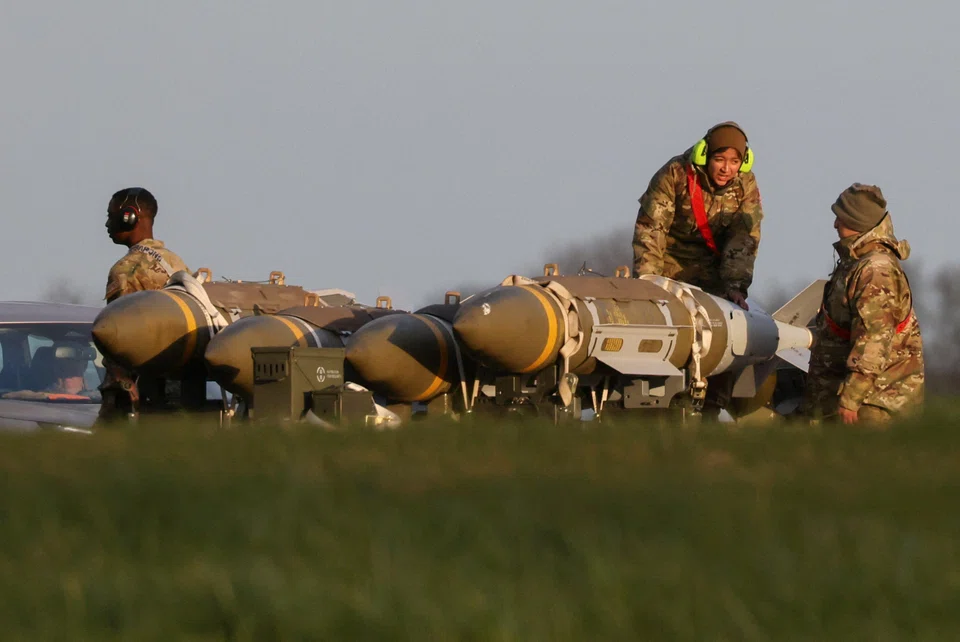
Air defence systems, intelligence assets and precision munitions consumed in the Iran campaign are among the exact capabilities the US would rely on in any high-end conflict in the Indo-Pacific. Military resources are finite. Strategic attention is finite. And history is unforgiving of powers that fail to husband both.
There is a deeper irony at work. The pivot’s original sin was always that it was announced loudly but funded modestly. American strategy kept declaring Asia the priority while politics kept dragging the US back to the Middle East – the evangelical community’s attachment to Israel, the Gulf’s petrodollar architecture, the gravitational pull of existing bases and alliances.
European strategic over-reliance and domestic pressure from the evangelical community have repeatedly prevented any serious drawdown of the US’ footprint in the Middle East, and now a new war has made that footprint deeper still.
Some analysts have drawn parallels with the 1956 Suez Crisis – when Britain and France, despite initial military success, collapsed politically and revealed that they could no longer act as independent global powers.
The parallel is imperfect but instructive. Moments of apparent strength can mask structural decline. A military operation that impresses in the short term can exhaust the strategic reserves needed for the competitions that matter most.
The US is not in terminal decline. Its military demonstrated stunning capabilities early in this conflict. But capability and strategy are not the same thing.
Such an abrupt departure from America’s stated strategic purpose in the Indo-Pacific will trouble its closest partners in Asia, while boosting Beijing’s confidence over its own prospects in the region and beyond.
The pivot to Asia was never just a military redeployment. It was a strategic promise – that the US had learnt from its post-9/11 overreach, that it understood where the decisive contest of the 21st century would be fought, and that it would be present and committed when that moment arrived.
That promise has now been broken, not by America’s adversaries, but by its own choices.
History will record that the pivot died with an air strike on Teheran.
TRENDING NOW

Philippine power giant First Gen rebuffs foreign offers, plans up to US$2.6 billion in expansion

Cliff Tan has 7 million followers and a 4-month waitlist. Why won’t he expand his business?

Could stablecoins be the future of money?

From finance aspirant to Asean CEO: TUV SUD’s Jonas Strahberger on finding people who believe in you

