

The real problem with China’s economy
CHINA’S ongoing economic slowdown has elicited a variety of explanations. But forecasts largely have one thing in common: while the short-term data is somewhat volatile – annual growth rates have been distorted by the legacy of the authorities’ draconian zero-Covid policy – most observers expect Chinese gross domestic product (GDP) growth to continue trending downward.
The International Monetary Fund, for example, expects China’s growth to reach just 4.5 per cent in 2024 and fall to 3 per cent by the end of this decade – better than most advanced economies, but a far cry from the double-digit rates of a decade ago. Yet growth is only part of the story.
Of course, the focus on it is understandable. For decades, China has accounted for a significant share of global GDP growth. Moreover, the size of China’s economy – a key determinant of its ability to continue expanding its military capabilities – will shape the evolution of the balance of power with its main rival, the United States.
But growth is not the only – and probably not even the main – channel through which the Chinese economy affects the rest of the world. The balance of savings and investment also matters, perhaps even more.
Extraordinarily high investment
One of the Chinese economy’s distinguishing characteristics is its extraordinarily high investment and savings rates, which exceed 40 per cent of GDP. This is double the level in the European Union and the US, and higher even than the rate in Asia’s other high-savings countries, such as Japan and South Korea.
Investment – particularly in high-quality infrastructure – has been integral to maintaining China’s rapid GDP growth. China built the world’s largest high-speed rail network in record time. Today, even medium-sized cities have metro lines, and China’s numerous shiny new airports put the ageing terminals seen in the US and Europe to shame.
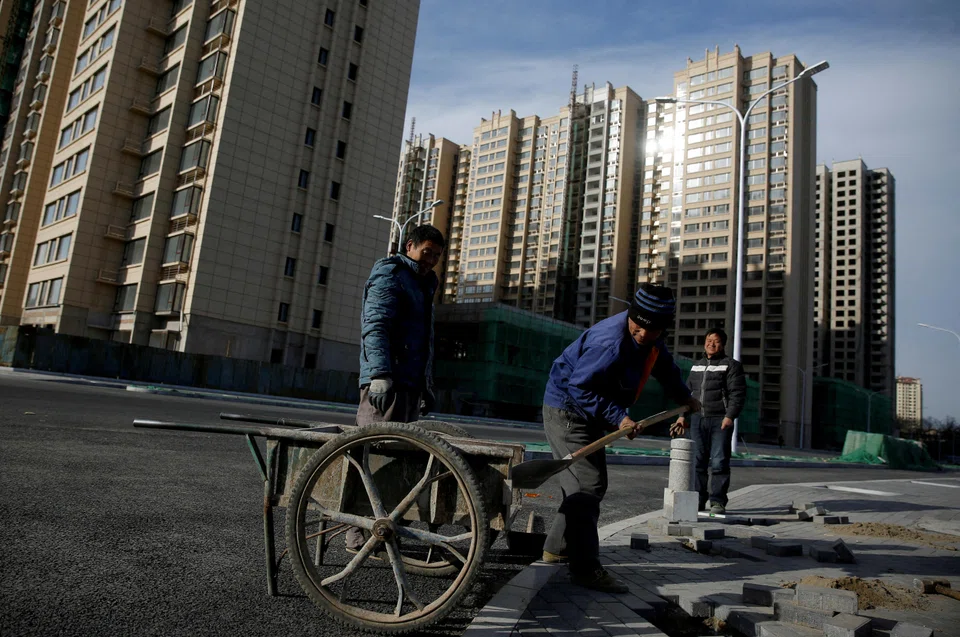
But, as Harvard’s Kenneth Rogoff has pointed out, such investment generates diminishing returns. This is best illustrated by the construction sector’s woes. Over the last decade, so much housing has been built in China that about 40 square metres per person already exists – about as much as in Germany or Japan.
In other words, China has built the capital stock of a developed economy, effectively meeting housing demand – before reaching the associated income level.
This severely limits investment’s potential to drive further increases in income. At this point, further housing construction would simply create more ghost cities: shiny, new, and empty. And because the additional housing stock – and infrastructure more broadly – has a long life span, this will not change significantly any time soon.
To be sure, China’s government will probably be able to find new ways to support the construction sector, including by finding infrastructure projects that can at least be made to appear worthwhile; for example, in the poorer and rural inland provinces. But overall, investment can be expected to decline gradually from now on.
Japan faced a similar problem a few decades ago. After its real-estate bubble burst in the late 1980s, the government attempted to lift the economy out of a severe downturn by channelling vast funds towards infrastructure investment. But most of the new roads led to nowhere, so after a few years of heavy spending, the government had to give up.
In China, the response to lower investment might seem simple: the Chinese could consume more. But recall that China’s savings ratio is also extraordinarily high, and has remained so despite the authorities’ efforts over the last decade to foster domestic consumption as a driver of growth. A significant rise is thus unlikely in the foreseeable future.
Beyond consumption, China could channel savings towards investment in renewable energy sources like solar and wind. But with such investment already approaching US$300 billion annually – far more than in the US or Europe – the ability of renewables to absorb Chinese savings is limited.
Surplus spillovers
Amid declining investment, China’s high savings spill out into the rest of world via current-account surpluses. In China, these surpluses are even larger than those of other countries with excess savings, like Germany or Japan, because of the magnitude of the potential excess and the sheer size of the economy.
If savings remain at their current level (more than 40 per cent of GDP), but investment falls to 30 per cent of GDP – still a very high ratio – China would have to maintain a current-account surplus of 10 percentage points of GDP to keep the economy in equilibrium. With China’s GDP set to reach US$20 trillion soon, this would amount to nearly US$2 trillion. That is several times larger than the previous surpluses of Germany or Japan, and large enough to affect the global savings-investment balance.
One spillover effect of China’s savings surplus – downward pressure on interest rates – would be relatively benign. But another, bigger danger looms: large Chinese current-account surpluses would fuel an already-accelerating trend towards protecting domestic industries against Chinese competition.
This does not have to be the case. With their investments in technologies like batteries, solar panels, and electric vehicles, Chinese exporters are on track to gain an ever-greater advantage in capital-intensive green industries. Europe and the US could welcome cheap green imports as a means of reducing the costs of their own climate policies.
But this seems unlikely in today’s climate of geopolitical confrontation. Instead, we can look forward to more protectionist policies, which will increase costs and do nothing to reduce Chinese savings. PROJECT SYNDICATE
The writer is director of the Institute for European Policy-Making at Bocconi University
TRENDING NOW

Analysts cut DBS target price on lower 2027 earnings, but see buying opportunity after share price slide

China Investment Corp, PGIM’s 50% stake in Nex mall up for sale; asking about S$1.2 billion

Nvidia CEO Jensen Huang drops from world’s top 10 richest after chips sell-off

OCBC wealth clients turn defensive amid market volatility as Q3 profit rises 3%

