

Reining in the vassal states
Will trade wars wreck the US economy?
[WASHINGTON, DC] After Donald Trump won the election last November, investors were in a cheerful mood, as was the public, with the stock market roaring in expectation of waves of government deregulation and tax cuts. Meanwhile, opinion polls suggested that the American people were bullish, as they awaited the ushering in of the new “golden age” that the returning president had promised.
The conventional wisdom at that time was that President Trump’s threats of imposing a series of tariffs on US trade partners were part of an effort to win leverage with – and squeeze concessions from – them during the coming negotiations. At the same time, reforming the federal government was seen as producing benefits to everyone.
But, more than six weeks into Trump’s return to office, the mood has changed – with the financial markets in a bearish mood, consumer confidence sagging, and the public losing its earlier confidence in the president’s promises.
Indeed, launching trade wars, the most devastating since the 1930s, may not be the most effective way to win the markets’ applause or the public’s support. They tend, if anything, to raise concern about the negative effects they would have on economic growth and the rate of inflation.
Imposing 25 per cent tariffs on products from Canada and Mexico on Mar 4, Trump seemed to disavow the North American free-trade agreement he had helped negotiate in 2018, that promised to strengthen the US economy and security. Instead, he shattered some of the world’s most integrated supply chains.
Recognising the effects that those tariffs could have on the American economy, Trump and his aides searched for ways to mitigate them. First, a 30-day exemption for cars was announced. Then the president said that tariffs on some Mexican and Canadian goods would be delayed until Apr 2.
The president also raised tariffs on China, and has threatened to impose them on the European Union, Japan and South Korea, accusing America’s leading economic partners of freeloading off the US.
The bottom line is that Trump believes that tariffs are good for the American economy. Since he controls the Republican Party and Congress, he is free to advance his protectionist agenda, including his promise of imposing reciprocal tariffs, matching those that American exports face abroad, and in the process devastating the entire global trading system.
During his speech to Congress on Mar 4, Trump insisted that his tariffs would help preserve jobs and make America richer. Instead, inflation expectations are rising, and with consumer and business confidence slipping, there is even some talk about a looming recession.
In a way, these signals are highlighted by the behaviour of the financial markets. To recall, during his first term in office, Trump hailed the then stock market boom. Now, these same markets are sending him a clear message that, contrary to his economic dogma, tariffs are not good for the economy.
Investors have counted on two financiers who joined the Trump administration – Treasury Secretary Scott Bessent and Commerce Secretary Howard Lutnick – to try to restrain the president over tariffs. But, if they have indeed tried to do that, they seem to have failed.
It is true that because of its size and wealth, the American economy would be impacted less by a trade war than Mexico and Canada, who are likely to head into a recession as they adjust to the loss of the huge American market.
But, losing the economics of scale provided by an integrated North American market would hurt the American economy. Economic growth would certainly be affected, because tariffs would raise input costs. Companies would pass them to America’s 300 million consumers. Indeed, as economists like to point out, tariffs amount to a form of taxation on consumers.
Moreover, it remains unclear what exactly the tariffs on Mexico and Canada are supposed to achieve. Trump first suggested that the justification for tariffs on Mexico and Canada was to halt the inflow of fentanyl and reduce the influx of illegal immigrants.
But, after the two countries took steps to comply with the US president’s demands, and the flow of illegal immigrants seemed to stop and Mexico extradited several major drug lords to the US, Trump went ahead with the tariffs anyway.
Now, the new justification for the tariffs is that Mexico and Canada were supposedly taking advantage of the US, and were wont to “steal our jobs and take our factories and take our businesses”. That problem would be solved, according to Trump, if and when multinational companies decided to relocate to the US from Mexico and Canada.
In general, in addition to considering the costs of retaliatory moves by Mexico and Canada, the trade war that Trump launched against them and his threat to annex Canada into the US would likely raise anti-American, anti-nationalist sentiments in both countries.
But then, antagonising long-time American allies has become part of Trump’s modus operandi, if one considers his policy towards Ukraine and America’s European allies over the war in Ukraine.
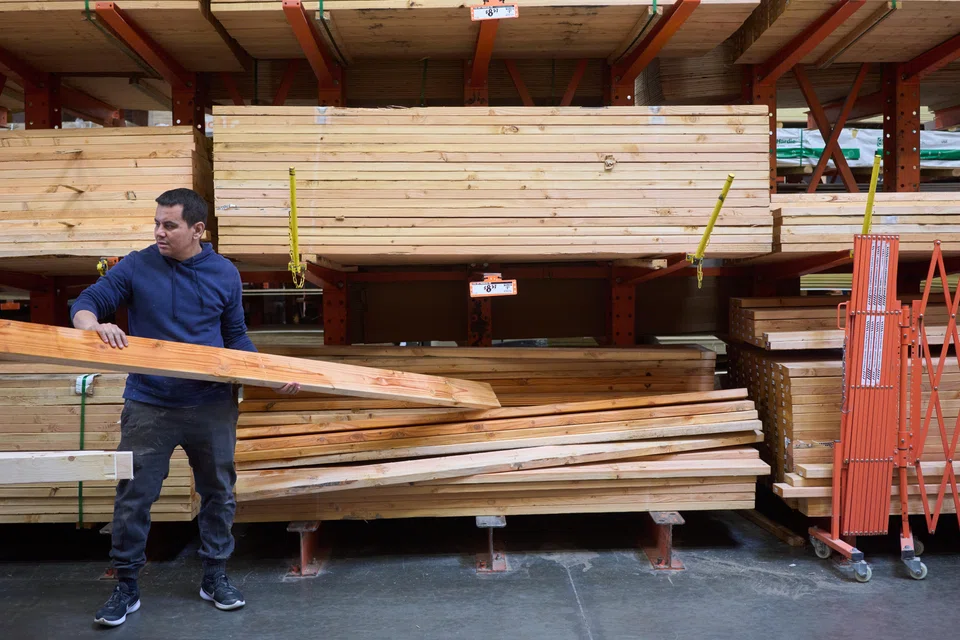
As Trump sees it, the deals that count are the ones he would make with the big and mighty Russia and China. Mexico and Canada are, from that perspective, vassal states that need to accede to American dictates, tariffs being one tool to help rein them in, even if that means raising the price of avocados from Mexico and lumber from Canada, not to mention increasing the risks for inflation.
TRENDING NOW

Two Singapore-listed palm oil firms named in Greenpeace report on Indonesian plantation fires

Singapore Airlines flight returns to San Francisco after ‘unruly’ passenger incident

Singapore looking into which companies responsible for haze-causing fires: PM Wong

Deluge IPO 3.86 times subscribed ahead of SGX debut

