

Repeat after me: Never underestimate China
By the law of large numbers, it still has the cost advantage in advanced manufacturing
THE year 2025 has been full of dramatic twists and turns. At the onset of the year, China’s economy was left for dead. Economists were predicting lost decades akin to what Japan experienced in the 1990s, and its dominance of manufacturing was being challenged by US President Donald Trump and the drive by exporters to diversify their supply chains and move operations abroad.
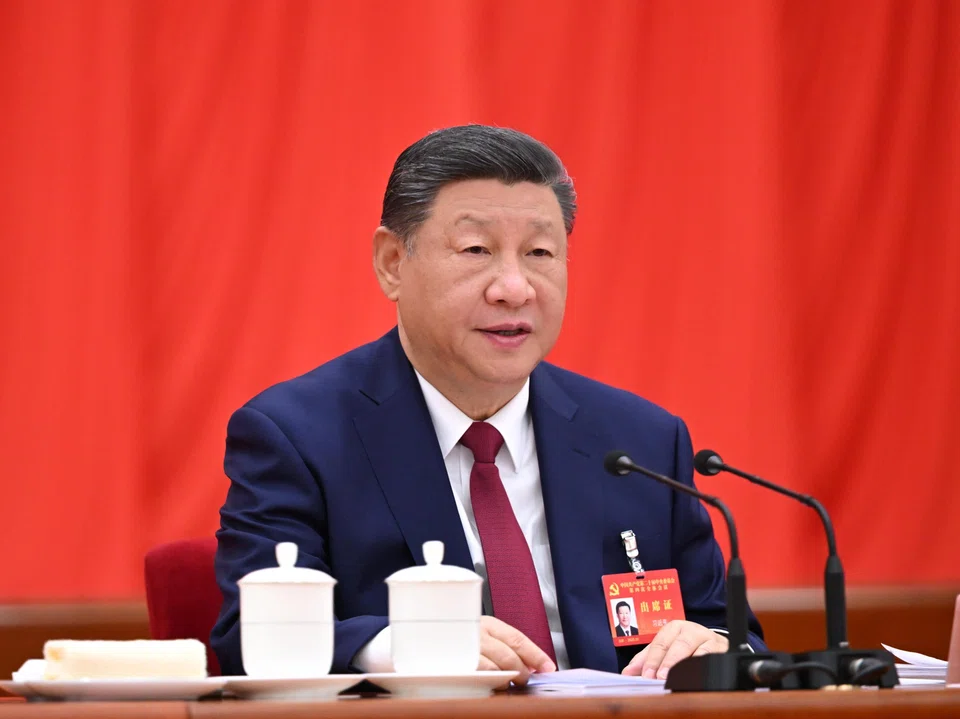
Now, the perception could not be any more different. Chinese President Xi Jinping was the only foreign leader who stood up to Trump’s bullying tactics on trade, and forced him to back down by weaponising Beijing’s control of rare earth materials. It has kept its status as the world’s most vibrant factory.
How did China manage to shake off its malaise and dazzle the world with DeepSeek moments in tech, biotech and even defence? Were the seeds of success always there, and elites in the West simply chose not to see them? It is a bit of both.
First, Xi’s focus on higher education is finally paying off. These days, roughly 40 per cent of high school graduates go to university, versus 10 per cent in 2000. Engineering is by far the most popular major for post-graduate studies.
As a result, the nation’s talent pool has greatly expanded: Between 2000 and 2020, the number of engineers ballooned from 5.2 million to 17.7 million; in 2022, 47 per cent of the world’s top 20th percentile artificial intelligence (AI) researchers finished their undergraduate studies in China, compared with 18 per cent share from the US.
What this means is that by the law of large numbers, innovative breakthroughs are bound to happen, and that China still has the cost advantage in advanced manufacturing.
Chinese under the age of 30 account for 44 per cent of the total engineering pool, versus 20 per cent in the US; compensation for researchers is only about one-eighth that of their American counterparts.
Therefore, even if the likes of Apple want to quit China, they cannot.
China is pragmatic
Second, China is pragmatic, and the AI arms race offers a good illustration.
Whereas the US is seeking the holy grail – or artificial general intelligence, in this case – Xi is pushing the industry to be “strongly oriented towards applications”, locking in any advantages that AI might bring to sharpen the nation’s edge in manufacturing.
Across China, industrial robots operate in so-called “dark factories”, where automation is so efficient that work happens with the lights dimmed. Companies are also using AI to speed up logistics and product design cycles.
By now, productivity gains from AI and automation are there for all to see: China’s trade surplus hit a record US$1 trillion this year, beating rival exporting powerhouses such as Germany and Japan, with the fastest growth coming from advanced manufacturing, such as cars, integrated circuits and ships.
Third, deflation cuts both ways. Investors dislike it because companies have no pricing power.
On the flip side, it is pretty much guaranteed that Chinese brands capable of charging premium prices at home have hit consumers’ soft spot, giving them a fighting chance in global trade as well.
The prime example is Pop Mart International.
The company’s gross profit margin of 70 per cent is more than twice what a generic toymaker can make, thanks to the wickedly cute and viral Labubu.
The nagging question is how thought leaders in the West got the world’s second-largest economy so wrong.
Some of it is the elites’ aversion to visiting an autocracy whose political values are different from their core beliefs.
Making money off China is not as easy as a decade ago, and some worry that, once there, they might get an exit ban.
But one thing is for sure: It would be a huge mistake to write off China, the only other economic superpower that matters. BLOOMBERG
TRENDING NOW

Britain’s mansion tax shows the difficulty of targeting wealth

Once staunchly pro-China, Malaysian Chinese businesses are now distancing themselves from Beijing

The only common thing in S-E Asia is that we all eat rice: Cisco’s Asean president

Singapore data centre operator DayOne opts for US IPO at likely US$20 billion valuation

