

A reset in Riyadh’s favour: Trump welcomes Saudi crown prince back to Washington
The broader implications of the visit trouble those who believe US foreign policy should balance strategic interests with democratic values
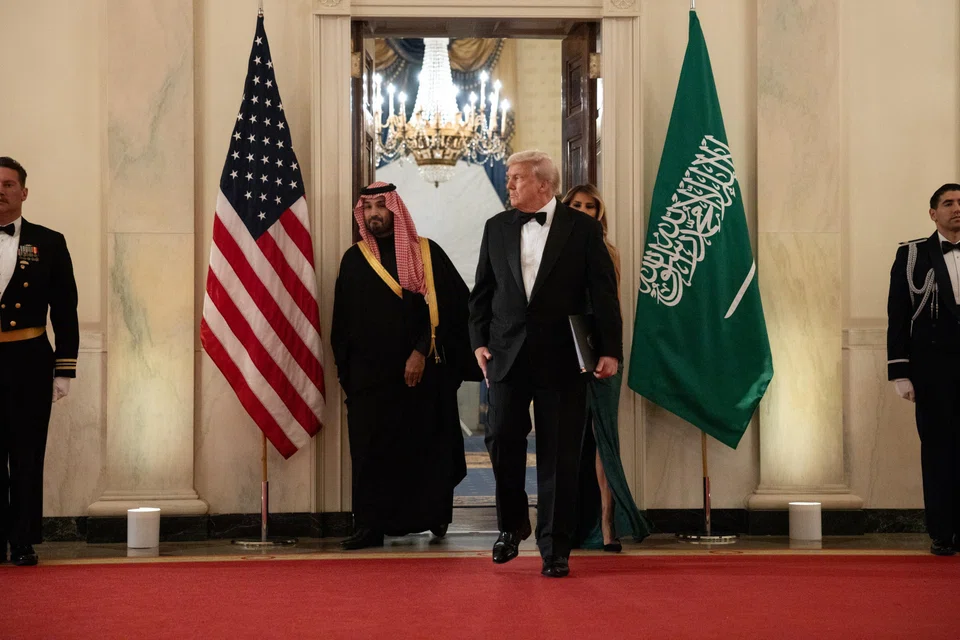
SAUDI Crown Prince Mohammed bin Salman’s return to Washington on Nov 18 (Tuesday) marks a dramatic reversal in US-Saudi relations and underscores the Trump administration’s unabashedly transactional approach to Middle East policy. The lavish White House reception – complete with jets, trumpets, mounted guards and a state dinner – signals not just a diplomatic thaw, but also a full embrace of the kingdom’s de facto ruler, despite lingering controversies that would have been unthinkable barriers just years ago.
The spectacle itself tells the story. Trump welcomed Prince Mohammed with a formal arrival ceremony on the South Lawn that included a military flyover, mounted honour guards and a greeting from the US Marine band – treatment typically reserved for heads of state. This stood in stark contrast to the Biden administration’s approach, which sought to keep the crown prince at arm’s length following US intelligence findings that he approved the operation to kill journalist Jamal Khashoggi.
When pressed on Khashoggi’s 2018 murder during the Oval Office meeting, Trump dismissed the matter by saying “things happen” and claimed the crown prince “knew nothing about it” – a statement that directly contradicts US intelligence assessments. This casual dismissal of what human rights groups consider state-sanctioned murder underscores the Trump administration’s willingness to subordinate human rights concerns to strategic and economic interests.
The visit produced tangible outcomes that benefit both sides. Prince Mohammed announced that Saudi Arabia was increasing its planned investments in the US to US$1 trillion, up from US$600 billion, encompassing artificial intelligence infrastructure, civil nuclear cooperation and defence purchases. Trump designated Saudi Arabia a major non-North Atlantic Treaty Organization ally and confirmed the sale of advanced F-35 fighter jets to the kingdom – moves that strengthen military ties, but raise regional concerns about an escalating arms race.
The elephant in the room remains the Abraham Accords and Saudi normalisation with Israel. Prince Mohammed indicated willingness to join, but reiterated that Riyadh wants a clear path to a two-state solution. Given the current Israeli government’s opposition to Palestinian statehood, this is a significant obstacle that even Trump’s deal-making confidence may struggle to overcome.
From Riyadh’s perspective, the visit represents a strategic triumph. The crown prince has successfully rehabilitated his international image with the world’s most powerful nation, secured military hardware and nuclear cooperation agreements, and maintained his principled stance on Palestinian statehood – all while facing minimal pressure on human rights issues. Trump’s praise for the prince’s record on human rights, offered without specific examples, further insulates Prince Mohammed from international criticism.
The broader implications are troubling for those who believe US foreign policy should balance strategic interests with democratic values. Human rights organisations note that Saudi authorities continue to harshly repress dissent, including by arresting human rights defenders and journalists, with a documented surge in executions.
By rolling out the red carpet without extracting meaningful commitments on reform, the administration sends a clear message about its priorities.
This meeting will likely define US-Saudi relations for years to come, cementing an alliance built on oil, arms sales and shared opposition to Iran rather than shared values. Whether this purely transactional approach serves long-term American interests remains an open question that Tuesday’s pageantry deliberately obscured.
TRENDING NOW

Could stablecoins be the future of money?

Once staunchly pro-China, Malaysian Chinese businesses are now distancing themselves from Beijing

Global expertise and tailored solutions: How affluent S’poreans can grow and manage wealth across markets
GIC-backed Bank Jago sees wealth management as next growth engine as Indonesian investor base grows

