

Rethinking our global health architecture in a fragmented world
The international health governance landscape is at a critical and precarious juncture
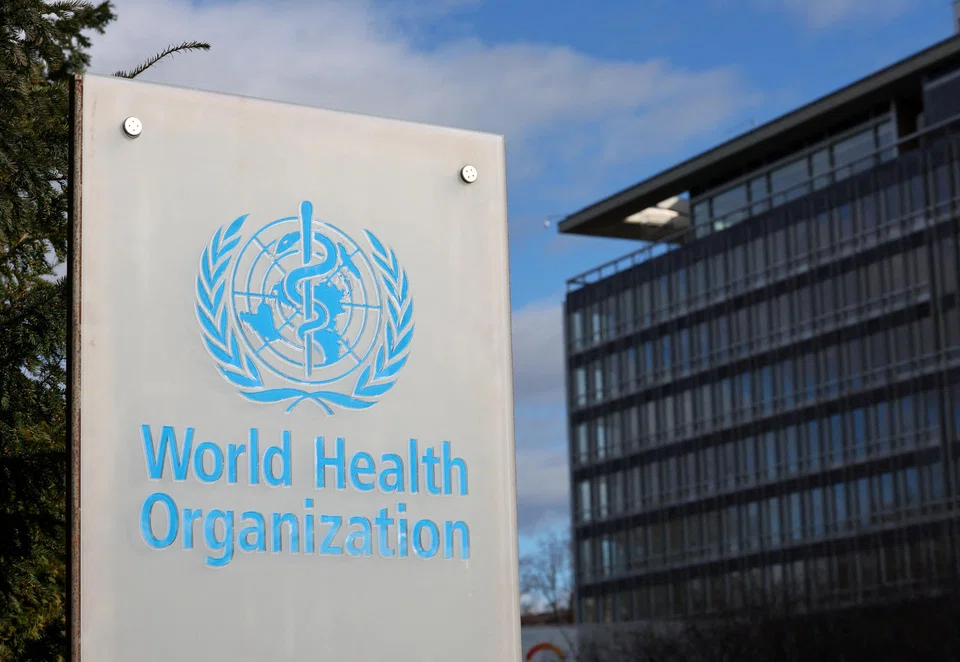
THE post-World War II consensus-driven multilateral frameworks that once anchored international cooperation are showing deep cracks. They are strained by persistent failures to collectively address transnational crises, slashed development aid and intensifying geopolitical rivalries.
This fragmentation is playing out in real time, with the US completing its withdrawal from the World Health Organization (WHO) in January – ending nearly 80 years of membership and leaving behind unresolved questions about global commitment and burden-sharing for health security and normative functions.
Yet, even before this dramatic exit, development assistance that has been the lifeblood of many health systems in low and middle-income countries was already in decline. Major donors, including the UK and Germany, have been reducing commitments amid shifting domestic priorities and mounting economic pressures.
We must confront a fundamental reality: the global health architecture that has underpinned nearly a century of cooperative action is no longer fit for purpose, leaving our world more exposed to pandemics, climate-driven health shocks and protracted conflicts that do not respect borders.
National interest versus global responsibility
Nation states remain the primary arbiters of global health policy, and electorates are increasingly demanding their governments to prioritise immediate national well-being over distant global commitments.
In an era shaped by social media and digitally informed publics, political leaders face relentless pressure to deliver short-term gains for their constituencies. These demands often come at the expense of investments in global public goods, whose benefits are diffused, long-term and politically less visible.
This narrowing of focus raises two existential questions for the global health order.
First, who will take responsibility for financing and sustaining global public goods, such as pandemic preparedness, equitable access to essential medicines and disease surveillance systems, when national interests no longer align with collective global action?
Second, who will help countries think strategically over the long term in an age dominated by political short-termism?
A pivotal illustration of this tension is the Pathogen Access and Benefit Sharing (PABS) annex currently under negotiation as part of the WHO Pandemic Agreement.
Adopted by the World Health Assembly in May 2025, the agreement aims to strengthen global preparedness, prevention and response to future pandemics. It establishes mechanisms for surveillance, research coordination, and the equitable distribution of medical countermeasures, anchored in principles of equity and cooperation.
Central to this framework is the PABS system, intended to ensure rapid, equitable sharing of pathogen samples and genetic sequence data alongside fair access to resulting benefits, such as vaccines and diagnostics. Yet, negotiations on the annex have been protracted and contentious.
This impasse reveals that domestic political agendas focused on sustainable financing for health services, equitable access for citizens and demonstrable cost-effectiveness do not always align with the imperatives of building and sustaining systems for global public goods.
At home, governments are grappling with ageing populations, rising burdens of non-communicable diseases, and growing defence expenditures in anticipation of geopolitical conflicts.
Together, these pressures consume fiscal space and policy attention, leaving little room for sustained investment in global health leadership.
“Who, if not the WHO, would serve as the global broker for health issues that transcend borders? Who would set international standards for disease classification, pharmaceutical quality and health policy norms?”
Global discourse on global health reforms
Unsurprisingly, the strains within the existing global health architecture have sparked intense debate about reform.
Across regions and sectors, coalitions of political leaders, institutions, philanthropies and academics are debating what a next generation of global health governance should look like in a fragmented world.
One such initiative is the Accra Reset, launched by Ghanaian President John Mahama. Initially articulated at an Africa-focused summit, the Reset was later elevated to a broader global agenda at the 2026 World Economic Forum in Davos.
The Accra Reset calls for reimagining global health governance rooted in health sovereignty, domestic investment and local leadership. It is explicitly framed as a challenge to donor dependency and a declaration of intent by African leaders to shape a future in which countries are not passive recipients of aid, but active architects of their own health trajectories.
Philanthropic actors have also contributed to this discourse. In late 2025, the Wellcome Trust gathered governments, civil society and other stakeholders across five regions to discuss and reflect on global health system reform approaches grounded in regional realities.
The Saw Swee Hock School of Public Health at the National University of Singapore, together with Tsinghua University’s Vanke School of Public Health and Thailand’s International Health Policy Program, convened the Asia-Pacific dialogue. It generated insights into how reforms in Asia-Pacific could be designed to be both practical and tangible.
Reform debates have also increasingly turned towards the WHO itself. Proposals ranged from internal restructuring to more radical suggestions of dismantling parts of the body altogether.
Yet, amid these critiques, a fundamental question arises: Who, if not the WHO, would serve as the global broker for health issues that transcend borders? Who would set international standards for disease classification, pharmaceutical quality and health policy norms?
The WHO’s normative functions, including setting global health standards, issuing evidence-based guidelines, and facilitating agreements such as the International Health Regulations and Framework Convention on Tobacco Control, remain indispensable for coherent global action.
These instruments underpin surveillance systems, define response expectations, and help align national policies around shared global objectives.
Any reformed architecture must either preserve or reinvent such functions in a way that continues to maintain legitimacy, credibility and global reach.
New era of health sovereignty and regionalisation
Narratives around health sovereignty and regionalisation have gained traction as alternative sources of power, coordination and accountability.
Critics of the current fragmented system argue that the blurring of roles and responsibilities across global, regional, national and sub-national levels has resulted in duplication, inefficiency and weakened accountability.
A more structured multi-level governance framework – one clearly delineating the roles of global entities (such as the WHO) regional blocs and national governments – could provide the clarity needed to navigate contemporary challenges.
For global institutions, this reorientation would mean a sharper focus on genuine cross-border functions that cannot be effectively delivered by individual states acting alone: normative leadership, standard setting, global surveillance protocols, harmonised regulatory standards for health technologies, and international conventions that promote equity and accountability.
At national and regional levels, health sovereignty entails countries leading their own health agendas – anchored in strategic domestic financing, priority-setting based on population needs, and the development of robust institutions capable of regulating, purchasing and delivering health services independently.
This requires sustained investment in horizontal capacities, such as pricing and reimbursement mechanisms, healthcare quality regulation, and oversight of health products and services. These efforts need strong domestic accountability systems to ensure resources are used effectively and ethically, and are free from waste or corruption.
Where reliance on external financing or technical expertise persists, it should be accompanied by explicit transition strategies.
Global financing models must increasingly incorporate conditional mechanisms that require clear transition and sunset plans, alongside capacity-building pathways that enable countries to assume greater responsibility as resilience improves.
In practical terms, regionalisation could involve pooling technical expertise, financing mechanisms and regulatory capacity within geographic clusters.
In Asia, for example, regional financial institutions such as the Asian Development Bank could support pooled procurement of vaccines, antibiotics and other essential medicines, enabling countries to stretch constrained domestic health budgets.
Countries could also form coalitions to harmonise regulatory processes and jointly negotiate with manufacturers, leveraging larger purchasing volumes to secure better prices.
Such approaches strengthen collective resilience while improving the affordability and accessibility of medical innovations for individual health systems.
Far from weakening global cooperation, effective regional platforms can act as intermediaries between national systems and the global architecture, reinforcing shared standards while tailoring implementation to local contexts.
A path forward in 2026 and beyond
The year 2026 finds global health governance at a crossroads. Ongoing conversations on reforms are already shaping how nations will cooperate on shared threats.
What is clear is that the status quo of divided priorities, declining aid and weakened leadership is no longer acceptable.
Yet, within this fractured landscape lies an opportunity: to reimagine a system that combines strong normative leadership at the global level, accountable and sovereign health governance at the national level, and empowered regional platforms that bridge local priorities with transnational needs.
I do not see this as a return to the old multilateralism nor a retreat into national silos. Rather, it points to a recalibrated multi-level architecture, one capable of sustaining equity, resilience and shared responsibility in an increasingly polarised world.
As health threats continue to emerge unpredictably, our collective survival will depend on the courage to build a more inclusive, transparent and agile global health order – one that does not merely survive fragmentation, but rises above it.
The writer is vice-president for global health and dean of the Saw Swee Hock School of Public Health at the National University of Singapore.
This essay is part of New Global Order, a series which explores how the changing world landscape is reshaping business, politics and beyond.
TRENDING NOW

Fed hike throws Singapore banks a margin lifeline; UOB likely to benefit more

He built the Vingroup empire. Now South-east Asia’s richest man is handing some key roles to his sons

Chagee, Mixue and Luckin won the market. Sustaining their edge is the harder part

Canada is upping oil flows to Asia, but South-east Asia’s refineries aren’t ready to handle them yet

