The right dominates South America – but their mandate is weaker than it looks
The continent’s electorate is split close to evenly and impatient for change
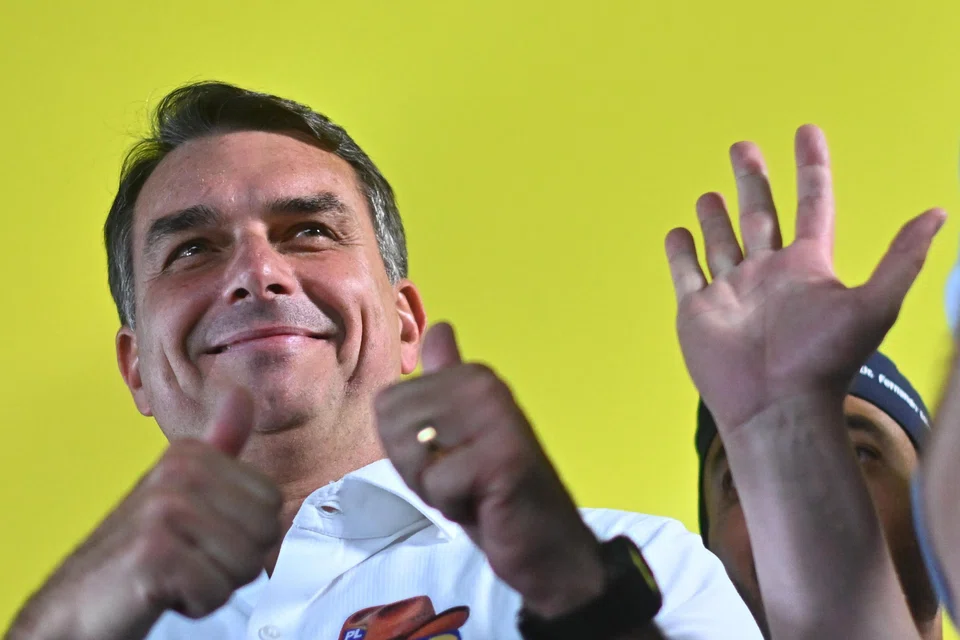
ON OCT 4, Flavio Bolsonaro finished ahead of President Luiz Inacio Lula da Silva in the first round of Brazil’s election. If he wins the runoff on Oct 25, the right will govern every large country in South America.
That would complete one of the fastest political reversals the continent has seen – and it would rest on some of the narrowest victories.
The scoreboard
Seven of the continent’s 10 Spanish and Portuguese-speaking republics now have presidents from the right or centre-right.
By late 2022, the left had won the presidency in Brazil, Argentina, Colombia, Chile, Peru and Bolivia. Four of those six have since voted the left out – Peru’s Congress removed its leftist president and Brazil votes again in three weeks.
Crime did most of the work. Cocaine-trafficking gangs have spread into countries that were once among the region’s safest, and Ecuador went from calm to South America’s most violent in a few years.
The winning candidates in Chile, Colombia and Ecuador all ran on order first: borders, prisons, soldiers on the streets.
The economy did the rest. Bolivia’s left lost power in the country’s worst economic crisis in decades, with fuel and dollars running short. Argentina turned to Javier Milei after years of runaway inflation. Colombia’s deficit widened under Gustavo Petro.
Washington is the third factor. US President Donald Trump endorsed Colombia President Abelardo de la Espriella, backs Milei and removed Venezuela’s Nicolas Maduro by force. Being close to the US has become an electoral asset for the right, where it was once a liability.
Coin-flip countries
The map looks like a landslide. The vote counts do not. Keiko Fujimori won Peru by about 50,000 votes – out of a total of roughly 18.4 million – with ballots from abroad tipping the balance.
Colombia’s de la Espriella won the election by one percentage point, and Petro alleged fraud. In Brazil, two percentage points separate the leading candidates.
A shift of one voter in a hundred would have produced a very different map, and a very different set of commentaries. In Colombia, the vote split along income lines, with the poorest backing the left and the wealthiest the right.
That is a divided electorate, not a converted one.
There is also a simpler explanation than ideology: voters are firing whoever is in charge. Most of the right’s gains came against sitting left-wing governments, just as the left’s 2018-to-2022 wave washed away sitting conservatives.
Uruguay, where the right was the incumbent, went the other way.
Winning was the easy part
The right’s new presidents are already meeting the fate of the governments they replaced.
Jose Antonio Kast took office in Chile in March with 57 per cent approval and was at 34 per cent by September.
Chile’s economy shrank year on year in the first and second quarters, unemployment hit 9.6 per cent in the June-to-August period, and his security reform is still in committee.
Milei, the movement’s standard-bearer, sits near 35 per cent approval with about six in 10 Argentines viewing him negatively. Inflation fell, but real wages and jobs have not recovered, and one September poll has him narrowly losing a 2027 runoff.
Bolivia is the starkest case. President Rodrigo Paz Pereira ended fuel subsidies within weeks of taking office in November 2025. By June 2026, he faced blockades, which resulted in at least 24 deaths and a state of emergency.
In Ecuador, voters who re-elected Daniel Noboa in April 2025 rejected all four of his referendum proposals seven months later, including the return of foreign military bases.
The pendulum swings
Brazil decides on Oct 25. Bolsonaro is the favourite: no first-round winner has lost a Brazilian runoff, and most of the remaining 8 per cent votes in the initial round went to centre-right candidates.
A Bolsonaro win would give the right the continent’s largest economy and hand Washington its most valuable regional ally.
Brazil is the one large South American economy still governed from the left, a founding Brics member and the country whose president said in June that Mercosur hopes soon to open trade talks with China.
Bolsonaro would probably shelve that idea and cool Brazil’s enthusiasm for Brics. But he would not stop the soy, iron ore and beef shipments to China; his father’s government did not, and China’s weight in Brazilian exports is no smaller today.
Lula was expected to lead by about three points and finished two behind.
A Lula victory would leave the continent’s largest economy as a counterweight to its neighbours, and keep a Mercosur-China track alive alongside a Japanese one.
But it would not change the underlying arithmetic. South America’s voters are split close to evenly, impatient and quick to punish.
The right has won its turn in office. Whether this becomes a durable realignment depends on what it delivers on crime and living standards before the next round of elections.
Argentina votes in 2027. On current polling, the pendulum could already be on its way back.