

Scuttled M1-Simba deal leaves investors with more questions than answers
How does a telco operator use airwaves that do not belong to it?

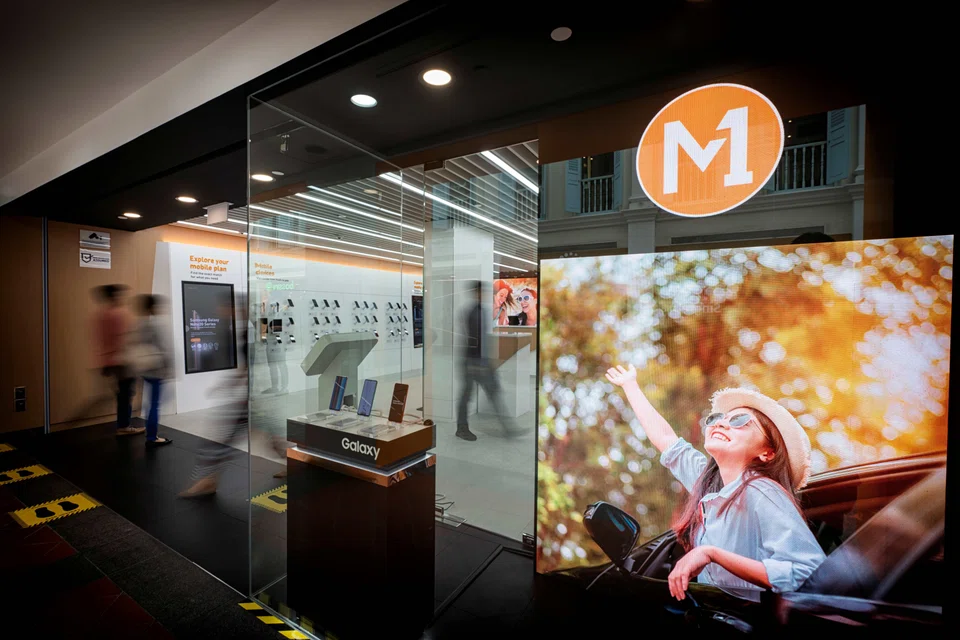
[SINGAPORE] After months of anticipation and a heated public consultation, it appears the S$1.4 billion deal for Simba Telecom to buy the telecommunications business of M1 from asset manager Keppel is off the table.
The Infocomm Media Development Authority (IMDA) threw a spanner into the works on Monday (May 18), as it abruptly announced the suspension of its evaluation of the M1-Simba consolidation application.
IMDA said it learnt during the review that Simba could have been using radio frequency bands that had not been assigned to it to provide mobile services. This would constitute unauthorised use of frequency spectrum, which is a breach of the Telecommunications Act.
As investigations are ongoing, it is understandable that the announcement was scant on details. But this leaves investors in Keppel and Simba’s parent Tuas Ltd with a host of unanswered questions.
Let us start with the elephant in the room: Simba’s alleged unauthorised use of radio frequency bands. How does a telecommunications operator use airwaves that do not belong to it?
Think of the radio spectrum like a massive, multi-lane highway.
The government, acting as the traffic police, divides this highway into specific lanes and sells the exclusive rights to drive in those lanes to the various operators. Each operator configures its cellular towers to transmit signals strictly within its assigned lanes.
But Simba is alleged to have been driving in another lane.
A simplistic way of explaining this is that a telco facing heavy network congestion might end up broadcasting on empty, unassigned lanes to give its users more bandwidth.
SEE ALSO






It is like driving on the road shoulder during a heavy traffic jam to get ahead.
In a briefing on Monday, Keppel said the unauthorised use did not involve M1’s frequency spectrum.
Driving outside of your own lane could relieve immediate congestion and speed up traffic – up until the police pull you over.
Without more information, it is impossible to gauge the severity of Simba’s alleged transgression.
Shares in Tuas Ltd, listed on the Australian stock exchange, plunged sharply on Monday after the news, and rightly so. An alleged breach of the Telecommunications Act is a highly serious matter.
A prolonged investigation could severely hamper Simba’s momentum and drain management resources.
Investors attempting to catch the falling knife right now might find themselves nursing deep cuts. The regulatory overhang is simply too great to ignore until the airwaves are cleared.
Special dividend impact
Over at Keppel, the management has asserted that any termination of the proposed transaction is not expected to have an immediate material financial impact on the company.
While the proposed divestment of its stake in M1’s telecommunications business will be removed from its announced monetisation for 2025, Keppel’s target to monetise S$2 billion to S$3 billion of non-core assets in 2026 remains unchanged.
The management said it is hoping to bring forward other monetisation targets to help fill the gap from the deferred M1 sale.
For Keppel investors, the real, immediate impact is the loss of a one-off special dividend of between S$0.07 and S$0.11 per share that is now unlikely to be paid out this year.
Keppel for FY2025 paid a total dividend of S$0.47 per share, comprising an ordinary dividend of S$0.34 per share and a special dividend of S$0.13 per share.
To its credit, the asset manager was surprisingly quick to roll out a fallback strategy, which helps to reassure investors.
Shares of Keppel closed 2.1 per cent or S$0.22 lower at S$10.38 on Monday – a relatively muted decline considering Tuas Ltd’s 62.8 per cent tumble on the Australian Securities Exchange.
Preparing for the scenario where it retains majority ownership, Keppel activated a 90-day “Plan B” to drive efficiency at M1 and improve its run rate earnings before interest, taxes, depreciation and amortisation.
This efficiency drive involves rightsizing the company, reducing technology platform and network costs, using artificial intelligence for automation, and rationalising products.
This swift pivot is good for assuring the market that Keppel has not been caught completely flat-footed, but it does beg an uncomfortable question: If there is so much fat to trim and efficiency to be gained through a 90-day plan, why was this not executed previously?
M1 has been flopping around in a highly competitive market for years. One would expect a tight ship to be run at all times, rather than waiting for a merger collapse to trigger a sudden efficiency drive.
Executing Plan B now implies that M1 has been operating below its optimal state. If Keppel succeeds in rightsizing the company and boosting profitability over the coming months, it could theoretically make M1 a leaner asset.
This brings us to the ultimate endgame. Keppel believes that the telecommunications industry in Singapore is in need of consolidation, and the company remains open to divestment opportunities.
If the Simba deal collapses entirely – as it will if IMDA approvals are not secured by the extended long-stop date of May 21 – there will likely be other buyers circling the wagons.
StarHub, for one, was widely tipped by analysts as the natural front runner to acquire M1 right up until Simba swooped in with its S$1.4 billion all-cash offer last August.
A StarHub-M1 tie-up has long made strategic sense for market consolidation. With Simba now stuck in regulatory limbo, StarHub might just find its way back to the negotiating table.
Keppel on Monday disclosed that, before it signed the agreement with Simba, there were “quite a few” suitors and “more than one” serious bidder for its M1 telco business.
The pressing question is whether any new suitor will be willing to offer the same price or valuation that Simba put on the table. A telecommunications asset requiring a sudden, aggressive restructuring often invites lower bids.
The merger might be suspended, but the corporate drama in this sector is clearly just getting started.
Decoding Asia newsletter: your guide to navigating Asia in a new global order. Sign up here to get Decoding Asia newsletter. Delivered to your inbox. Free.
Copyright SPH Media. All rights reserved.
TRENDING NOW

DBS, OCBC, UOB rout lops billions off STI as inflation, rate concerns spook investors

Grab CEO’s wife Chloe Tong on life with Anthony Tan and finding her purpose

OCBC sheds S$8 billion in value as shares close nearly 6% down; analysts cautious on banks

Deal between tycoon friends sparks scrutiny of Philippine power sector

