

Seeing positives for Singapore Reits from investors’ support of Keppel Reit’s DPU-dilutive MBFC Tower 3 acquisition
With demand for office trusts focused in the Republic despite lower yields, more capital should be allocated domestically

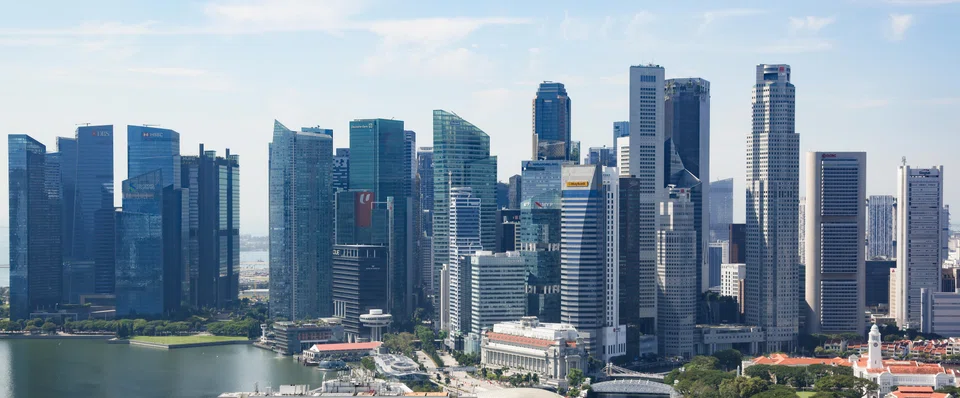
[SINGAPORE] Investors buy real estate investment trusts (Reits) to earn recurrent income from periodic distributions. Managers therefore strive to grow a trust’s distribution per unit (DPU).
One strategy is to buy properties that raise DPU. However, Keppel Reit recently did a mega deal where the immediate impact was to lower DPU.
The trust acquired an additional one-third stake in Marina Bay Financial Centre (MBFC) Tower 3 at an agreed property value, based on one-third interest, of S$1.453 billion or S$3,268 per square foot. The acquisition cost totalled S$937.5 million.
Located in the Central Business District (CBD), MBFC Tower 3 is a 46-storey premium Grade-A office tower, with a three-storey retail podium and three basement levels of car park.
The building has about 1.3 million sq ft of net lettable area and sits on land with a remaining lease of more than 80 years.
The acquisition upped Keppel Reit’s stake in MBFC Tower 3 from a one-third to two-thirds interest.
To help fund the purchase, the trust did a preferential offering which raised gross proceeds of about S$886.3 million.
According to its manager, the impact of completing the equity raising and acquisition on the trust’s pro forma net asset value (NAV) per unit and DPU are negative.
Keppel Reit’s DPU for 2024 was S$0.056. After adjusting for the payment of 75 per cent of management fees in units and excluding the anniversary distribution, the DPU would have been S$0.0472.
On a pro forma basis, post completing the equity offering and acquisition, Keppel Reit’s DPU for 2024 would have been S$0.0442, assuming tax transparency on the acquisition and blended annual interest cost of 3.3 per cent, based on the average interest rate of existing debt and 2.2 per cent interest per annum for new incremental debt.
This translates to a 6.4 per cent dilution against the adjusted DPU of S$0.0472.
Yet, many investors supported the trust’s acquisition. Keppel Reit’s preferential offering drew valid acceptances and excess applications totalling 97 per cent of new units available under the offering.
Sure, Keppel Reit’s unit price as at Jan 30 is still slightly below its closing price before announcing the deal to up its MBFC Tower 3 stake. Still, there are positive takeaways for Singapore Reits from Keppel Reit buying a property where the upfront impact is a hit to NAV per unit and DPU.
Income support unneeded
First, Reits making DPU-dilutive property buys need not structure deals where the sponsor provides income support so that the upfront impact of an acquisition is DPU-accretive.
Indeed, using income support to boost the initial returns of a property that a Reit buys could result in a cloud hanging over the said trust as to what happens when income support expires.
In 2026, Singapore’s Reit market will mark 24 years since the first trust made its trading debut. As the market matures, managers need not dress up a property deal: Investors can stomach a deal that is not immediately DPU-accretive, provided they are confident in the growth prospects of the property that is purchased.
With MBFC Tower 3, prospects for rental growth and capital appreciation are underpinned by Singapore’s attractiveness as a business hub, flight to quality among businesses, and no new office supply in Marina Bay over the next few years.
Narrow yield
Second, Grade-A office properties generally offer lower yields than other non-residential property types in Singapore, partly due to the popularity of premier office buildings with investors.
The capitalisation rate used to value CBD Grade-A office buildings may be just over 3 per cent.
Under the income-capitalisation method, a property’s value is derived by dividing the net property income by the capitalisation rate. The property’s value and the capitalisation rate used are inversely related.
With investors possibly raising the premium for premier Singapore physical properties because of the city-state’s safe-haven status in a world full of geopolitical turmoil and low interest rates, could thin capitalisation rates used to value Grade-A office spaces potentially compress?
That Reit investors support trusts buying Grade-A office buildings at narrow entry yields matters. This means investors may accept a relatively low DPU yield for a listing of a new Singapore-centric Reit owning premier office assets.
Think of IOI Properties Group or GuocoLand launching a new Reit anchored by CBD Grade-A office properties.
Think, too, of existing Reits not shying away from making DPU-dilutive property purchases, provided said properties have good growth prospects. Could big Reits such as CapitaLand Integrated Commercial Trust be increasingly competitive in fending off private funds when competing for Grade-A office buildings here?
Home comforts
Third, the support investors showed to a Reit buying a high-quality Singapore property despite the negative upfront impact on NAV per unit and DPU could encourage locally listed trusts to deploy more capital to acquisitions at home instead of venturing overseas.
To deliver DPU growth, some trusts buy property overseas or invest in property asset classes that offer higher yield. However, investing abroad presents risks, such as in foreign exchange. Also, Singapore Reit managers may not be as sharp in deal sourcing or managing overseas assets compared with local players in respective overseas markets.
Many investors like to buy Singapore-listed Reits to get Singapore property exposure. Perhaps, the local Reit market’s allure to investors would grow if Reits allocated more capital to buying properties in the city-state.
Global asset manager and operator Keppel supported Keppel Reit’s raising of its stake in MBFC Tower 3 by taking up its entitlement under the preferential offering.
By increasing its interest in MBFC Tower 3, Keppel Reit grew its Singapore exposure to 79 per cent of its portfolio value and bolstered its investment case as the proxy for Reit investors seeking Singapore Grade-A office property exposure.
While Keppel Reit did a possible detour by buying 75 per cent of Top Ryde Shopping Centre in Sydney, Australia, last year, may the trust continue to focus on growing its premier Singapore CBD office property exposure.
Crucially, may Keppel Reit’s DPU-dilutive buy of MBFC Tower 3 pave the way for Reits to be more competitive in investment deals involving Grade-A office buildings here.
The writer is a unitholder of Keppel Reit
TRENDING NOW

Once staunchly pro-China, Malaysian Chinese businesses are now distancing themselves from Beijing

Looking beyond looming CEO succession, should UOB potentially pursue a transformative merger?

Could stablecoins be the future of money?

Grab CEO’s wife Chloe Tong on life with Anthony Tan and finding her purpose

