

SGX-Nasdaq dual-listing bridge may afford GIC, Temasek bigger role in revitalising local market
MAS says EQDP and the Anchor Fund @ 65 will support fundraising activity and trading liquidity on the new Global Listing Board

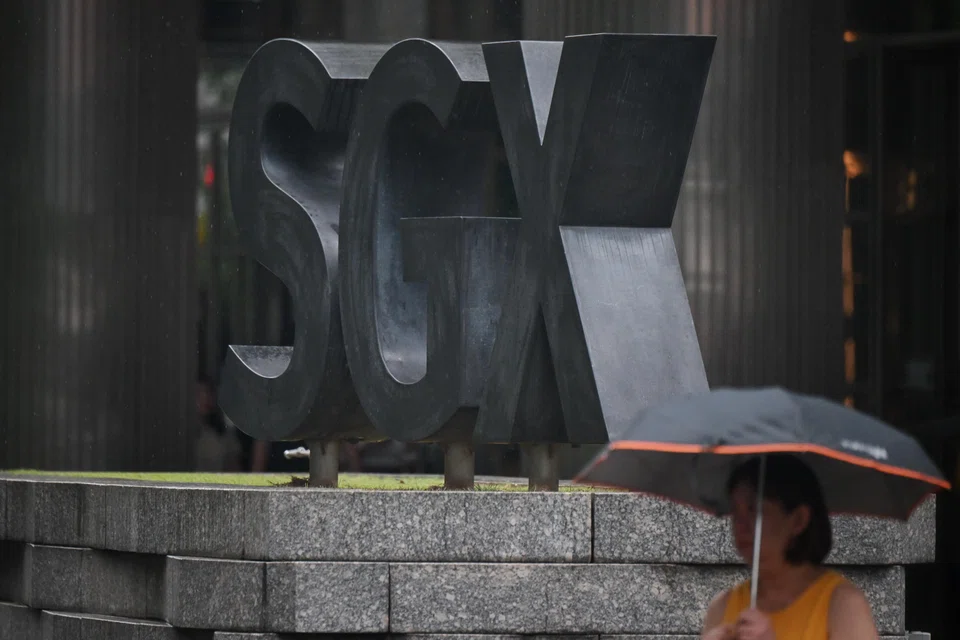
[SINGAPORE] As one might expect, the announcement from the Singapore Exchange (SGX) and Nasdaq last week about their plan to establish a “dual-listing bridge” included quotes from their respective chief executives extolling the virtues of cooperation, and the benefits of enabling companies to simultaneously access capital and liquidity in North America and Asia.
It also seemed quite natural that Minister for National Development Chee Hong Tat weighed in on the deal, expressing confidence in the potential of the Global Listing Board that SGX plans to set up for these dual listings.
Chee is, after all, chairman of the Equities Market Review Group that the Monetary Authority of Singapore (MAS) formed last year, and the SGX-Nasdaq deal is said to have been “encouraged and facilitated” as part of the national effort to draw promising companies to the local market.
Indeed, the initiative was unveiled last week in conjunction with the review group’s final report, as well as a number of other measures to revitalise the Singapore market.
These latest measures included a Value Unlock programme to help companies sharpen their focus on shareholder value creation and investor engagement; the appointment of the second batch of fund managers under the S$5 billion Equity Market Development Programme (EQDP); and a number of moves to enhance market infrastructure and trading efficiency.
It was intriguing to me, however, that the announcement of the SGX-Nasdaq dual-listing bridge also included a quote from Temasek chief investment officer Rohit Sipahimalani. “As a long-term global investor, we welcome efforts that deepen market connectivity and broaden access to capital,” he said.
“This initiative complements the work of our platforms – Seviora, 65 Equity Partners, Heliconia and Vertex – in contributing to building the Singapore ecosystem, and enabling promising enterprises in the US and Singapore to scale across markets.”
From the outset, the MAS review group has carefully avoided making recommendations that may interfere with the purpose of GIC and Temasek, or that might prevent these key stewards of Singapore’s national savings from conducting their investment activities on purely commercial terms.
Notably, Chee has flatly refused calls for GIC to invest its funds in locally listed stocks simply to restore the vibrancy of the Singapore market. He has also plainly stated that Temasek-backed companies should not be forced to list in Singapore when they decide to go public.
The way I see it, the SGX-Nasdaq dual-listing bridge may be a means for these institutions to play a bigger role in fostering an institutional asset management ecosystem that includes the local stock market, while adhering to their commercial principles.
Support from EQDP, Temasek fund
The US market has been an overwhelmingly powerful magnet for listing aspirants and investors from around the world, including Singapore. While US-listed companies with an Asian nexus have been able to seek secondary listings in this region to widen their investor following, doing so involves time and money, and may not be an especially high priority for many of them.
The SGX-Nasdaq dual-listing bridge will offer companies with market capitalisations of S$2 billion or more the opportunity to list on both exchanges when they decide to go public, without much additional cost or effort. More importantly, companies will only have to submit one prospectus to obtain listings on the two exchanges.
On the face of it, this seems to be an attractive proposition for Asian companies already eyeing a Nasdaq listing. They would be able to secure a strong valuation in the US market while also tapping investors in Singapore. MAS said last week that the EQDP as well as the Anchor Fund @ 65 will support fundraising and trading liquidity for companies on the new Global Listing Board.
The Anchor Fund @ 65 was part of a package of initiatives unveiled in 2021 to support high-growth companies seeking to raise capital in the local market. It is managed by 65 Equity Partners, which is wholly owned by Temasek.
Among its portfolio companies is AvePoint, a software provider that helps organisations manage their data. AvePoint listed on Nasdaq in 2021 by combining itself with a publicly traded special purpose acquisition company. It obtained a secondary listing in Singapore two months ago.
Another of its portfolio companies is UltraGreen.ai, a medical technology player specialising in fluorescence-guided surgery, which is reportedly working on an initial public offering in Singapore.
Meanwhile, MAS said last week that a further S$2.85 billion will be allocated to six fund managers under the EQDP. Together with the S$1.1 billion placed with the first batch of three fund managers, a total of S$3.95 billion has now been farmed out across nine fund managers.
Are Singapore investors ready?
The proposed regulatory framework to allow the use of a single set of offering documents for a dual listing on SGX and Nasdaq is yet to be finalised. So it remains to be seen whether any sticking points emerge along the way, and whether SGX and MAS will be able to adequately address them.
A bigger risk, in my view, is that fast-growing companies that avail themselves of the SGX-Nasdaq dual-listing bridge may fail to garner strong support from Singapore’s famously dividend-focused investors.
This brings me back to the other announcements MAS made last week. While the review group has issued its final report, the revitalisation of the Singapore market is still a work in progress.
For one thing, only a handful of big companies – such as Hongkong Land, Keppel and Singtel – have come up with detailed road maps to unlock value and expand their businesses. Many smaller companies do not have such convincing narratives of how they will grow and drive shareholder value.
MAS said last week that it will address this by providing S$30 million in grants to build competencies in corporate strategy, capital optimisation and investor relations. MAS will also work with SGX to help companies better communicate with investors through outreach events, media engagements and enhanced research coverage.
In addition, regulatory clarity will be provided to assure companies that their communications and forward projections are legally permissible.
In another interesting move, SGX plans to facilitate investor adoption of broker custody accounts. This could enable brokers to deepen their relationships with investors, and put them in a stronger position to expand into activities such as margin lending, portfolio management and robo-investing.
SGX also plans to reduce the board lot size for securities priced above S$10, from 100 units to 10 units. This is expected to broaden investor participation and boost trading activity.
Taken together, these moves could help enliven the market, and gradually persuade local investors to view stocks as more than just a source of dividend income. Over time, this could make the Singapore market more receptive to the companies that MAS and SGX are hoping to draw to the Global Listing Board.
TRENDING NOW
Analysts cut DBS target price on lower 2027 earnings, but see buying opportunity after share price slide

Waymo founder predicts ‘landslide’ robotaxi adoption in Singapore, driven by high car costs

The limits of China’s trade concessions to Europe

Nvidia CEO Jensen Huang drops from world’s top 10 richest after chips sell-off

