SGX RegCo stiffens its back with proposal for enhanced disclosures to drive value creation
The frontline market regulator should ask boards for more transparency on their thinking on capital management

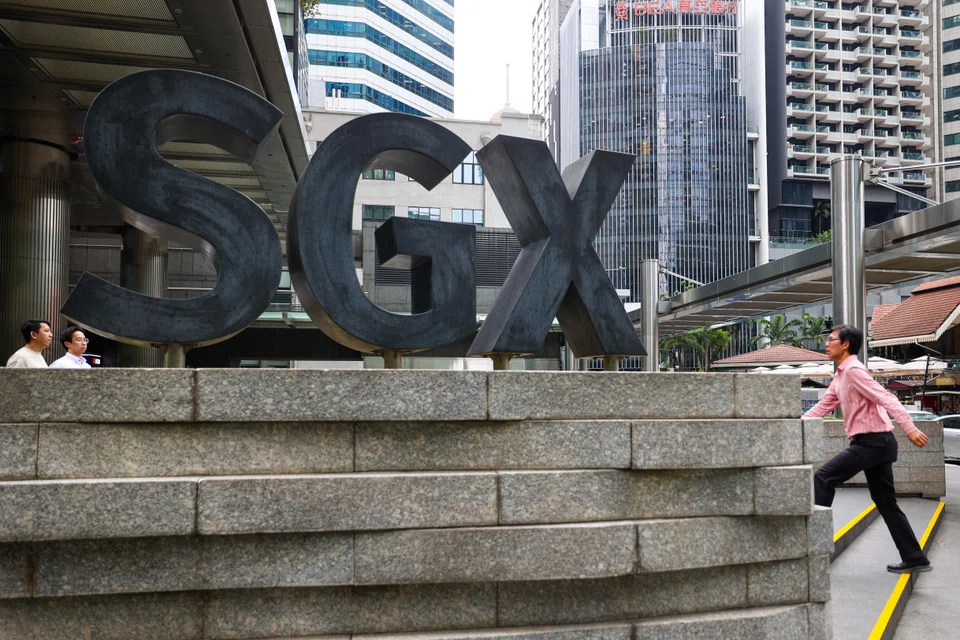
[SINGAPORE] When Singapore Exchange Regulation (SGX RegCo) launched a public consultation last week on enhanced disclosures to promote value creation and investor engagement, its chief executive Tan Boon Gin noted that some market participants had been pushing for the frontline market regulator to take an even more prescriptive stance.
“They would like us to emulate Japan, for example, which has asked companies to disclose concrete plans to move their price-to-book values above one,” Tan said, during a media briefing. “But let us remember, Japan’s Value-Up programme has been more than a decade in the making, and Singapore is only at the beginning of this journey.”
Yet, the listing rule amendments SGX RegCo is proposing do represent a prescriptive tilt away from the raft of pro-enterprise measures announced last year – which included streamlining listing processes, adopting a more targeted approach to post-listing queries, alerts and trading suspensions, and doing away with the much hated financial watch list.
If the proposed listing rule changes are implemented, issuers will be required to disclose in their annual reports the key performance indicators used to determine remuneration of their boards and key management, and how these indicators align with long-term shareholder value creation.
Issuers will also be required to describe their dividend policy in their annual reports.
On top of that, issuers will have to maintain investor engagement websites, publish their investor relations (IR) policy on those websites, and describe their investor engagement activities in their annual reports.
SGX RegCo noted in its consultation paper that there are already “comply-or-explain” provisions under the Code of Corporate Governance for issuers to be transparent on their remuneration policies, and the links between remuneration, performance and value creation.
Under the Code, issuers are also expected – on a comply-or-explain basis – to have a dividend policy and communicate that policy to investors; and an IR policy that allows for an ongoing exchange of views with investors.
Yet, about two-thirds of the largest issuers on the mainboard and Catalist either do not disclose that they have an IR policy or do not publish their policy, said SGX RegCo in a media release last week.
Two-thirds of these largest issuers also do not disclose the metrics they use to link remuneration to value creation, it added.
Will SGX RegCo’s proposed listing rule changes meet resistance from these issuers? Why is the frontline market regulator stiffening its back now?
Seizing the moment
The enhanced disclosures on executive pay, dividend policy and IR are clearly linked to the Value Unlock programme announced late last year.
Under that initiative, issuers are being offered financial grants to build capabilities in corporate strategy, capital management and IR. The listing rule changes SGX RegCo unveiled last week would ensure that issuers actually make use of these skills to deliver shareholder value.
This also seems to be an opportune moment to push issuers to adopt a more shareholder friendly stance. Through the Equity Market Development Programme, a total of S$6.5 billion is in the process of being allocated to fund management firms with a strong focus on Singapore stocks.
SGX has also announced moves to drive price discovery and reduce trading friction – for example, through the reduction in the board lot size of higher priced stocks.
The result has been a strong market rally and heightened trading volumes.
Since the beginning of 2025, the Straits Times Index has advanced nearly 30 per cent while the iEdge Singapore Next 50 Index has climbed 33.9 per cent. In March, securities market turnover increased 78 per cent year on year to S$52.8 billion. Securities daily average value for the month was S$2.4 billion, up 62 per cent year on year.
Against this backdrop, companies that take steps to unlock value, or that simply have the potential to do so, are likely to see their shares re-rated by the market.
Despite the concerns some market watchers have raised about smaller companies lacking the wherewithal to cope with the additional compliance burden, it seems unlikely to me that many corporate boards will resist SGX RegCo’s push for better disclosures in the current climate.
Not prescriptive enough?
Judging from the examples SGX RegCo provided in its consultation paper, the enhanced disclosures do not even seem all that onerous.
One suggested dividend policy description reads: “In balancing the need for a satisfactory return to shareholders against the company’s investment requirements to ensure sustainable growth, the company’s dividend policy does not adopt any quantified dividend targets or fixed payout ratios.
“The board will declare or recommend dividends where it considers that doing so is appropriate, having regard to the availability of distributable profits, reserves and cash, working capital requirements, projected capital expenditure, and investment requirements.”
In my view, this could serve as a handy motherhood statement for companies that do not have a dividend policy.
The big question is whether the enhanced disclosures have the intended effect of unleashing the disciplining power of the market. If a company with an underperforming share price were to publish such an uninformative dividend policy in its annual report, its shareholders may begin asking tough questions about its capital expenditure needs, and whether its balance sheet could be better managed.
Indeed, SGX RegCo is seeking feedback through its public consultation on whether the proposed requirement for issuers to maintain and describe their dividend policy should be broadened to cover other aspects of their capital management framework.
My sense is that SGX RegCo should just go ahead and ask that boards provide more transparency on their thinking around the issue of capital management.
Investors are not just entitled to their share of a company’s dividend payouts; they are also collective owners of its retained earnings, and will naturally be interested in how those funds are used.
Yet, many institutional investors may simply not engage with companies that are not already expressing a strong narrative on shareholder value – especially the small and mid-cap companies that are not part of a key market index.
Hence, a more prescriptive approach seems warranted here. In my view, SGX RegCo should ask companies to describe how they prioritise organic growth, acquisitions, debt management and returning capital to shareholders. Companies should also be asked under what circumstances they would pursue share buybacks instead of paying dividends.