

Share buybacks offer window into Seatrium board’s perspective on its stock’s value

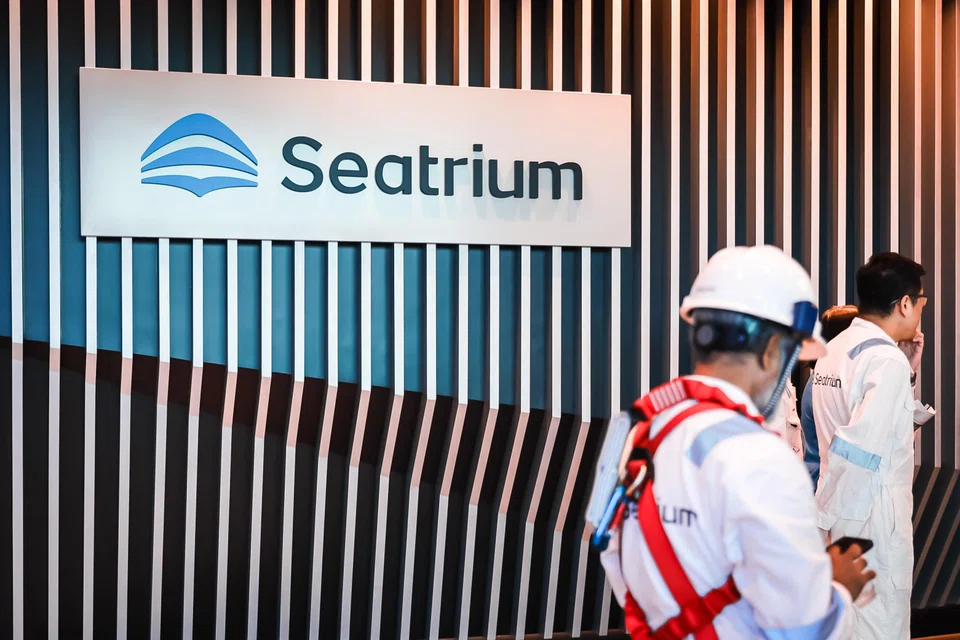
THE S$100 million share buyback programme announced by Seatrium on Apr 29 was interpreted positively by many investors – and for good reason.
When companies choose to return capital in this manner, it is usually an indication that they are in good financial shape and are positive about their future.
There is also a shareholder value dimension to share buybacks: investors who hold on to their shares end up with a proportionately larger stake in the company.
Some investors also take share buybacks as a signal that a company’s board believes its shares are being undervalued by the market.
Indeed, the prices at which Seatrium executes its share buybacks are likely to be closely watched by investors for exactly this reason. The company’s board would be nailing their colours to the mast, and revealing the level at which they believe the beleaguered stock offers good value.
Seatrium’s shares have delivered a total return of minus 87.3 per cent since the beginning of 2020, in the wake of two deeply-discounted rights issues and the company’s controversial acquisition of Keppel Offshore and Marine (KOM).
These corporate moves expanded Seatrium’s share base from less than 2.1 billion to more than 68.2 billion. On Tuesday (May 7), the company began trading ex for a 20-to-1 share consolidation exercise that will shrink its number of shares back down to 3.4 billion.
Its shares closed Wednesday at S$1.88, which puts its market capitalisation at more than S$6.4 billion.
Many analysts and investors are confident that Seatrium is in the early stages of a sustained turnaround in profitability. Yet, repeated bouts of bad news and setbacks have weighed on its share price.
Earlier this year, Seatrium reported revenue of S$7.3 billion for 2023 versus S$1.9 billion for 2022. The company’s earnings before interest, taxes, depreciation and amortisation (Ebitda) for 2023 came in at S$236.4 million, a marked turnaround from negative S$6.6 million for 2022.
Seatrium was, however, hit by asset write-downs, provisions for onerous contracts, legal and corporate claims, and merger expenses. On top of that, it had to make a provision for financial penalties related to a decade-old bribery scandal in Brazil.
Seatrium’s former chief executive Wong Weng Sun and another former employee were charged in Singapore earlier this year for their involvement in the case.
The impact on the company’s bottom line was brutal. Seatrium reported a loss of more than S$2 billion for 2023, versus a loss of S$261.1 million for 2022.
Then, there was Seatrium’s Investor Day on Mar 15. The company said at the much-anticipated event that it was projecting revenue of as much as S$12 billion and Ebitda of S$1 billion by 2028.
These targets seemed to disappoint analysts and investors, judging from the sell-off that immediately followed. This raised questions about whether the market had been expecting too much, too quickly from Seatrium.
A turnaround in profitability at Seatrium is still very much on the cards, of course. OCBC Investment Research said in a report this week that the group’s focus in 2024 is to build a profitable and resilient business.
The report noted the company ended last year with a net order book of S$16.2 billion, with deliveries stretching to 2030.
The research house expects Seatrium to report earnings in 2024 of S$51 million, on revenue of almost S$7.8 billion. It is expecting earnings in 2025 of S$328 million, on revenue of S$9.2 billion.
Are these forecasts achievable? Even if they are, will they be sufficient to support and drive Seatrium’s market capitalisation higher?
This is where the share buyback programme Seatrium announced last week could be important.
Seatrium said the share buybacks will be funded with its existing cash holdings, and that the repurchased shares may be used in its share-based remuneration schemes or simply cancelled.
It stands to reason that Seatrium’s board will only authorise share buybacks at prices that represent good value for the company.
This window into the board’s thinking could be interesting for analysts and investors trying to price Seatrium’s shares following the completion of its acquisition of KOM and amid a rapidly unfolding expansion of its business operations.
The share buyback programme will probably not have much direct impact on Seatrium and its shareholders. The company’s share purchase mandate allows it to repurchase up to 2 per cent of its issued shares; and it said last week that the S$100 million programme could take more than a year to be completed.
For Seatrium’s recently overhauled board, however, making the right call on the price at which to execute the share buybacks could be important in burnishing its standing among the company’s long-suffering shareholders.
TRENDING NOW
Singapore tech stocks plunge as Nasdaq bloodbath spills into region

S$3 billion money laundering case: Rare Pateks and Rolexes, diamond-covered Hermes and more head to auction
OCBC Q3 profit rises 3% to S$2.04 billion, slightly above expectations
From legacy to launch: Francis Yeoh and Yeoh Pei Xien on family unity and YTL’s next‑gen ventures

