Shedding light on IP challenges: medical-cost inflation and thin margins
With the IP industry’s profit margin at just 0.5%, commissions and costs to insurers and policyholders are under scrutiny

RECENT developments in Integrated Shield Plans (IPs) are likely to elicit mixed reactions – and even some confusion – among policyholders. The newly launched riders are on average 30 per cent less costly than older ones, but in many cases, these savings are diluted by higher premiums of their IP base plans.
Five in seven IP insurers have opted to raise the premiums of their IP base plans, affecting mostly private hospital and restructured-hospital Class-A plans. Those that have raised the premiums of their IP base plans have done so by up to double-digit amounts.
About 71 per cent of Singapore residents (around three million people) hold IPs. Of that, about two-thirds or two million people subscribe to riders.
Yet many remain confused about specific coverage of their plans and are seeking advice on whether they should downgrade their riders, for instance.
I have picked out some key issues, partly drawn from readers’ letters to the Forum page of The Straits Times, which I think are worth thinking about.
Medical inflation vs medical-cost inflation
Medical-cost inflation of an estimated 16.9 per cent has grabbed headlines. But as the Health Ministry pointed out in a clarification, medical-cost inflation does not actually reflect healthcare cost inflation.
The Healthcare Consumer Price Index was about 3 per cent in 2025, and includes primary care, hospital bills and medication costs.
The 16.9 per cent figure was a projection by global advisory, broking, and solutions company WTW, and was the most aggressive forecast among those made by benefits consulting firms.
Aon’s forecast was 13 per cent for 2026, and Mercer Marsh Benefits’ was 14 per cent. The forecasts were based on surveys of insurers who were polled on their experience providing group health cover for employees.
SEE ALSO



The expectations are therefore drawn from a far larger set of inputs than just medical inflation itself. Group medical plans tend to focus on private healthcare and include outpatient cover. IPs, in contrast, cover pre- and post-hospitalisation expenses.
A Mercer Marsh spokesperson said the medical trend rate includes medical inflation, changes in treatment mix such as the use of potentially more expensive options, utilisation changes and regulatory changes.
Factors that drive this rate up include rising plan utilisation as populations age, healthcare staff shortages, and pressure on public healthcare systems, which leads to more intensive usage of private-plan benefits.
WTW’s report also cites new medical technologies, advancements in pharmaceuticals, and “little or lack of cost sharing”; there are also factors such as the rising rate of cancer among younger people.
Insurers’ razor-thin profit margins
Recently in a letter to The Straits Times’ Forum, Dr Ng Chee Kwan, president of the Singapore Medical Association, suggested that insurers keep an eye on the medical loss ratio (MLR), which is the percentage of premium income paid out in medical claims.
The MLR, he said, can be used as a gauge of whether premiums are “appropriately priced”.
But focusing on the MLR alone does not give a complete picture because of other ongoing expenses.
An analysis by the Singapore Actuarial Society (SAS) found that in 2024, every dollar of premium (IPs and other long-term private medical insurance) is allocated in these proportions: 80 per cent in claims; 12 per cent in distribution costs and 0 per cent in profits. Its estimate of the industry profit margin is based on rolling 10-year periods.
SAS president Alex Lee said it is misleading to take any single year in isolation. “Medical cost inflation rises annually, but premium adjustments are made every two to three years. Looking back at the average profitability of IP insurers, even the best-performing one managed only a mid-single digit per cent profit.”
Collectively, IP insurers managed a profit margin of only 0.5 per cent between 2015 and 2024.
“This means that skipping one year of premium increase will immediately make that a loss-making year, triggering a bigger jump in premium the following year,” Lee added.
Cutting out the middleman?
Another ST Forum letter proposed parking IPs under the Direct Purchase Insurance (DPI), which enables policyholders to save on commissions because these are policies sold directly, without agents, to consumers.
At the moment, term life and whole life plans may be sold as DPI, as they are very standardised. Typically, DPI products have certain caps, such as up to S$400,000 in death cover for a term life plan.
IPs are not sold as DPI. How feasible is a no-advice, commission-free framework for IPs? The short answer is that it is not, because it seems the need for advice is intense, and it is not just before a hospital admission.
As Havend chief executive Eddy Cheong said, servicing of IP policyholders is “very demanding”.
“We receive claim requests daily. Once a client starts claiming, the process can span pre-treatment, hospitalisation and possibly post-treatment stages.” IP commissions are charged annually with a larger percentage deducted in the first year.
Clients often need help in these aspects, he said:
- Claim calculations: The amount claimable, choice of doctors and hospitals, and the financial implications of treatment decisions;
- Administrative and process support: Pre-authorisation requests, letters of guarantee and coordination with insurers and healthcare providers;
- Appeals and claim disputes when claims are partially or fully declined: Advisers step in to submit appeals and engage insurers to reconsider decisions.
Partner hospitals
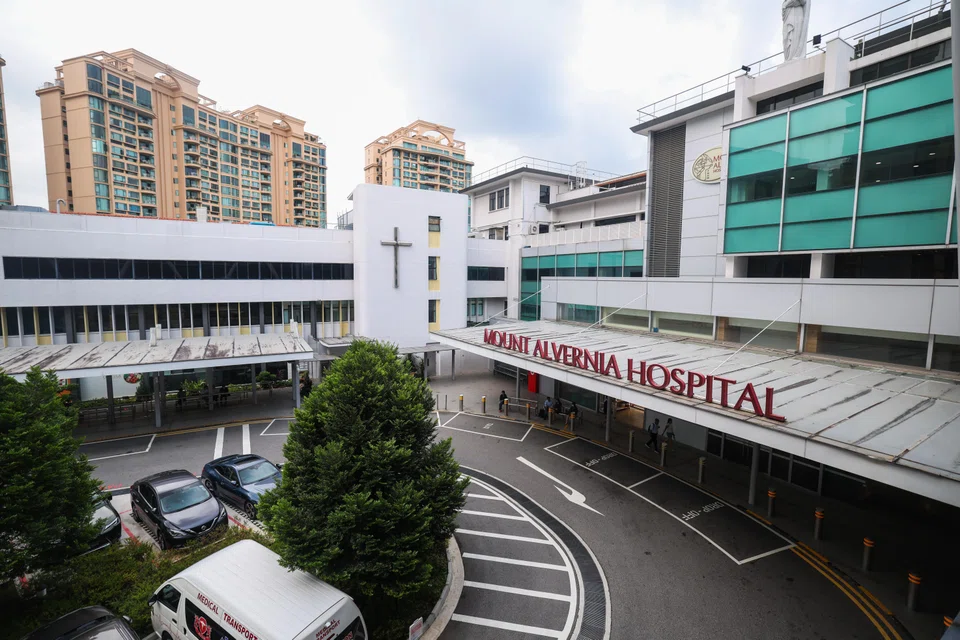
Quite apart from overconsumption by policyholders, one of the biggest cost items must be hospital facility charges. Two insurers now specify partner hospitals in their panels. Prudential has had a hospital partnership programme since 2019; the hospitals on its list are Mount Alvernia Hospital, Thomson Medical Centre and Raffles Hospital. Hospitals not on the list are considered either non-panel or “no access”.
Likewise, Great Eastern began to name partner hospitals in its P Prime Plan launched last October; the list is broadly similar to Prudential’s, but with the addition of Farrer Park Hospital.
Great Eastern’s P Prime plan and the accompanying rider are priced more affordably than its full private plan. Recall the outcry last year when Great Eastern temporarily suspended pre-authorisations for two Mount Elizabeth hospitals? It had noted that its like-for-like comparison found that the bill sizes at those two facilities were 20 to 30 per cent higher than in other private hospitals.
The option of a lower-priced plan with partner hospitals is likely suitable for those who still want a private hospital option, but baulk at the steep costs and premiums.
Mount Alvernia is currently the sole not-for-profit private hospital, but Health Minister Ong Ye Kung recently announced that a new one is in the pipeline. This will be a welcome addition for those who want more affordable private healthcare.
Decoding Asia newsletter: your guide to navigating Asia in a new global order. Sign up here to get Decoding Asia newsletter. Delivered to your inbox. Free.
Copyright SPH Media. All rights reserved.