

Should South-east Asia fear the second ‘China shock’?
The region should strategically optimise the growth of capital imports and investment from China
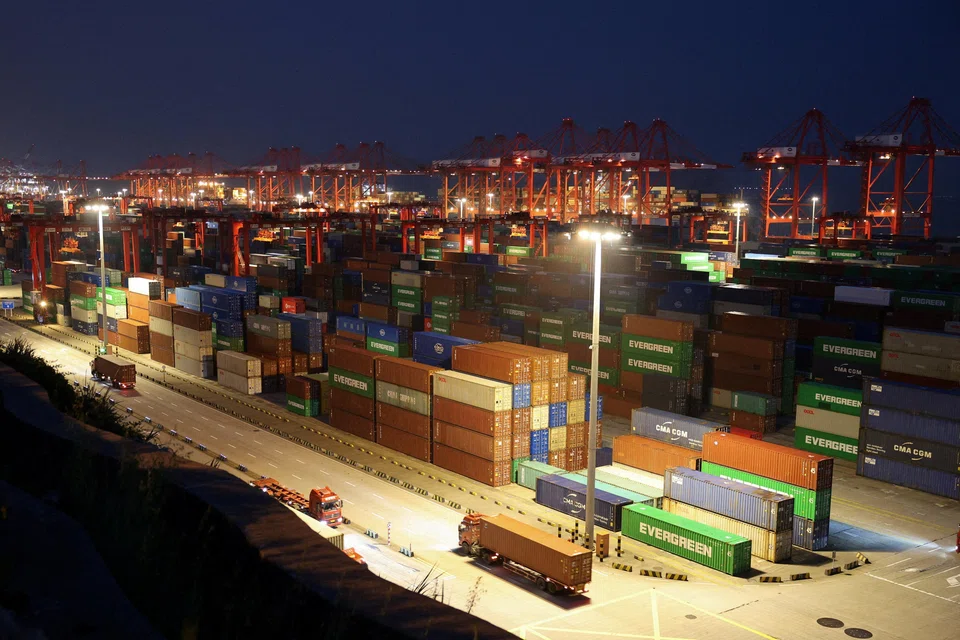
MERCHANDISE imports to South-east Asia from China reached over half a trillion dollars in 2025. The region’s collective trade deficit with China was around US$290 billion, and this has grown further since.
Globally, China’s burgeoning exports and trade surplus since around 2020 have been dubbed the “second China shock”. China’s customs trade surplus reached US$1.2 trillion in 2025 while its exports reached US$3.8 trillion.
The fear is a repeat of the first China shock after its 2001 entry into the World Trade Organization.
In the United States, surging Chinese imports were blamed for job losses in American manufacturing towns. For developing countries, China’s export dominance was associated with “premature deindustrialisation”.
Should South-east Asia’s policymakers be concerned about its growing trade deficit with China? Or perhaps even join the US and Europe in pushing back on Chinese imbalances?
The new trade dynamics
Today’s China shock is very different from the first.
The first saw China serving as an assembly hub, reliant on inputs and technology from others, exporting finished goods to high-income countries, and crowding out exports from other developing countries. Meanwhile, China mostly recycled its resultant large current account surplus into US treasuries.
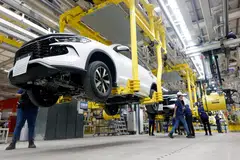
Today, China primarily exports parts and components – that feed other countries’ production and exports – as well as the machinery and equipment needed to make things. China has become “factory to the factories”.
China is also channelling more of its current account surplus into capital flows to developing economies, including manufacturing investment. Through all this, the country is exporting its own technologies — from clean energy products to industrial robots.

And South-east Asia is at the forefront of these new dynamics.
To be sure, a surge in low-cost Chinese imports may have contributed to concentrated pain in some sectors. For instance, amid an influx of competing Chinese imports, Indonesia’s textile industry shed 80,000 jobs in 2024 alone while Japanese auto manufacturers in Thailand are either closing down or scaling back.
Acute import surges can justify targeted safeguard-like measures, such as anti-dumping tariffs and curbs on online imports, as introduced by several South-east Asian governments. Social protection is also vital for supporting affected workers and fostering labour market adjustment.
A closer look at the numbers
One should not, however, overlook the simultaneous positive impact of the China shock on other parts of the economy – via intermediate inputs, capital goods and investment that bring in new technologies, networks and higher productivity. All of these can, in turn, enable increased industrialisation and job creation.
Around 90 per cent of South-east Asia’s imports from China are either intermediate inputs or capital goods, rather than final consumer goods. Meanwhile, Chinese investment is flooding in.
Direct investment from China into South-east Asian manufacturing was US$15.4 billion in 2024, up from US$5.7 billion in 2019. Total direct and portfolio investment from China has tripled to around US$75 billion, or almost 2 per cent of South-east Asia’s gross domestic product.
Data tracking greenfield foreign investment suggests that the average Chinese investment project in South-east Asian manufacturing created almost twice as many local jobs as investment from other countries – reflecting its higher labour intensity, notably in electronics assembly.
Perhaps South-east Asia would be doing even better if China were not running such a large trade surplus, soaking up global demand while giving little back as China’s own imports have flatlined.
Yet the signs are that South-east Asia has overall been gaining alongside China, rather than being crowded out.
China’s merchandise exports grew by 5 per cent in 2025 and are up by 51 per cent since 2019. South-east Asia’s exports are up by 13 per cent and 54 per cent respectively.
China’s customs trade surplus rose by 20 per cent last year and 178 per cent since 2019. South-east Asia’s collective trade surplus is up by 39 per cent and 142 per cent respectively (despite the larger trade deficit with China).
China’s share of world exports in key global value chain sectors (textiles, electronics, machinery and autos) rose from 22.8 per cent in 2019 to 24.6 per cent in 2024. South-east Asia’s share has risen from 9.2 per cent to 11.3 per cent.
It is also important to look at value-added exports, which reflect the contribution of domestic production to the value of exports. China operates as a supplier of intermediate inputs while South-east Asia mostly operates in the lower tiers of the value chain. Value-added exports also account for the transshipment of Chinese goods aimed at circumventing US tariffs. By this measure, China has done better than South-east Asia.
Yet, South-east Asia has also done well. China’s value-added exports in key global value chain sectors rose by almost 40 per cent between 2019 and 2022 (the latest available data). South-east Asia’s value-added exports grew by 24 per cent.
These broad patterns mostly hold across major South-east Asian economies, although not all have done equally well. Those that are more open and competitive, such as Vietnam and Malaysia, have done best. Those less so, such as Indonesia and Thailand, are lagging.
There are also risks. South-east Asia is fast becoming heavily reliant on Chinese supply chains, capital and technology. This could heighten trade tensions with the US, which remains fixated on reducing its indirect dependencies on China.
Reforms and public investments to increase competitiveness and domestic capability will be vital for turning the near-term benefits of the second China shock into sustained industrial upgrading, while maintaining diversified trade and investment linkages and avoiding dependency.
The writer is lead economist and director of the Indo-Pacific Development Centre at the Lowy Institute
This is an edited version of an article that first appeared on Fulcrum, ISEAS – Yusof Ishak Institute’s blog
Decoding Asia newsletter: your guide to navigating Asia in a new global order. Sign up here to get Decoding Asia newsletter. Delivered to your inbox. Free.
Share with us your feedback on BT's products and services






