

Singapore Airlines faces some bleak choices as it lies trapped in Air India’s money pit
Should SIA just cut its losses and walk away from Air India?

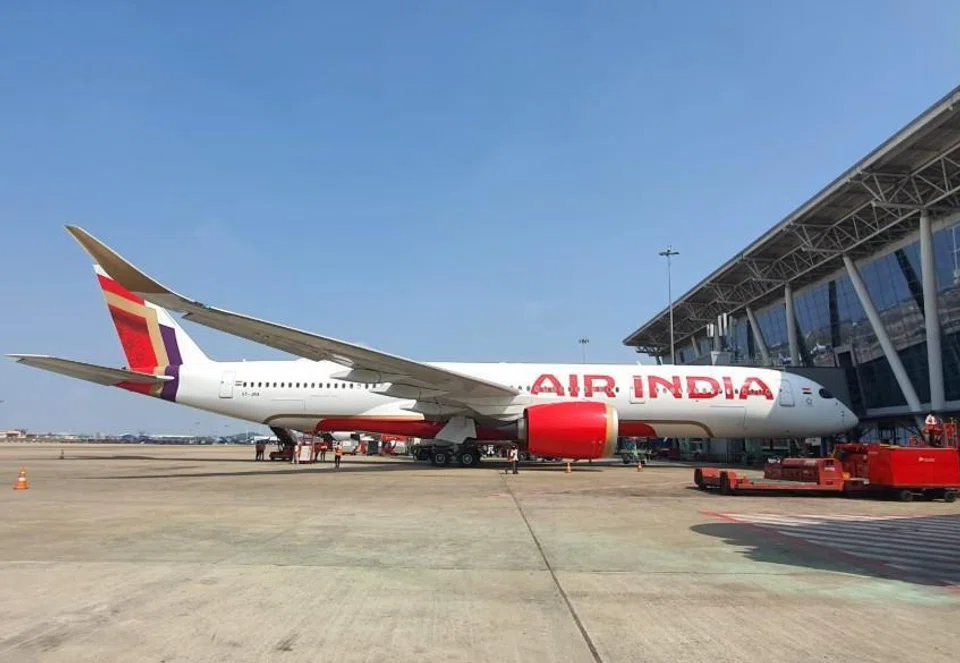
[SINGAPORE] Air India has its cap out again. Reuters on Aug 25 reported that the carrier is seeking US$1.5 billion in fresh equity from its shareholders to keep its turnaround going.
Singapore Airlines’ (SIA) slice of the bill works out to roughly US$375 million, or just under S$500 million. Nothing has been decided, and any investment would likely be made in several tranches.
But if SIA writes that cheque, it will ironically be paying a small fortune for the privilege of making its own financial results look worse.
This is the peculiar reality of equity accounting – and the dilemma facing SIA’s board right now.
Think of SIA’s 25.1 per cent stake in Air India as a very expensive, leaky bucket.
Between the initial cash and the handover of its Vistara shares, SIA spent roughly S$2.1 billion to buy this bucket. Today, the carrying value – the water left inside – is about S$1.1 billion.
Much of the leak has come in the last financial year, about S$945 million in fact.
Whether it will leak that fast again is an open question. The year to March included the Ahmedabad crash, a Pakistani airspace closure still in force and a fuel spike.
SIA’s latest June quarter update was vague on the exact scale of the current bleeding. But if it is at anything close to last year’s rate, the bucket will run dry sometime next year.
SEE ALSO





Under equity accounting, once the paper value of an investment hits zero, the investor stops recording those losses on its own income statement. The bleeding on the profit report simply stops.
But write a fresh cheque and the bucket refills. Because the investment has value again, SIA must resume dragging a quarter of Air India’s ongoing losses onto its own books.
In effect, the new cash will provide the accounting buffer that ensures Air India’s red ink keeps eating into SIA’s bottom line.
SIA’s board, however, cannot point to the original merger agreement and claim everything is going to plan.
Singapore’s flagship carrier agreed to a top-up budget of S$880 million in November 2022, when the Air India-Vistara merger was announced. It has since handed over S$498 million in 2024, then another S$167 million in 2025.
If both were drawn against that budget – something SIA has not spelt out explicitly – barely S$200 million is left in the envelope. The current ask is more than double that.
So why not simply decline? Let the stake drop below 20 per cent – the threshold for “significant influence” – and watch the losses vanish from the accounts. A tired board might find the idea tempting.
Because it will not work. Dropping below 20 per cent does not magically switch off the pain. The accounting rules assume you still have influence if you hold a board seat and a deep commercial partnership.
If SIA somehow proved it had lost that influence, the retained stake must be remeasured at fair value through profit or loss – which crystallises the damage in one ugly line rather than making it disappear.
And if SIA just sits still and lets the bucket run dry? The unrecognised losses still have to be declared in the footnotes of its financial reports. Worse, SIA cannot claim a single cent of any future Air India profits until it pays off that hidden deficit.
Also, because SIA already promised to keep funding the airline, the accountants might rule they cannot stop recording the losses anyway.
Walking away
The chatter around town, meanwhile, is whether SIA should just cut its losses and walk away entirely. That, again, is a fantasy of a different kind.
You cannot sell a minority stake in an unlisted, cash-burning Indian airline on the open market. There is only one plausible buyer: Tata, the majority owner.
If SIA tries to exit now, it arrives at the negotiating table holding a damaged asset and an obvious desperation to be rid of it. It would lock in a S$1 billion strategic blot in SIA’s investment track record, while handing Tata a catastrophic vote of no confidence in the middle of a complex turnaround.
Tata itself has its hands full. Chairman N Chandrasekaran – under whom the stake in Air India was acquired, alongside other large investments – said he would not seek re-election.
None of this means India was a bad idea. The strategic logic from 2022 still holds. India is a booming market, a vital second hub, and the obvious answer for an airline stranded without a domestic market of its own.
What has changed is the price of admission and the timeline. As SIA chief executive Goh Choon Phong describes it, the airline’s investment in Air India is a “long game” with no shortcuts.
While that may be true, it is also what cynics would expect executives to say when the short game has gone terribly wrong.
Money itself may not be the problem. SIA closed the June quarter with S$10.5 billion in cash and deposits – it can well afford the fresh half-billion-dollar ask.
The question, perhaps, is not about this cheque, but the one after it, and the one after that.
SIA has walked this road before. It dumped Air New Zealand in 2004 after losing hundreds of millions. The Virgin Atlantic and Virgin Australia adventures ended in similar tears.
The problem could be that buying minority stakes in airlines creates a very expensive illusion. In reality, it buys influence but not control – making it difficult to succeed.
Shareholders are perfectly entitled to ask what 25.1 per cent buys that a deep codeshare agreement would not. If the answer is a seat at the table and a quarter of the losses, it might be worth walking away from an expensive chair.
Decoding Asia newsletter: your guide to navigating Asia in a new global order. Sign up here to get Decoding Asia newsletter. Delivered to your inbox. Free.
Copyright SPH Media. All rights reserved.
TRENDING NOW

DBS, OCBC, UOB rout lops billions off STI as inflation, rate concerns spook investors

Grab CEO’s wife Chloe Tong on life with Anthony Tan and finding her purpose

OCBC sheds S$8 billion in value as shares close nearly 6% down; analysts cautious on banks

Deal between tycoon friends sparks scrutiny of Philippine power sector

