

Smaller board lots can’t fix a market run by three banks
Ten-share lots make it cheaper to buy stocks, but the small and mid-cap counters that need it do not benefit

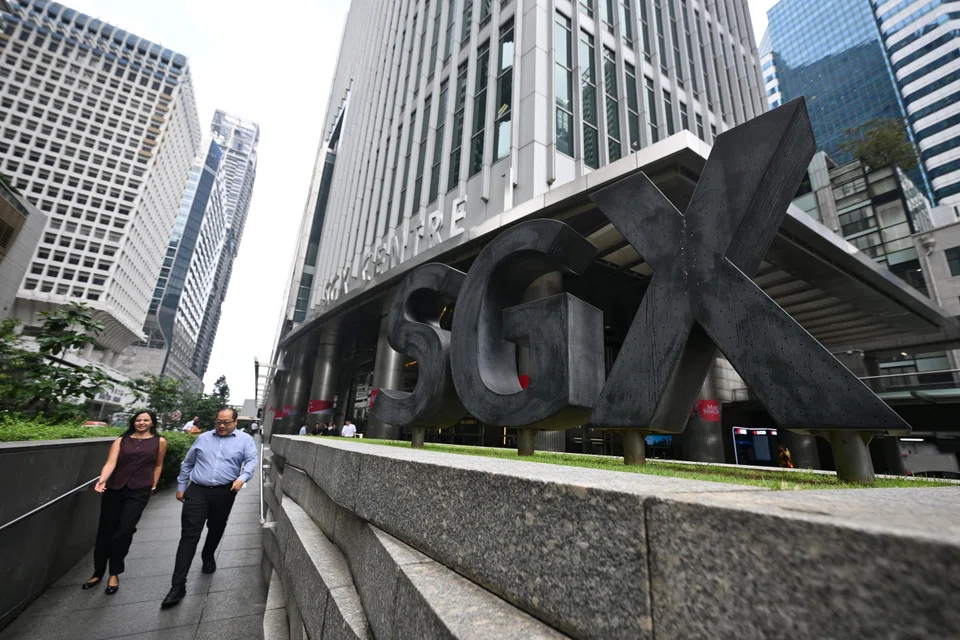
[SINGAPORE] The Singapore Exchange (SGX) on Oct 5 finally let small investors buy shares of the local bourse’s priciest counters – including DBS, OCBC and UOB – in lots of 10 shares at a time instead of 100 shares, and plenty of them took up the offer.
But three days later, the big money sold the banks hard, and lot sizes made no difference at all.
The exchange pitched the change as part of its push to widen retail participation. These 11 stocks made up about 35 per cent of SGX trading in the first half of the year, so this was no side show.
The first-day numbers looked like a win. Across the 11, more than 20,000 trades were done in 10-share lots, against about 13,000 in the old 100-share size, based on Bloomberg and SGX trade data.
For DBS , 10 shares was by far the most common choice with around 5,000 such transactions. About 55 per cent of all trades that day were smaller than the old minimum.
So smaller lots did get people to enter the market. But what it did not do was bring in more money.
DBS traded 3.05 million shares on Oct 5. Its daily average in September was 3.62 million. This means that on the day the door was meant to swing open, volume came in below an ordinary September session.
There is no evidence of new demand; investors merely cut their orders into thinner slices.
Volume did spike later in the week. On Oct 8, DBS traded 18.6 million shares, about five times its September norm, as its price fell 4.7 per cent to S$73.85.
Local banking peers also fell; UOB dropped 5.2 per cent and OCBC , 4.3 per cent. The Straits Times Index (STI) lost 3.5 per cent, and losers beat gainers 438 to 163 across the wider market.
The way Saxo’s Charu Chanana sees it, two forces hit at once. Rising global bond yields made Singapore’s dividend stocks look less special. Then, worries about bank earnings set off a round of profit-taking.
Neither had anything to do with board lots.
The wrong end of the market
Truth be told, retail investors do not need help buying the banks. DBS rose 37 per cent this year to Oct 2 while trading in 100-share lots. SGX data compiled by Maybank Securities shows retail investors put S$1.3 billion into financials in the third quarter up to Sep 21.
At the same time, the market has narrowed.
The three local banks made up about 33 per cent of SGX turnover in September, up from 26 per cent a year earlier, according to DBS Group Research. STI stocks took 80 per cent of all trading value.
Over the past year, the STI rose 32 per cent, while the FTSE ST Mid Cap Index fell 4 per cent. Catalist velocity, which Maybank uses as a gauge of retail interest in smaller stocks, slid from 81 per cent in May to 38 per cent in August.
Meanwhile, the institutions that the Equity Market Development Programme was meant to pull in have gone the other way.
Since Q3 2025, S$5.4 billion of the programme’s money has been handed to fund managers. Over the same stretch, institutional investors as a whole have been net sellers of S$4.1 billion on SGX, Maybank says.
So the lot cut makes it cheaper to buy the shares that investors are already buying. But the small and mid-caps that are actually short of buyers do not necessarily benefit.
SGX’s own report card
Which brings us to SGX itself. It is one of the 11 counters, so its own shares now trade in 10-share lots. That has not helped much. At S$20.96 on Wednesday (Oct 14), the stock sat more than 18 per cent below its August record of S$25.69.
Analysts have been heading for the exit too. JPMorgan Chase cut SGX to “neutral” on Oct 1. Citi stuck with its “sell” call the next day, with a S$17.70 target. Macquarie rates it “underperform”. Goldman Sachs is “neutral” at S$19.80. DBS Group Research cut it to “hold” on Tuesday, with a S$20 target.
To be fair, most of these calls are about valuation and slowing volumes after a record year. They are not a verdict on market reforms such as the smaller board lots.
Securities turnover fell from S$2.4 billion a day in May to S$1.9 billion in September, DBS noted.
But one point in the note is telling. The way DBS’ Lim Rui Wen describes it, the gap between the STI and smaller stocks suggests the market’s gains still rest mostly on large-cap financials. That raises questions over whether strong turnover growth can last without broader participation.
SGX’s own chairman would not argue with much of that. Speaking to listed-company chairs on Oct 1, four days before the lot change, Koh Boon Hwee said the exchange “doesn’t create liquidity, because we neither create certain demand nor supply”.
The job, he said, falls on companies.
A company that complains of thin trading, Koh argued, has not been talking to the people who might buy its shares, or telling them where it wants to be in three to five years.
He has a point, and companies are a fairer target than the exchange. Lot sizes are the plumbing, but demand has to come from companies giving investors a reason to care – and plenty of small and mid-caps still have not.
Read that way, a cheaper lot was never going to do much on its own.
The lot cut is harmless. It gives small investors more flexibility, and nobody should object to that.
But the market’s problem was never the price of one lot of DBS. It is a market where three banks now take a third of turnover, while the smaller companies that most need buyers sit on the shelf, many of them yet to explain why anyone should choose them, from the many counters that are available.
SGX has cut the price of entry. Giving the crowd a reason to spend more apart from the main stores in the building is a job for the tenants.
TRENDING NOW

Once staunchly pro-China, Malaysian Chinese businesses are now distancing themselves from Beijing

Britain’s mansion tax shows the difficulty of targeting wealth

Three hats, one goal: How Ng Kian Swan runs sustainability at NUHS

COE review: The gap between luxury and mass-market cars isn’t the only one worth bridging

