
Sorry, Pop Mart, Labubu is just not Lego or Pokemon
The continued reliance on scarcity to sell its products could turn consumers off
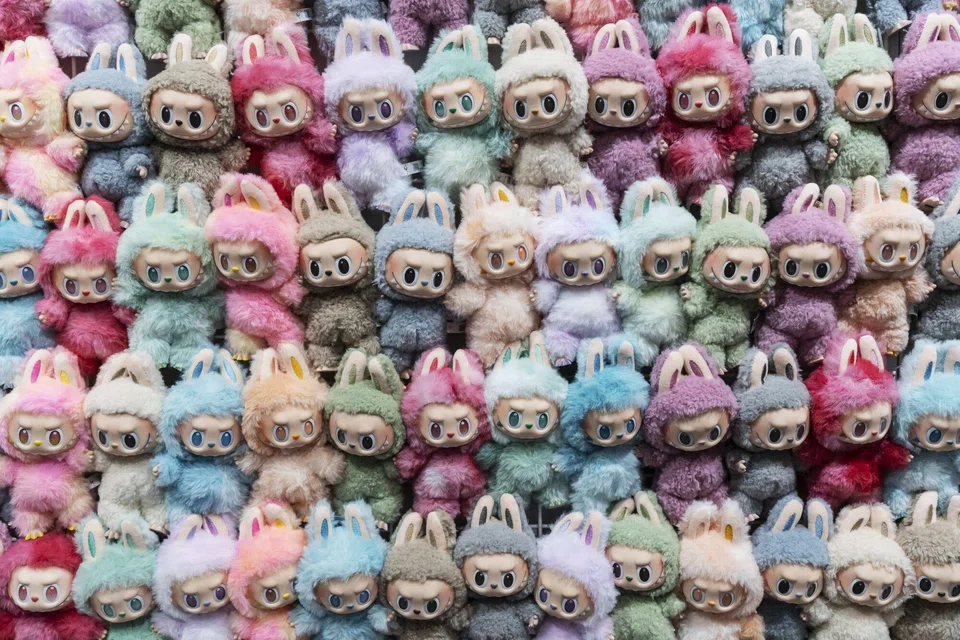
FEW toymakers have garnered as much investor attention as China’s Pop Mart, the manufacturer behind Labubu, a plush accessory seen dangling off the bags of A-listers from Blackpink’s Lisa to Rihanna.
The company’s fortunes have risen with the elf-like doll’s stardom. It reported blowout first-half earnings in late August, with chief executive officer Wang Ning saying that achieving 30 billion yuan (S$5.6 billion) in sales in 2025, or 130 per cent year-on-year growth, would be “quite easy”. The shares have rallied 179 per cent this year.
Scepticism is starting to surface, however. Bernstein Research began its coverage with an “underperform” call last week, a rare public dissent next to 40 “buy” ratings, according to a Bloomberg poll. There has been profit-taking lately: The shares are down 25 per cent from an August peak.
At the centre of the debate are two issues, regarding product diversification and sustainability. First, is Pop Mart a one-trick pony, or can it come up with another product as viral as the toothy Labubu? Second, if Labubu is the only intellectual property that can turbocharge growth, does it have lasting power with consumers?
In the first half, The Monsters series, including Labubu, became the toymaker’s profit centre, accounting for 35 per cent of total revenue, versus 14 per cent a year ago.
There is bad news on both fronts. Pop Mart has introduced Skullpanda and Crybaby, but neither has gathered much clout. Meanwhile, on Google search, which tends to capture first-time consumers curious about the brand, interest in Labubu briefly caught up to Lego in early July, but has dropped off since.
Granted, social media mentions do not translate directly into sales. For instance, search interest in Pokemon peaked in 2016, but The Pokemon Company made a whopping US$11 billion in retail sales last year from selling video games and trading cards, three times as much as in 2016.
Nonetheless, online traffic resilience does cement sales. Lego, the world’s No 1 toymaker, is a good example. In the first half, sales rose 13 per cent to US$5.4 billion, following a 13 per cent increase in 2024. Double-digit growth is fantastic for a 92-year-old company.
Meanwhile, even as the Labubu craze has quietened down on social media, Pop Mart is still relying on scarcity to sell its products. Months after the company vowed to increase supply, Labubu remains out of stock in stores.
I have been collecting these toys long before they became a global sensation – and lately, I decided to stop the chase. This is because unless you have time to wait around Pop Mart’s retail outlets to get hold of fresh batches, the only way to own one is through scalpers – and I cannot tell if I bought a Labubu or a Lafufu, a colloquial term for the fake ones.
The premium price I paid may not guarantee authenticity. My latest delivery from resellers feels funny – one leg has better range of motion than the other. I have started to develop Lafufu anxiety.
“No one wants to pay ‘IQ tax’, a popular slang in China that describes someone with bad judgment who pays an exorbitant amount for poor quality products. ”
Instead of prioritising restocking, Pop Mart has been busy churning out limited editions to whet consumer appetite. The Why So Serious series, released this month ahead of Halloween, with 33,000 likes on the company’s official Instagram account, are wickedly adorable but annoyingly out of stock and out of reach. A “juggling clown” costs 430 yuan on Qiandao, a resale platform, more than double the retail price.
I am by no means alone. Friends are equally frustrated. No one wants to pay “IQ tax”, a popular slang in China that describes someone with bad judgment who pays an exorbitant amount for poor-quality products.
By comparison, Lego – which also caters to the premium consumer segment – emphasises product availability, at least of its standard sets. Its Star Wars series are expensive, but are easily reachable as long as you are willing to pay.
These days, a sizeable chunk of Lego’s sales growth is coming from adult fans, who have bigger wallets. By 2021, they constituted a fifth of Lego’s sales.
Pop Mart has also captured grown-ups – fashionistas playfully pairing Labubus with their designer handbags and working mothers gifting to appease their overworked school children.
However, to retain this busy and fickle group, Pop Mart needs to make its products available. As it currently stands, all Labubus are limited editions – and that turns consumers off.
When The Monsters series first came to market, it was creating a fantasy land based on Nordic fairy tales. Labubu was mischievous with boyfriend Tycoco, raced carts with buddy Yaya, while ring leader Zimomo plotted pranks. That feeling of escape is gone.
Pop Mart is becoming a victim of its own success. BLOOMBERG



