

South-east Asia has lost Nvidia’s best salesman
Jensen Huang resigns after a second reported affair

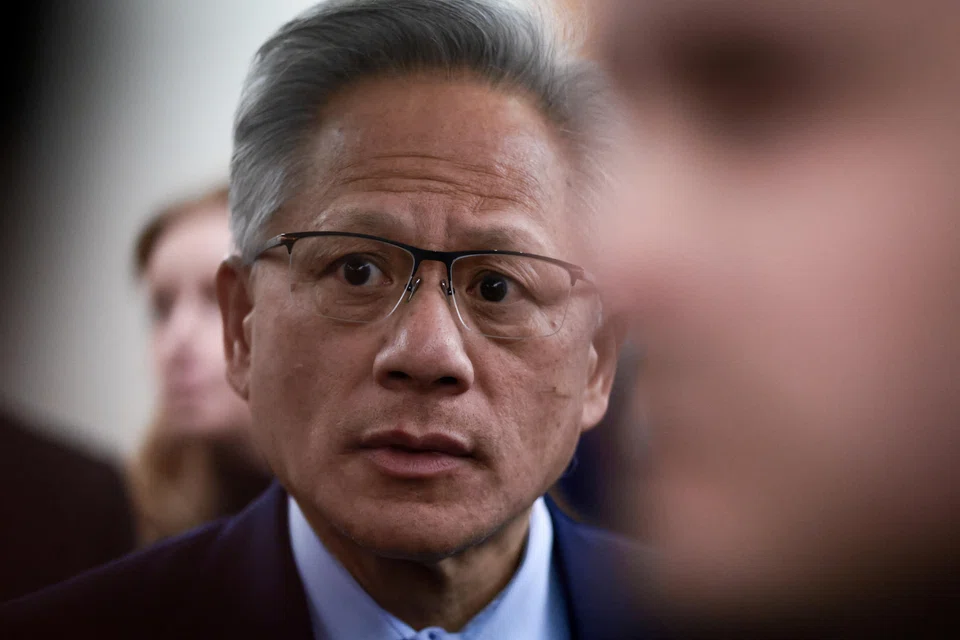
[SINGAPORE] The case for keeping Jensen Huang lasted about four days. On Sunday (Nov 8), Nvidia’s board said that it had confidence in its founder after he admitted to his staff that he had been unfaithful to his wife. Many of us argued that his private life was a matter for his family.
On Wednesday, The New York Times reported a second relationship, this time with Kimberly Powell, a long-serving vice-president who reports directly to him.
Within hours, The Wall Street Journal reported that the same board was preparing to push him out.
On Thursday, Nvidia said that Huang had resigned with immediate effect and will leave the company’s board as well.
The story of his relationship with Powell changes things in a way the one involving Alice Huang did not. An affair is a private failing, but a relationship with someone who reports to you is a governance problem. Nvidia, like most large companies, has rules that discourage this.
Intel removed Brian Krzanich in 2018 and McDonald’s fired Steve Easterbrook in 2019, both over consensual relationships with employees. But both were hired managers who were far easier to replace than a founder.
In the end, the board did not need to prove anything about spies. Nvidia’s shares fell about 7 per cent in after-hours trading on Wednesday, leaving them roughly 14 per cent below where they stood before the first story broke.
Then the shares tumbled further by more than 10 per cent in pre-market trading on Thursday, as news of Huang’s resignation emerged.
How this scandal is different
Losing Huang is no small thing, and comparisons with Apple after Steve Jobs or Amazon after Jeff Bezos miss the point, because those handovers were planned for years.
Tim Cook had run Apple’s operations for more than a decade before he took over; Andy Jassy spent nearly two decades building Amazon Web Services before he got the top job, and TSMC was run with two co-CEOs for almost five years before Morris Chang retired.
Nvidia has nothing of the sort. Huang has run it for 33 years with about 60 people reporting directly to him and no second-in-command.
There was simply no succession plan in place, and the board had started working with an outside search firm only this week.
The closer precedent is Intel. When Krzanich left, there was no successor ready, so finance chief Bob Swan ran the company as interim CEO for seven months.
A year later, Intel’s shares were down almost 9 per cent – at a time when the S&P 500 gained about as much.
Nvidia has followed the same script, handing the interim CEO job to its finance chief Colette Kress, who will keep doing her old job as well. The company also named former Synopsys boss Harvey Jones as its first chairman while it searches for a permanent chief.
Kress’ first test will come on Nov 17, when Nvidia reports its quarterly results.
Hitting close to home
For South-east Asia, the loss is more personal than it looks.
Huang was Nvidia’s chief salesman in this region, and he did the selling himself – in prime ministers’ offices.
He met Malaysia’s Anwar Ibrahim in December 2023 on a trip that included talks with Malaysian conglomerate YTL. In 2025, on the sidelines of the Asia-Pacific Economic Cooperation forum, the pair met again, by which time YTL had an artificial intelligence data centre running in Kulai, Johor.
In December 2024, he met Thailand’s then-prime minister Paetongtarn Shinawatra in Bangkok, and also Vietnam’s Pham Minh Chinh in Hanoi, where Nvidia agreed to open its first research centre in the country.
His pitch was “sovereign AI” – the idea that every country should own the computing power behind its own AI – and governments in the region bought it largely on his word.
A finance chief minding the shop will not have those relationships.
The region also loses its cover. Huang was the loudest voice in Washington against tighter chip-export controls; his replacement will spend the first months making peace with the House committees that want to quiz him behind closed doors.
The quickest way for a new boss to show that Nvidia is clean is to get tough on the customers who rent out its chips to Chinese clients, and many of those customers are in Singapore.
Megaspeed, the Singapore-based cloud company whose former executive Alice Huang sits at the centre of this saga, was an official Nvidia cloud partner with priority access to its chips.
The New York Times reported that its Malaysian arm, tied to a data centre in Johor, bought at least US$4.8 billion in AI equipment containing Nvidia chips in under two years. Megaspeed denies wrongdoing.
On Thursday, the Ministry of Home Affairs (MHA) filled in Singapore's side of the story. Police and Customs have been investigating suspected false declarations on server purchases since February 2025, and they impounded Alice Huang's passport along the way.
She was later given a stern warning for feeding police inaccurate information to play down her role at Megaspeed, and was allowed to leave Singapore. The government has now barred her from returning, though MHA says she was never investigated for espionage.
Police could not establish whether she broke the law over the declarations, partly because Singapore has received what MHA calls “limited information or assistance” from the US, despite asking since July 2025.
Washington, in other words, wants South-east Asia to police its export rules, but has been slow to help when asked.
The selling did not take place in Johor alone. A US think tank reckons about three-quarters of the offshore computing power used by Chinese companies now sits in South-east Asia.
The US House has passed a Bill that would extend export controls to cloud access, and these controls could affect even data centres in Singapore.
A scandal this size would certainly not hurt the Bill’s chances in the Senate.
The way MHA describes it, Singapore does not enforce other countries’ export controls.
But data centre operators are probably going to have to vet their tenants’ customers. This is going to spell a period of uncertainty for S-Reit investors holding Singapore data centres.
Nvidia will find a new permanent CEO eventually. Its chips will keep selling in the meantime.
What South-east Asia will struggle to find is another Nvidia boss willing to fly in, sit down with its prime ministers and argue its case in Washington.
TRENDING NOW

Nvidia prepares to oust Jensen Huang after news of second affair, with executive: reports

Higher rates, weaker spending: Is the Philippines entering stagflation?

Special dividend for SIA’s 80th anniversary? CEO says extra payout will need board’s nod

Genting Singapore Q3 net profit falls 42.2% to S$54.7 million on softer premium gaming

