

The South Korea discount demands the kitchen sink
About three-quarters of Kospi shares trade below book value
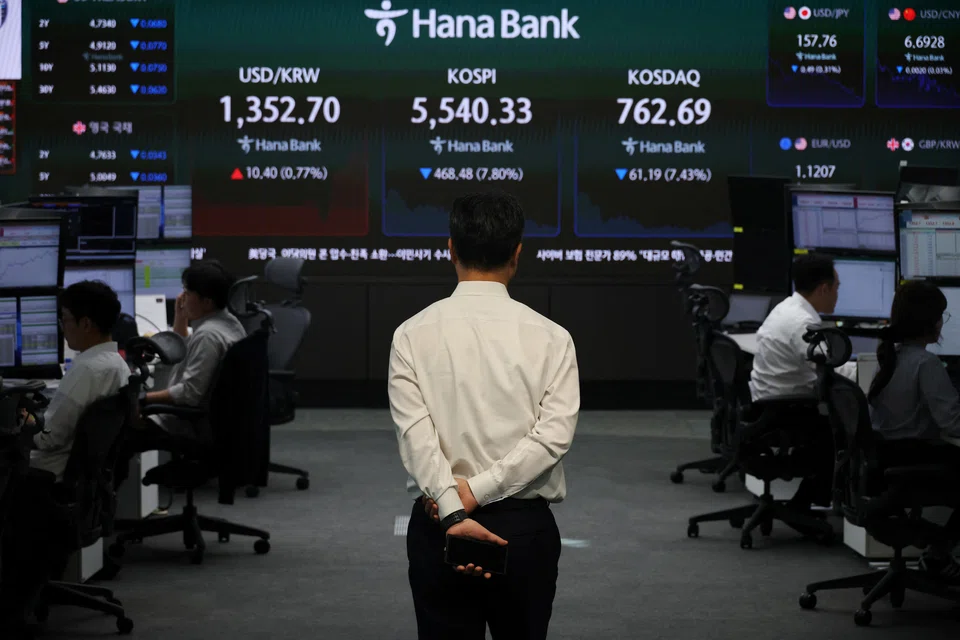
SOUTH Korea’s stock exchange operator unveiled an inaugural list earlier this month of more than 100 companies with persistently low valuations. It’s a welcome step to address the chronic underpricing of the nation’s stocks. But it won’t be enough.
Naming and shaming is a necessary addition to a year-long campaign by President Lee Jae Myung, and embraced by the growing ranks of individual investors against what’s become known as the “South Korea discount”.
Overcoming decades of entrenched corporate practices, however, requires a whole arsenal of measures, including legislative action, nurturing the next generation of independent board directors and changing entrenched corporate attitudes.
On paper, it looks like additional strategies may not be needed. South Korea has Asia’s top-performing stock index after Taiwan. The Kospi crossed the 5,000 level in January, just months after the left-leaning Lee took office.
His allies in the legislature moved quickly to pass a number of legal changes to the commercial code that strengthened minority shareholder rights and made boards more accountable to investors.
The improvements helped fuel the rally before the artificial intelligence trade turbocharged it. Most of the gains have accrued to select industries and to only two companies: memory chipmakers Samsung Electronics and SK Hynix.
The duo now account for about half of the Kospi’s market capitalisation, propelled by the AI boom. Strip them out and the remaining 800-plus constituents of the benchmark have collectively surrendered all of their gains for the year.
About three-quarters of Kospi shares are trading below book value, a measure of the net worth of a business. In fact, the number of listed companies valued at less than their net assets has grown in the past year, according to data compiled by Bloomberg.
The stock market’s headline performance conceals how little progress has been made in lifting valuations across corporate South Korea.
The discount has deep institutional roots. A reluctance to distribute profits and the practice of listing the most promising subsidiaries depresses valuations.
Weak enforcement of securities regulations undermines investor confidence. And with an estimated 93 per cent of the Kospi’s largest 200 companies controlled by an individual or family, corporate governance has traditionally favoured major shareholders.
From deals involving Samsung Electronics to LG Energy Solution, there have been cases of minority investors feeling like they got the short end of the stick.
The government, under various presidents, had been tackling the discount for more than a decade with little to show for it.
Steps being taken
But there are signs that the latest reform drive is beginning to change corporate behaviour. SK Hynix’s decision to abandon plans to list its Solidigm unit in the US last month after investor and regulatory opposition suggests that practices once taken for granted are now being challenged.
Minority shareholders had feared that a separate listing would dilute their exposure to a company that makes flash memory, which is in high demand at data centres.
“We were all over them,” said Namuh Rhee, chairman of the Seoul-based Korean Corporate Governance Forum.
Lee’s administration should capitalise on the momentum by doubling down on its legislative onslaught.
Measures still under consideration that are worth pushing through include amending existing rules to require boards to disclose and explain their responses to attractive takeover offers.
Under existing rules, management can remain silent about unsolicited approaches. The goal is to encourage hostile takeovers and put pressure on companies with persistently depressed valuations to potentially give up management control.
Another change being considered, extending the notice period for shareholder meetings to no less than four weeks, would give investors more time to scrutinise management proposals.
There’s also a need for more rigorous training programmes for independent directors to give them the skills and confidence to challenge management decisions.
Japan – which had its own name-and-shame list – offers a worthwhile example. It undertook corporate governance reforms as part of former prime minister Shinzo Abe’s economic revival plan.
The efforts have been successful, resulting in a stock market rerating and record levels of mergers and acquisitions.
Not all of Japan’s lessons will translate directly to South Korea, but the country is treading a similar path. Legal reforms can tackle entrenched practices by keeping corporate governance issues in the spotlight. Wall-of-shame lists add to that public pressure.
To beat the Korea discount, Seoul should keep throwing the kitchen sink at the problem. BLOOMBERG
TRENDING NOW

Ex-Nvidia CEO Jensen Huang carried a secret for more than a year. It led to his downfall

South-east Asia has lost Nvidia’s best salesman

Demand, tech capabilities position Apac and AI as Skyscanner’s next growth frontiers: CEO Bryan Batista

Jensen Huang discusses comeback as Nvidia CEO with allies: report

