STEWARDSHIP MATTERS

Stay the course: 5 inconvenient climate truths Singapore boards must address

Climate governance cannot stall even as disclosure deadlines are extended
Summarise
    • Interpreting current ESG polemics as permission to deprioritise climate governance is a strategic error, says the writer.
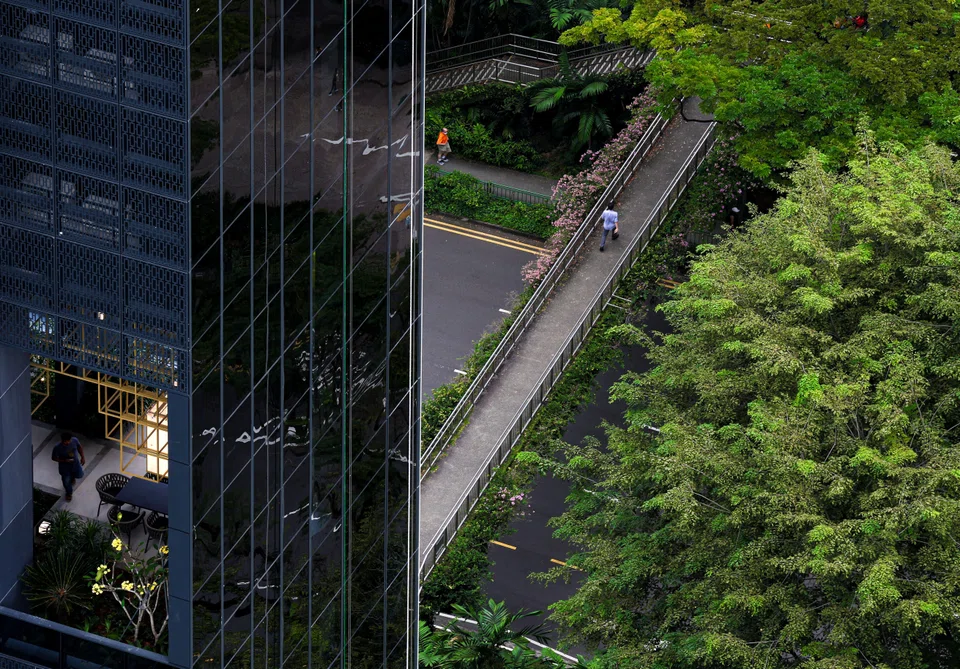
    • Interpreting current ESG polemics as permission to deprioritise climate governance is a strategic error, says the writer. PHOTO: YEN MENG JIIN, BT
    Shai Ganu
    Published Thu, Feb 12, 2026 · 07:00 AM

    THE past year has tested the resolve of even the most committed climate champions in the boardroom.

    Economic headwinds, geopolitical tensions and what some call “green fatigue” might tempt boards to pause their efforts in climate governance. Singapore’s recent extension of climate disclosure timelines might even seem to provide cover for such hesitation.

    But this would be precisely the wrong time to waver.

    Progressive boardrooms around the world aren’t just following regulatory disclosure minimums. To them, climate governance isn’t a compliance theatre, it is about survival and gaining a competitive advantage.

    Here are five stewardship principles, five “climate-isms” (my family teasingly calls them “Shai-isms”) that should anchor any board’s approach to climate governance.

    1. ESG is not CSR

    Too many directors still conflate environmental, social and governance strategy with corporate social responsibility (CSR). Some still claim their company has a strong sustainability strategy because they give employees a day of annual leave to plant trees.

    Planting trees is admirable, but that’s corporate giving, not sustainability strategy. CSR is what companies do with their profits; ESG is how they earn profits to begin with.

    Consider Faber-Castell, which literally and figuratively sows the seeds for the future. The company’s own managed forests meet 86 per cent of their worldwide wood demand. This ensures long-term raw material supply while reducing environmental impact.

    Closer to home, City Developments Ltd became the first Singapore company to publish disclosures aligned with the Taskforce on Nature-related Financial Disclosures, securing a S$400 million sustainability-linked loan with nature conservation targets in 2024. These are clear examples of ESG as a business strategy, not CSR as feel-good philanthropy.

    2. Physics does not lie; nor does it negotiate

    The science behind the man-made impact of climate change is irrefutable. We are transgressing six of nine planetary boundaries – thresholds beyond which earth’s systems may shift into new, potentially irreversible states.

    Some argue that we have been hearing climate warnings for decades and the sky has not fallen yet. But this misunderstands how complex systems fail: They don’t decline linearly; they hold, hold, hold... then collapse suddenly when they cross tipping points.

    Consider the Amazon rainforest. If current deforestation continues, it could become a savannah, shifting from a carbon sink to a net carbon emitter.

    Take also the Clausius-Clapeyron equation, which states that the atmosphere holds about 7 per cent more water vapour for each degree Celsius of warming. The current 1.5 degrees Celsius warming results in about 10 per cent extra water vapour in the atmosphere, leading to more frequent and extreme precipitation events and flooding risks.

    Physics does not wait for quarterly earnings or political cycles.

    3. Nature calls, and boards must answer

    Several jurisdictions now recognise natural assets such as rivers, forests and ecosystems as having legal personhood: New Zealand’s Te Awa Tupua and Colombia’s Atrato River, for instance, enjoy such legal standing.

    When natural assets gain legal personhood, they can appoint representation in legal proceedings. Simply put, nature itself could sue entities. We are not far from a future where a natural asset or a forest could bring legal action against polluters.

    This matters to boards. More than half of global gross domestic product depends moderately or highly on nature, yet corporate accounting has traditionally treated nature as infinite and free.

    Initiatives such as Climate Impact X – a Singapore-based global carbon exchange and marketplace co-founded by the Singapore Exchange, Temasek, DBS and Standard Chartered – demonstrate a growing recognition that nature-related risks are business risks, not externalities.

    4. Climate impacts the balance sheet

    Climate disasters have a real cost. In August 2022, a severe drought in China’s Sichuan province forced major manufacturers, including Toyota and CATL, to shut down factories.

    The climate-induced water shortage depleted reservoirs and cut hydropower generation just as demand for air-conditioning spiked. These were expensive write-downs and production losses stemming directly from physical climate risk.

    Firms that built facilities assuming stable climate conditions have found those assumptions devastatingly wrong.

    For Singapore companies with regional and global operations, the problem is real. It is in supply chains, manufacturing bases and investment portfolios.

    Beyond physical risks, firms also face transition risks: carbon charges, shifting regulations and market re-pricing as economies move towards net zero.

    Far from future hypotheticals, transition risks are already reshaping valuations and competitive advantage.

    Credit rating agencies now incorporate climate factors. Banks, too, stress-test portfolios against climate scenarios. Climate change is a core governance issue demanding board-level attention.

    5. Stay the course

    Extensions to climate reporting deadlines are an opportunity to get things right.

    In August 2025, Singapore Exchange Regulation and the Accounting and Corporate Regulatory Authority extended climate reporting timelines.

    While all Singapore-listed companies must still report Scope 1 and 2 emissions from FY2025, full International Sustainability Standards Board-based climate disclosures now follow a tiered timeline: Straits Times Index constituents lead from FY2025; companies with market caps above S$1 billion follow from FY2028; and smaller companies from FY2030.

    Large non-listed companies begin Scope 1 and 2 reporting in FY2030.

    Regulators have explicitly stated that the goal is to allow companies more time to build capabilities – to focus not on disclosure for its own sake, but on embedding substantive climate action into business strategies. The emphasis is on quality over rushed compliance.

    The way forward

    Some boards may be tempted to interpret current ESG polemics as permission to deprioritise climate governance. Doing so is a strategic error. The most effective boards are pulling ahead while others hesitate, preparing for the fundamentally different world already taking shape.

    The underlying business drivers have not changed. The physics remains unforgiving. Financial risks continue mounting. The competitive landscape is still shifting towards lower-carbon models.

    Climate does not negotiate, and neither should boards. The right course requires boards to ask hard questions, challenge management assumptions, and invest in capabilities that may not yield immediate returns.

    As the famous line in The Godfather reminds us: “It’s not personal; it’s strictly business.” Now, more than ever, good business means staying the course.

    The writer is global leader, executive compensation and board advisory at WTW. He is a member of the governing council at the Singapore Institute of Directors, where he chairs the sustainability chapter.

    Stewardship Matters is a monthly column that examines business disruptions, governance dilemmas and boardroom challenges in an increasingly complex world.