

With stock market in doldrums, SGX may want to listen to new voices for solution

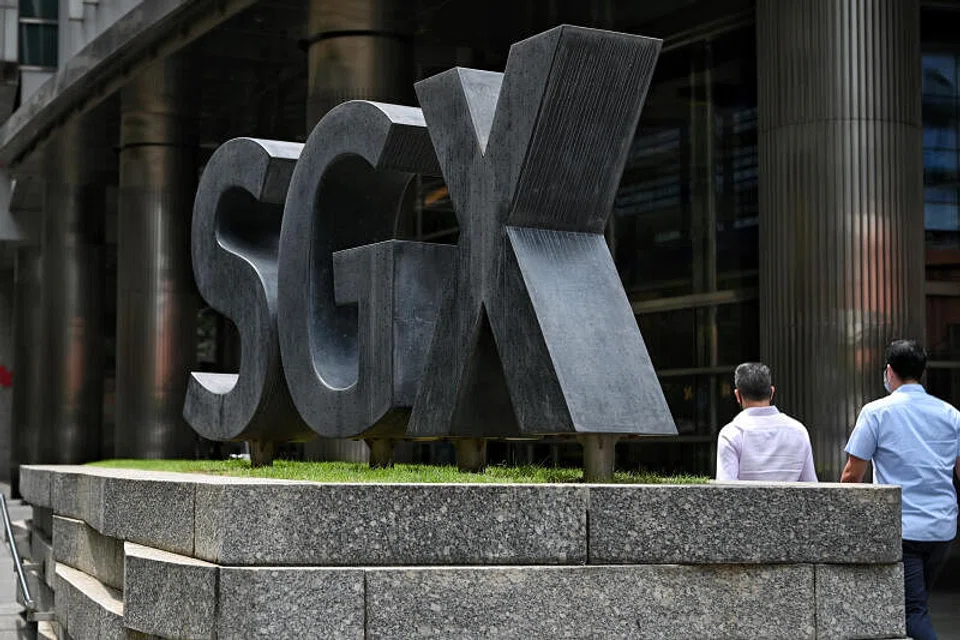
THERE has been a recent stream of efforts by various independent groups to resuscitate the moribund Singapore Exchange (SGX).
Last month, it was reported that the Singapore Venture & Private Capital Association (SVCA) put up a paper calling on the authorities to revive the local market through various means, such as investing sovereign funds into the local market.
Most recently, a group of industry observers came together to form a new research organisation called Corporate Monitor.
The organisation, which says it sets itself apart from other research houses by providing in-depth analysis on the governance and management of companies, counts accounting professor Mak Yuen Teen as one of its founding directors.
Prof Mak is a vocal critic of corporate governance standards in the Singapore public market.
The set-up of Corporate Monitor follows that of another group, SGListCos, which was established in 2022 with the aim of supporting local listcos to achieve long-term growth and success.
SGListCos, whose chairman is former SGX senior managing director Chew Sutat, represents companies listed on the SGX and aims to be the go-to group for the bourse regulator to sound out new initiatives.
Over the last two years, it has, among other things, set up an environmental, social, and governance reporting advocacy group and developed a guidance paper on renewable energy certificates for listcos.
Rise of independent groups
Initiatives proposed by these new associations add on to those from more established groups in the industry such as the Securities Investors Association (Singapore), or Sias, and The Society of Remisiers (Singapore). Their emergence comes as the local bourse struggles to attract new listings and improve its liquidity.
Last year, for example, SGX welcomed six new listings – all on the Catalist board. The companies raised a total of S$46.9 million, according to bourse data. This was sharply lower than the S$580.3 million raised by 11 initial public offerings (IPOs) in 2022.
This also paled in comparison to the performance of regional bourses.
For example, Indonesia saw 79 IPOs raising a total of US$3.55 billion in 2023, while Malaysia had 32 IPOs raising US$790 million.
The mushrooming of independent groups suggests that industry insiders feel that the authorities’ own efforts to revive the local public market are not bearing fruit – or at least not quickly enough.
On its part, SGX has embarked on several initiatives to lift the local bourse. These include a range of funds to support high-growth enterprises, as well as grant schemes to defray listing costs and increase research coverage of Singapore-listed stocks. (*see amendment note)
SGX has also tried to broaden market access by working with Thailand’s stock exchange on depository receipt listings.
However, critics say that these are not enough to move the needle, especially when Singapore is facing increasing competition from other exchanges such as Hong Kong and London.
Policymakers have attributed Singapore’s state of affairs to the global economic climate rather than internal issues.
In response to a parliamentary question on May 8, for instance, Prime Minister Lawrence Wong (then deputy prime minister) said that Singapore needs to be realistic about the global trends affecting the city-state’s equities market, and the actions that can be taken to change them.
Against this backdrop, it appears that independent groups have felt the need to step up and try to take matters into their own hands.
Keeping a stake in SGX
It is heartening, however, that there are still some within the industry who feel a vested interest in reviving the local exchange.
It suggests that there are stakeholders who continue to find value in keeping the public market afloat.
While the local regulator may find its actions constrained by other stakeholders and policymakers, having such independent groups may help to loosen some restrictions or provide some alternative perspectives.
That said, smaller associations will also have to work within their own constraints. Their lack of resources, for example, could limit the amount of work they can do.
In their interview with The Business Times, the members of Corporate Monitor admitted as much, noting that the frequency of research papers that they put out will also depend on the funding and manpower available to them.
Ultimately though, the diversity of views will only benefit the industry.
However, the ball is in the court of the authorities to ensure that any criticism does not come across as undermining the authority of the regulator.
To this end, SGX must continue to engage the various groups and parties that are seeking to contribute their views.
In this regard, SGX has a good track record of engagement.
It already works closely with other organisations such as Sias to hear their feedback and holds regular public consultation exercises.
So long as SGX continues to do so with new groups or initiatives proposed, a collective effort with the market could be the way forward to lift the Singapore bourse.
*Amendment note: An earlier version of this article incorrectly stated that SGX Regulation had embarked on initiatives to lift the local bourse. It is in fact SGX. The article above has been revised to reflect this.
TRENDING NOW

Once staunchly pro-China, Malaysian Chinese businesses are now distancing themselves from Beijing

‘How many will survive?’: Bubble fears arise as China’s humanoid robotics face reality check

Philippine power giant First Gen rebuffs foreign offers, plans up to US$2.6 billion in expansion
Indonesia imposes US$116 million in fines over manipulation of Sinar Mas, Prajogo-linked stocks

